Cancer Research UK Birmingham Cancer Centre, School of Cancer Sciences, College of Medical and Dental Sciences, The University of Birmingham, Birmingham, United Kingdom.
PLoS Pathog. 2011 May;7(5):e1001338. doi: 10.1371/journal.ppat.1001338. Epub 2011 May 5.
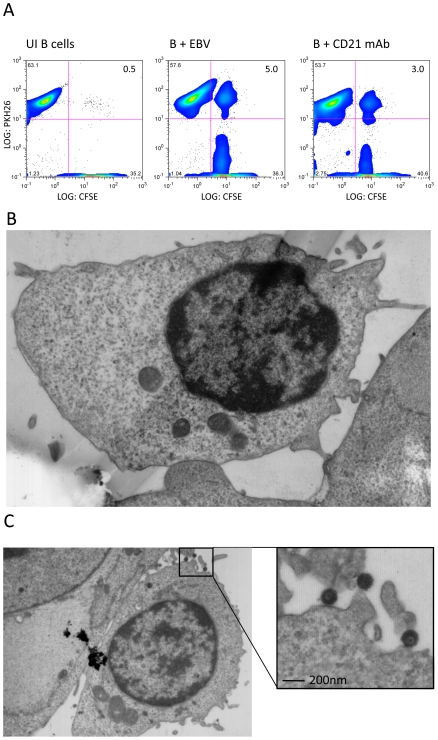
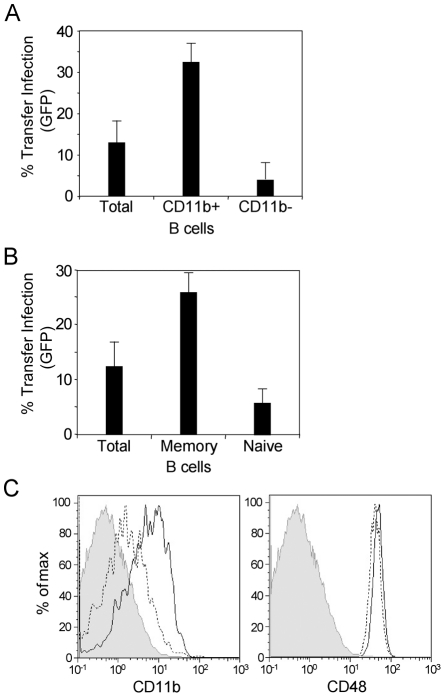
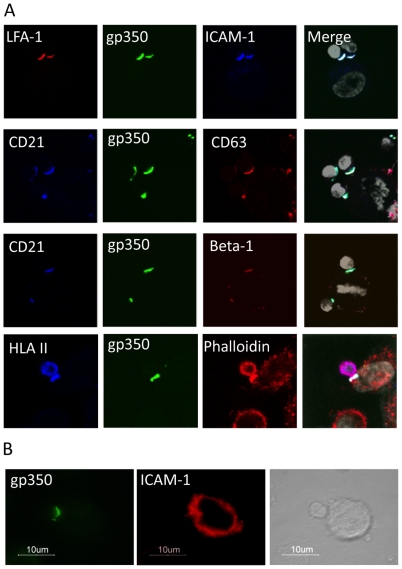
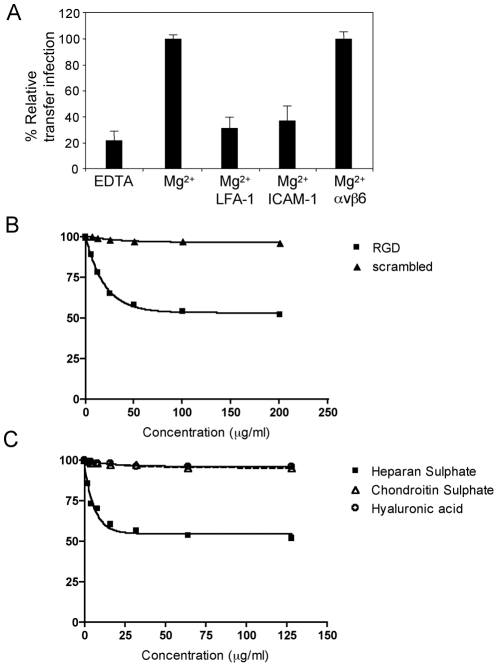
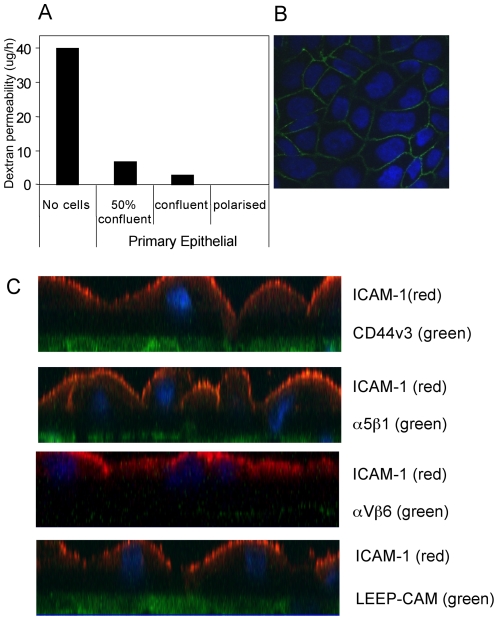
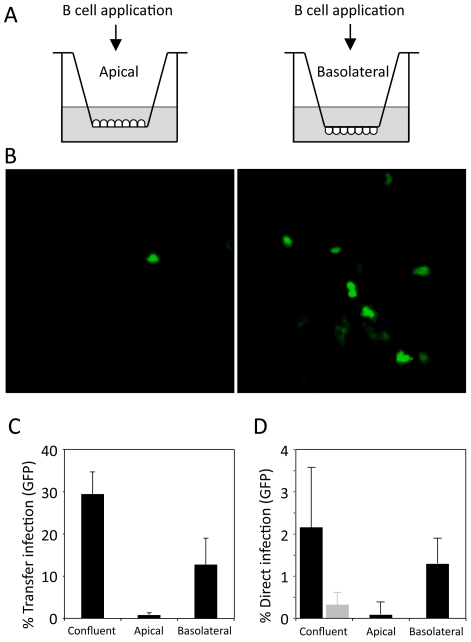
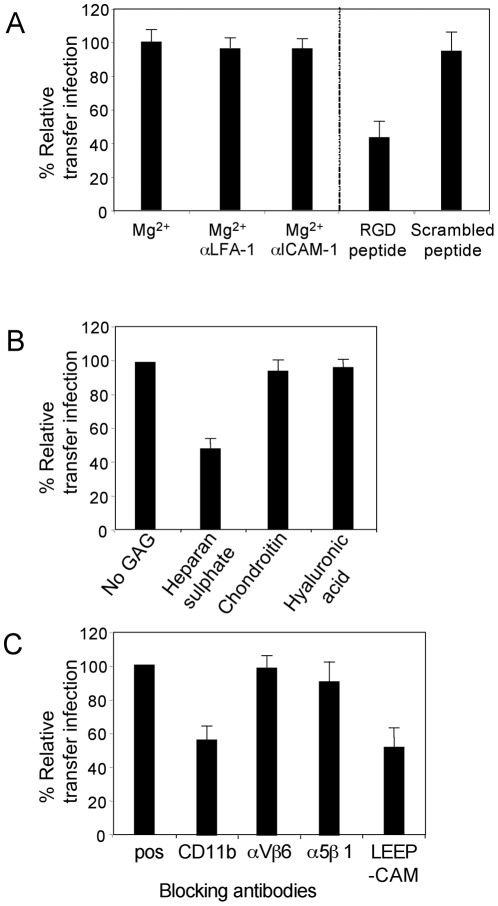
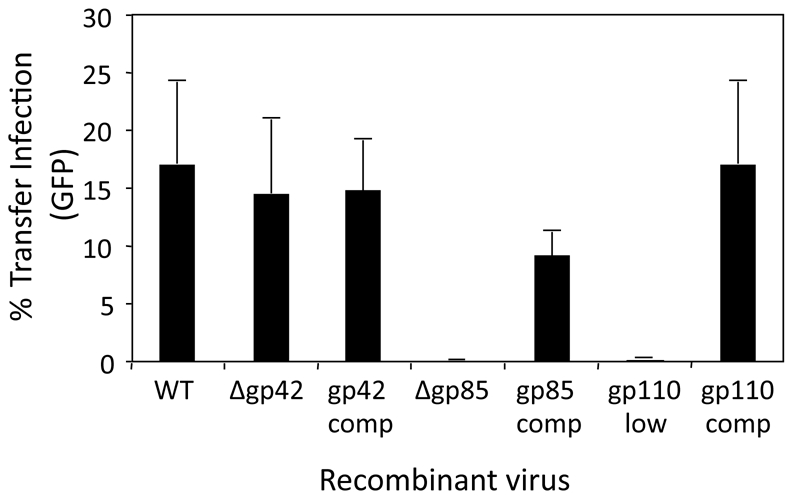
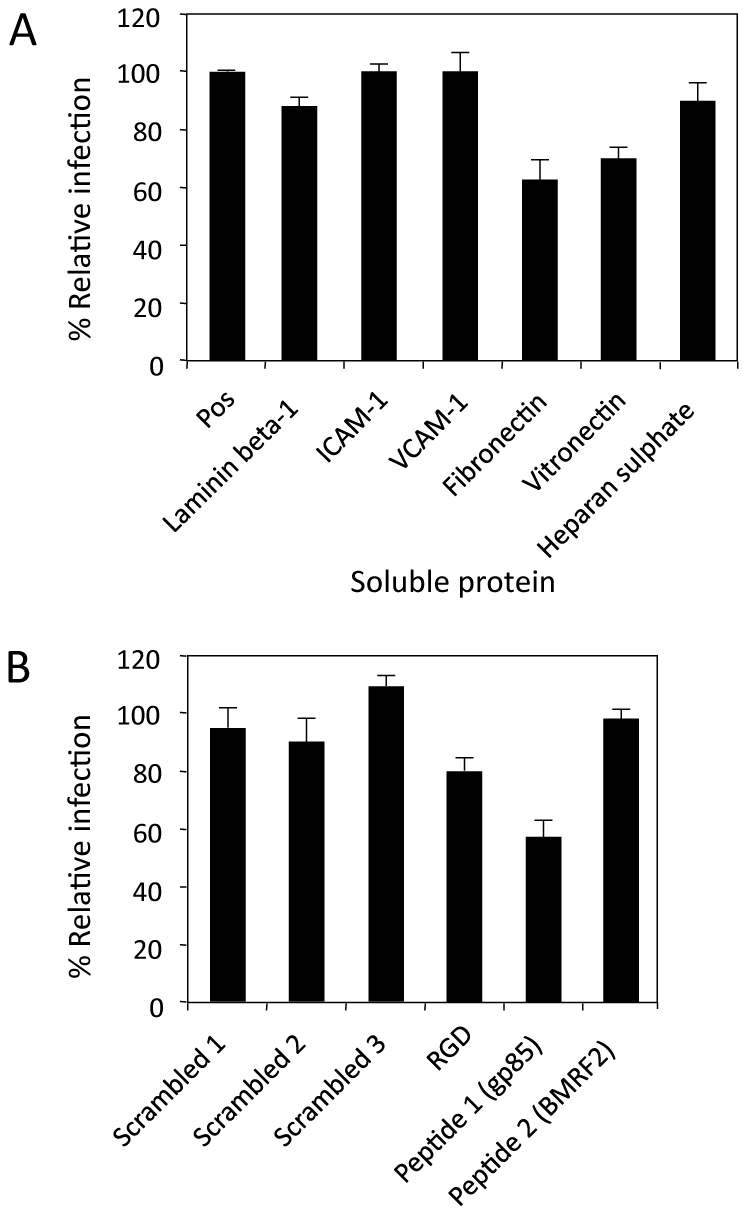
Epstein Barr virus (EBV) exhibits a distinct tropism for both B cells and epithelial cells. The virus persists as a latent infection of memory B cells in healthy individuals, but a role for infection of normal epithelial is also likely. Infection of B cells is initiated by the interaction of the major EBV glycoprotein gp350 with CD21 on the B cell surface. Fusion is triggered by the interaction of the EBV glycoprotein, gp42 with HLA class II, and is thereafter mediated by the core fusion complex, gH/gL/gp42. In contrast, direct infection of CD21-negative epithelial cells is inefficient, but efficient infection can be achieved by a process called transfer infection. In this study, we characterise the molecular interactions involved in the three stages of transfer infection of epithelial cells: (i) CD21-mediated co-capping of EBV and integrins on B cells, and activation of the adhesion molecules, (ii) conjugate formation between EBV-loaded B cells and epithelial cells via the capped adhesion molecules, and (iii) interaction of EBV glycoproteins with epithelial cells, with subsequent fusion and uptake of virions. Infection of epithelial cells required the EBV gH and gL glycoproteins, but not gp42. Using an in vitro model of normal polarized epithelia, we demonstrated that polarization of the EBV receptor(s) and adhesion molecules restricted transfer infection to the basolateral surface. Furthermore, the adhesions between EBV-loaded B cells and the basolateral surface of epithelial cells included CD11b on the B cell interacting with heparan sulphate moieties of CD44v3 and LEEP-CAM on epithelial cells. Consequently, transfer infection was efficiently mediated via CD11b-positive memory B cells but not by CD11b-negative naïve B cells. Together, these findings have important implications for understanding the mechanisms of EBV infection of normal and pre-malignant epithelial cells in vivo.
爱泼斯坦-巴尔病毒(EBV)对 B 细胞和上皮细胞均具有明显的倾向性。该病毒在健康个体中作为记忆 B 细胞的潜伏感染而持续存在,但感染正常上皮细胞的作用也可能存在。B 细胞的感染是由 EBV 主要糖蛋白 gp350 与 B 细胞表面的 CD21 相互作用引发的。融合是由 EBV 糖蛋白 gp42 与 HLA Ⅱ类相互作用触发的,此后由核心融合复合物 gH/gL/gp42 介导。相比之下,CD21 阴性上皮细胞的直接感染效率较低,但通过一种称为转移感染的过程可以实现有效的感染。在这项研究中,我们描述了转移感染上皮细胞的三个阶段中涉及的分子相互作用:(i)CD21 介导的 EBV 和整合素在 B 细胞上的共帽化,以及黏附分子的激活,(ii)通过被帽的黏附分子形成 EBV 负载的 B 细胞与上皮细胞之间的共轭,以及(iii) EBV 糖蛋白与上皮细胞的相互作用,随后融合和摄取病毒粒子。上皮细胞的感染需要 EBV gH 和 gL 糖蛋白,但不需要 gp42。使用正常极化上皮细胞的体外模型,我们证明了 EBV 受体和黏附分子的极化将转移感染限制在基底外侧表面。此外, EBV 负载的 B 细胞与上皮细胞的基底外侧表面之间的黏附包括 B 细胞上的 CD11b 与上皮细胞上的 CD44v3 和 LEEP-CAM 的肝素硫酸盐部分相互作用。因此,转移感染通过 CD11b 阳性记忆 B 细胞高效介导,但不能通过 CD11b 阴性幼稚 B 细胞介导。总之,这些发现对理解 EBV 感染体内正常和癌前上皮细胞的机制具有重要意义。