Tissue Engineering Laboratories (BIOTEC), Technische Universität Dresden, Dresden, Germany.
EMBO Mol Med. 2011 Jul;3(7):398-409. doi: 10.1002/emmm.201100147. Epub 2011 May 18.
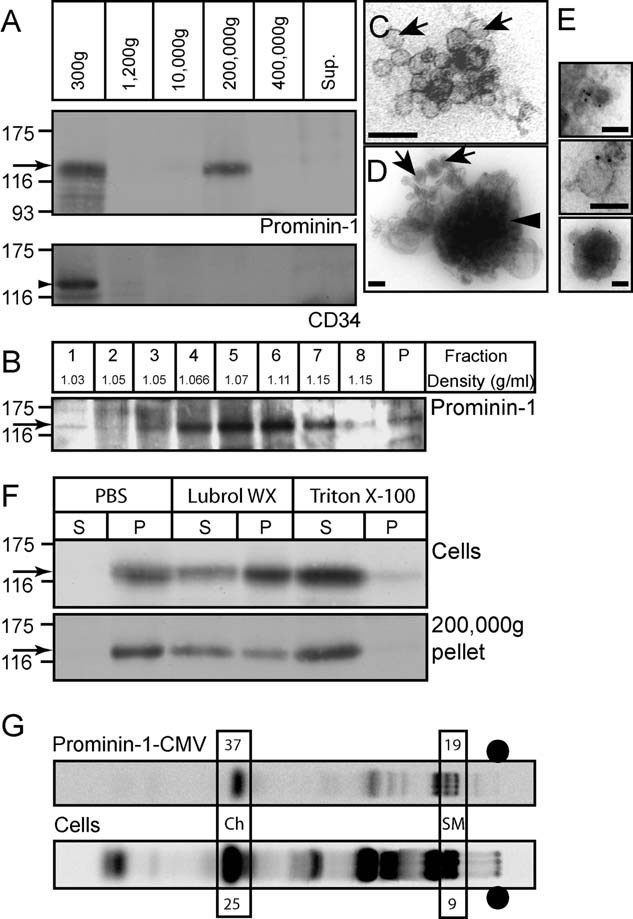
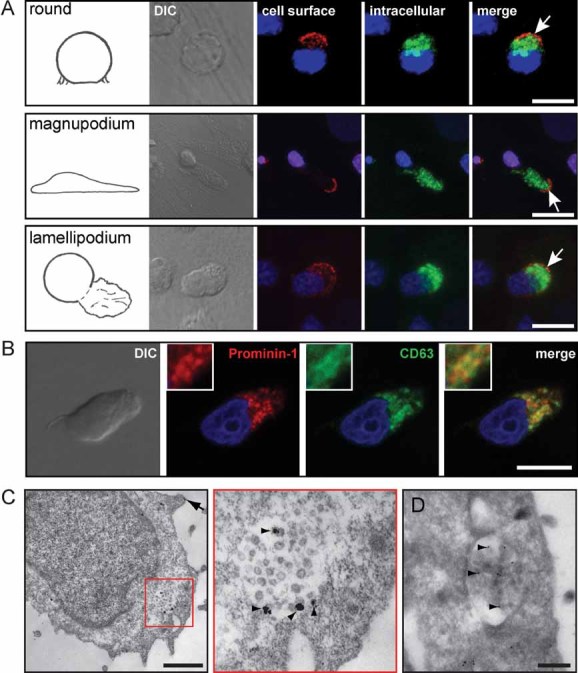
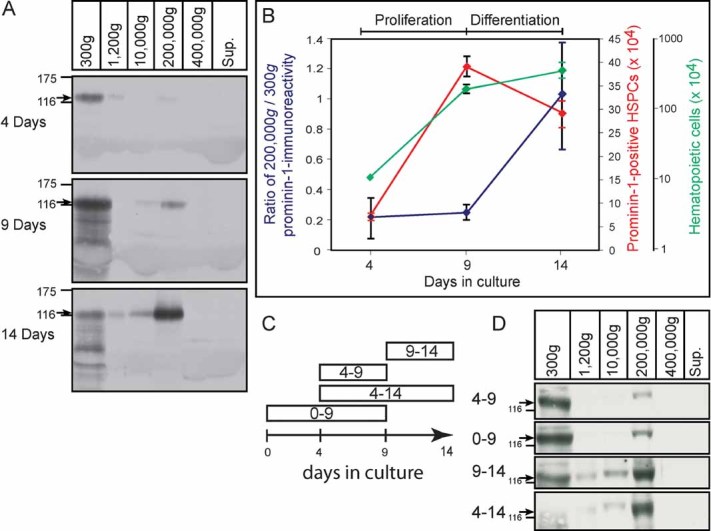
The differentiation of stem cells is a fundamental process in cell biology and understanding its mechanism might open a new avenue for therapeutic strategies. Using an ex vivo co-culture system consisting of human primary haematopoietic stem and progenitor cells growing on multipotent mesenchymal stromal cells as a feeder cell layer, we describe here the exosome-mediated release of small membrane vesicles containing the stem and cancer stem cell marker prominin-1 (CD133) during haematopoietic cell differentiation. Surprisingly, this contrasts with the budding mechanism underlying the release of this cholesterol-binding protein from plasma membrane protrusions of neural progenitors. Nevertheless, in both progenitor cell types, protein-lipid assemblies might be the essential structural determinant in the release process of prominin-1. Collectively, these data support the concept that prominin-1-containing lipid rafts may host key determinants necessary to maintain stem cell properties and their quantitative reduction or loss may result in cellular differentiation.
干细胞的分化是细胞生物学中的一个基本过程,了解其机制可能为治疗策略开辟新的途径。在这里,我们使用由人类原代造血干/祖细胞在多能间充质基质细胞饲养层上生长组成的体外共培养系统,描述了在造血细胞分化过程中含有干细胞和癌症干细胞标志物 Prominin-1(CD133)的小膜囊泡通过外泌体释放。令人惊讶的是,这与胆固醇结合蛋白从神经祖细胞质膜突起释放的出芽机制相反。然而,在这两种祖细胞类型中,蛋白脂质组装可能是 Prominin-1 释放过程中的基本结构决定因素。总之,这些数据支持这样的概念,即含有 Prominin-1 的脂筏可能包含维持干细胞特性所必需的关键决定因素,其数量减少或丢失可能导致细胞分化。