Department of Pediatrics, University of Texas Health Science Center, Houston, USA.
BMC Pediatr. 2011 May 18;11:37. doi: 10.1186/1471-2431-11-37.
Despite the high prevalence of seizure, epilepsy and abnormal electroencephalograms in individuals with autism spectrum disorder (ASD), there is little information regarding the relative effectiveness of treatments for seizures in the ASD population. In order to determine the effectiveness of traditional and non-traditional treatments for improving seizures and influencing other clinical factor relevant to ASD, we developed a comprehensive on-line seizure survey.
Announcements (by email and websites) by ASD support groups asked parents of children with ASD to complete the on-line surveys. Survey responders choose one of two surveys to complete: a survey about treatments for individuals with ASD and clinical or subclinical seizures or abnormal electroencephalograms, or a control survey for individuals with ASD without clinical or subclinical seizures or abnormal electroencephalograms. Survey responders rated the perceived effect of traditional antiepileptic drug (AED), non-AED seizure treatments and non-traditional ASD treatments on seizures and other clinical factors (sleep, communication, behavior, attention and mood), and listed up to three treatment side effects.
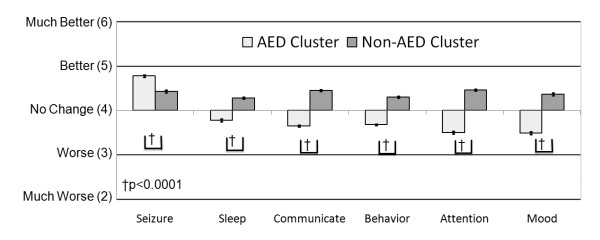
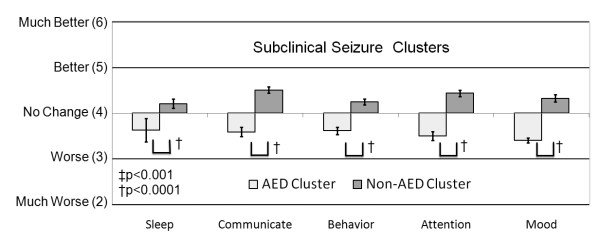
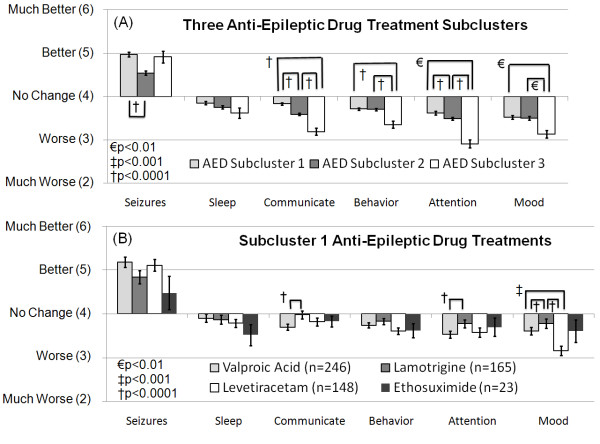
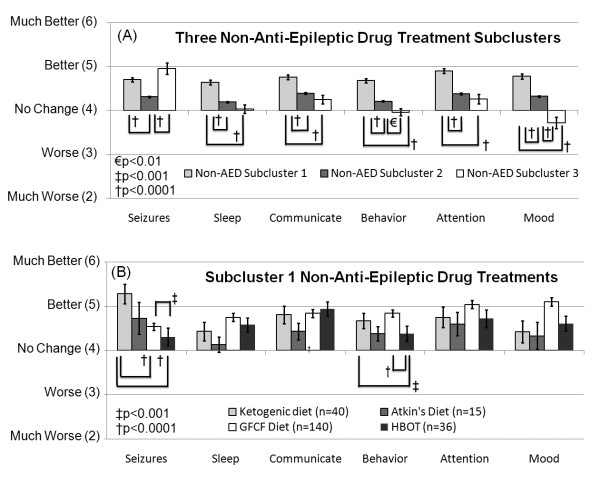
Responses were obtained concerning 733 children with seizures and 290 controls. In general, AEDs were perceived to improve seizures but worsened other clinical factors for children with clinical seizure. Valproic acid, lamotrigine, levetiracetam and ethosuximide were perceived to improve seizures the most and worsen other clinical factors the least out of all AEDs in children with clinical seizures. Traditional non-AED seizure and non-traditional treatments, as a group, were perceived to improve other clinical factors and seizures but the perceived improvement in seizures was significantly less than that reported for AEDs. Certain traditional non-AED treatments, particularly the ketogenic diet, were perceived to improve both seizures and other clinical factors.For ASD individuals with reported subclinical seizures, other clinical factors were reported to be worsened by AEDs and improved by non-AED traditional seizure and non-traditional treatments. The rate of side effects was reportedly higher for AEDs compared to traditional non-AED treatments.
Although this survey-based method only provides information regarding parental perceptions of effectiveness, this information may be helpful for selecting seizure treatments in individuals with ASD.
尽管自闭症谱系障碍(ASD)个体中癫痫发作、癫痫和异常脑电图的患病率很高,但关于 ASD 人群中治疗癫痫发作的相对有效性的信息却很少。为了确定传统和非传统治疗方法改善癫痫发作和影响与 ASD 相关的其他临床因素的有效性,我们开发了一个综合在线癫痫发作调查。
通过 ASD 支持组织的电子邮件和网站发布公告,要求 ASD 儿童的家长完成在线调查。调查响应者选择完成以下两个调查之一:一个是关于 ASD 个体伴有临床或亚临床癫痫发作或异常脑电图的治疗的调查,另一个是关于 ASD 个体无临床或亚临床癫痫发作或异常脑电图的对照调查。调查响应者对传统抗癫痫药物(AED)、非 AED 癫痫治疗和非传统 ASD 治疗对癫痫发作和其他临床因素(睡眠、沟通、行为、注意力和情绪)的感知效果进行评分,并列出最多三种治疗副作用。
共获得了 733 名癫痫发作儿童和 290 名对照者的响应。一般来说,AED 被认为可以改善癫痫发作,但会恶化有临床癫痫发作的儿童的其他临床因素。在有临床癫痫发作的儿童中,丙戊酸、拉莫三嗪、左乙拉西坦和乙琥胺被认为最能改善癫痫发作,对其他临床因素的恶化最小。传统的非 AED 癫痫治疗和非传统治疗作为一个整体,被认为可以改善其他临床因素和癫痫发作,但改善癫痫发作的效果明显低于 AED。某些传统的非 AED 治疗方法,特别是生酮饮食,被认为可以同时改善癫痫发作和其他临床因素。对于报告有亚临床癫痫发作的 ASD 个体,报告称 AED 会恶化其他临床因素,而非 AED 传统癫痫发作和非传统治疗会改善这些因素。与传统的非 AED 治疗相比,AED 的副作用发生率据报道更高。
尽管这种基于调查的方法仅提供了父母对有效性的看法的信息,但这些信息可能有助于在 ASD 个体中选择癫痫发作的治疗方法。