Departamento de Bioquímica, Instituto de Química, Universidade de São Paulo, São Paulo, SP, Brazil.
Free Radic Biol Med. 2011 Aug 1;51(3):733-43. doi: 10.1016/j.freeradbiomed.2011.05.002. Epub 2011 May 8.
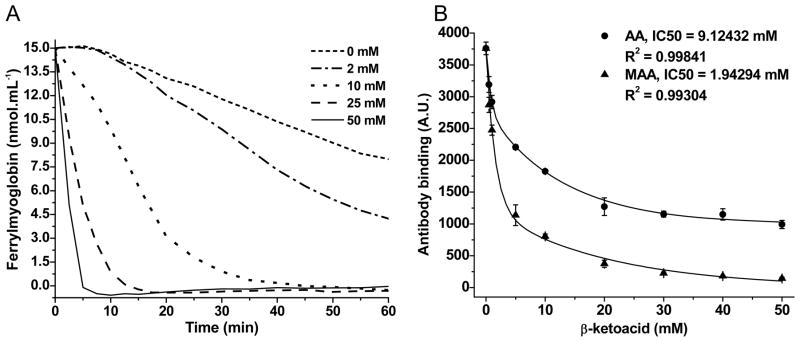
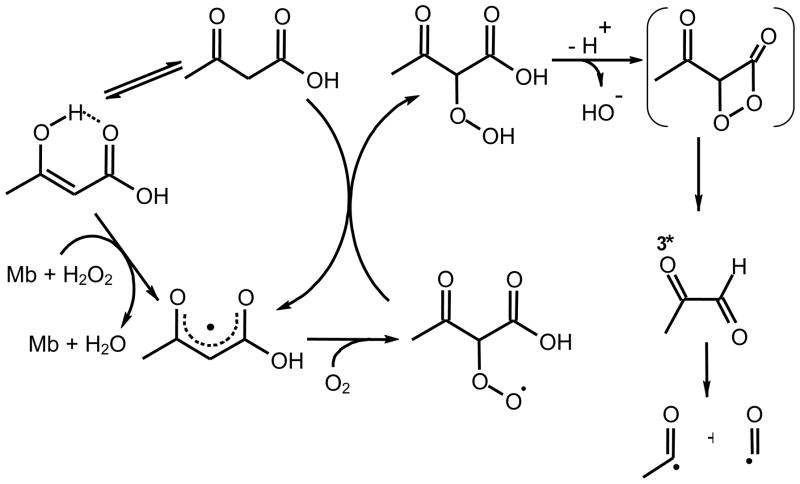
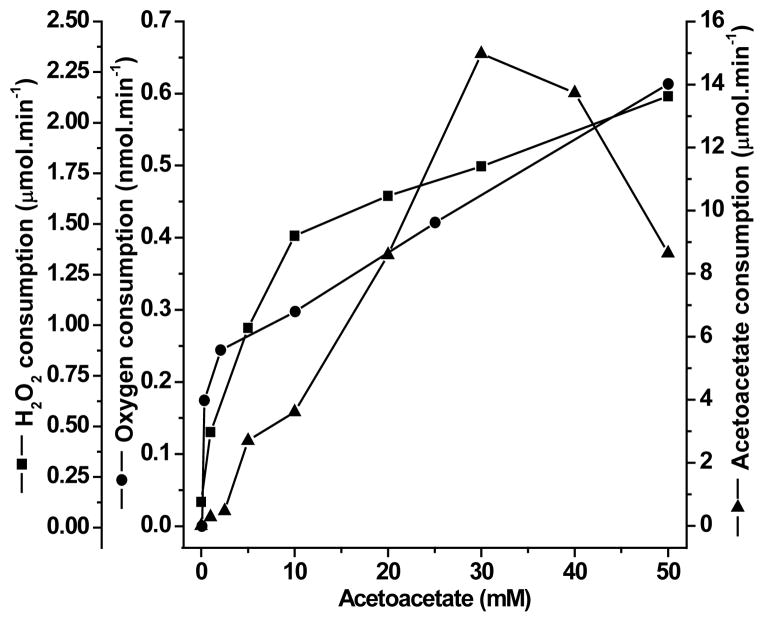
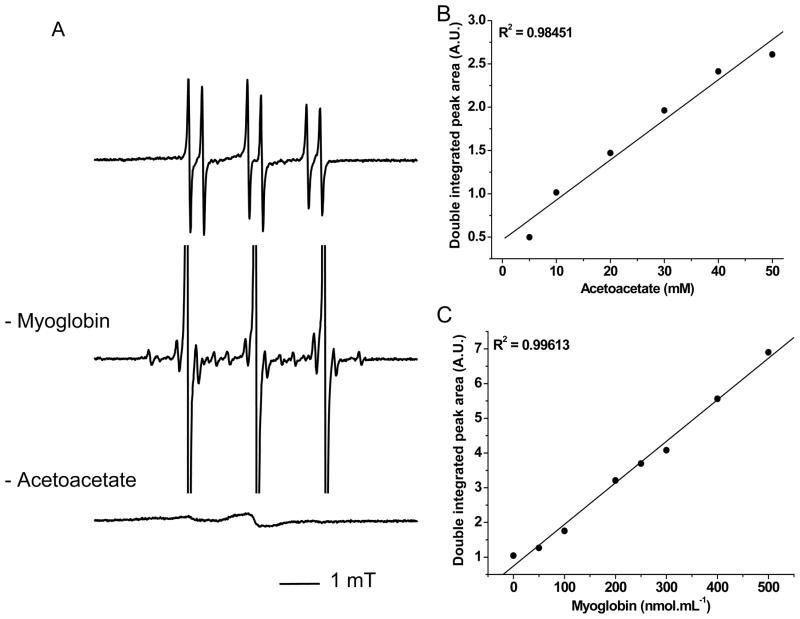
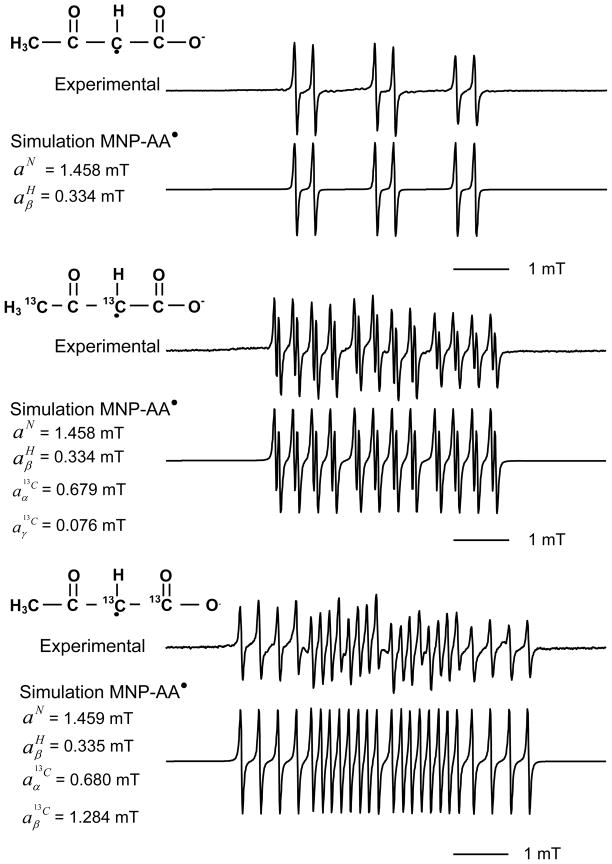
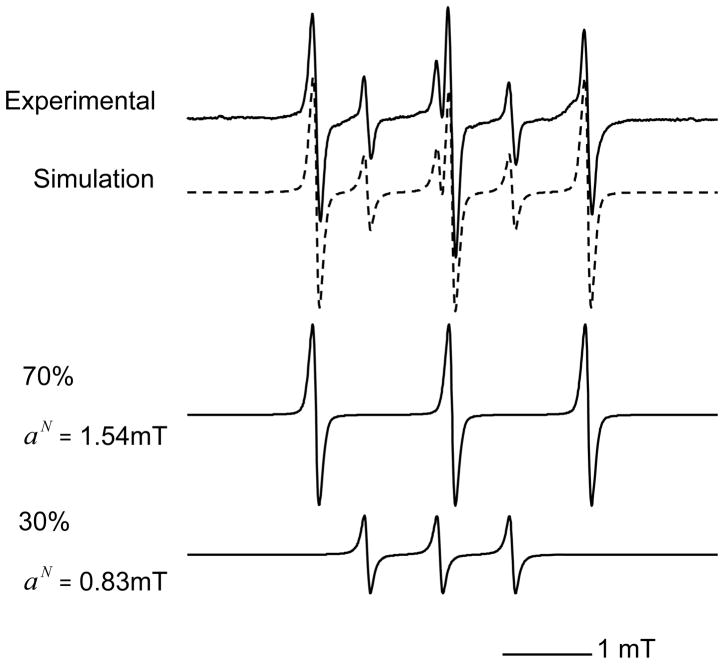
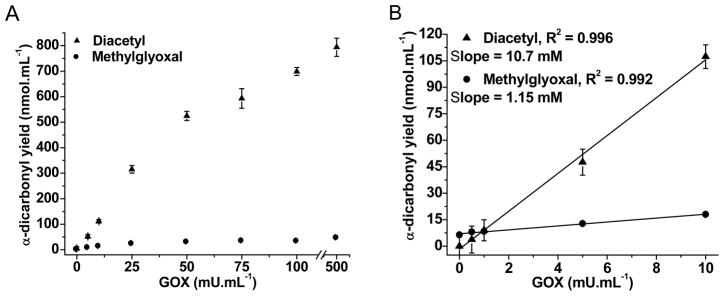
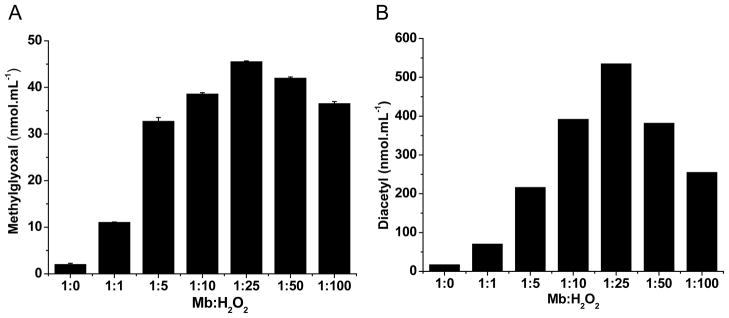
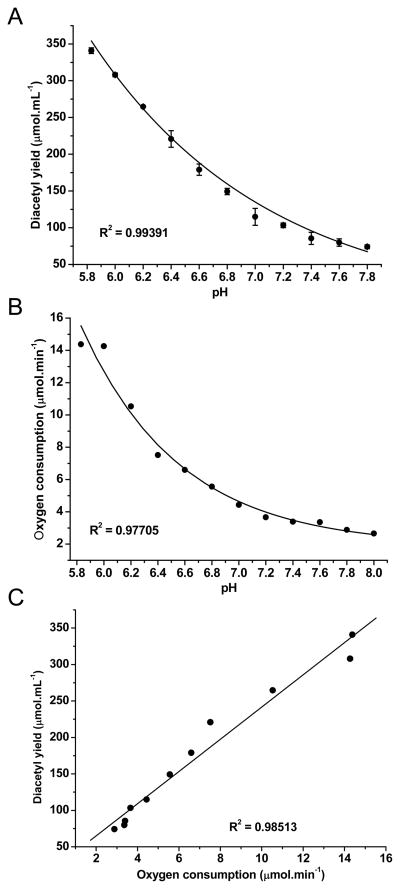
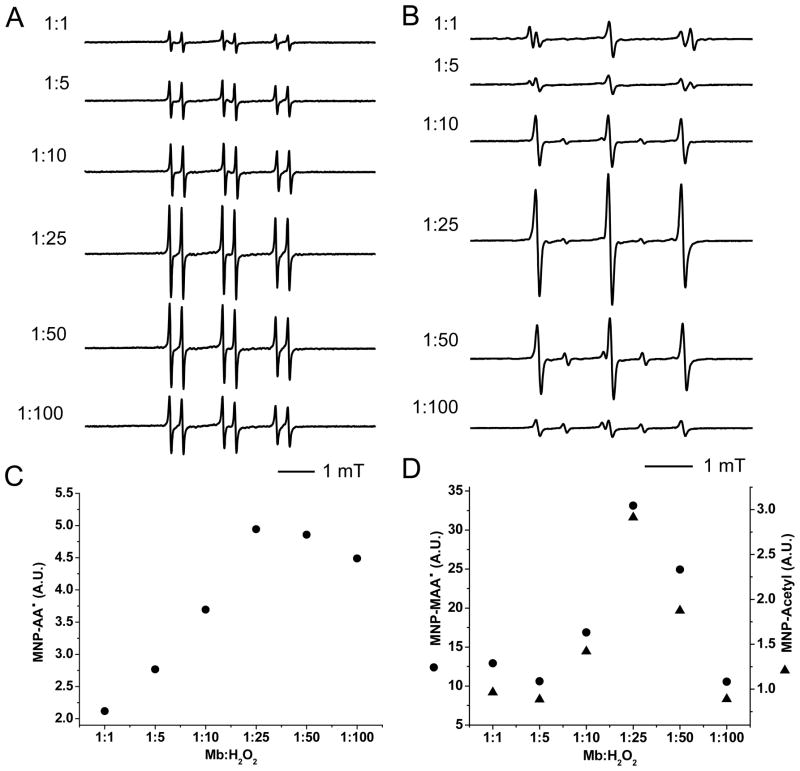
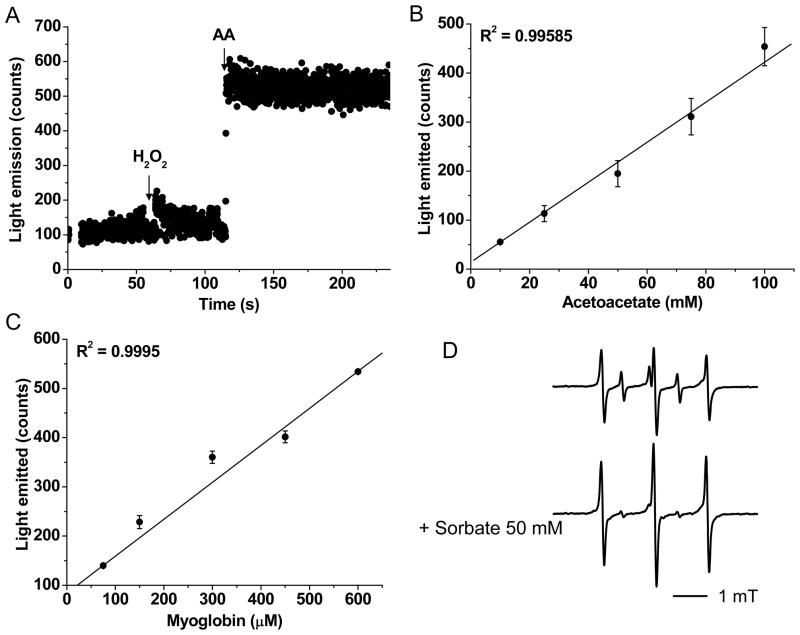
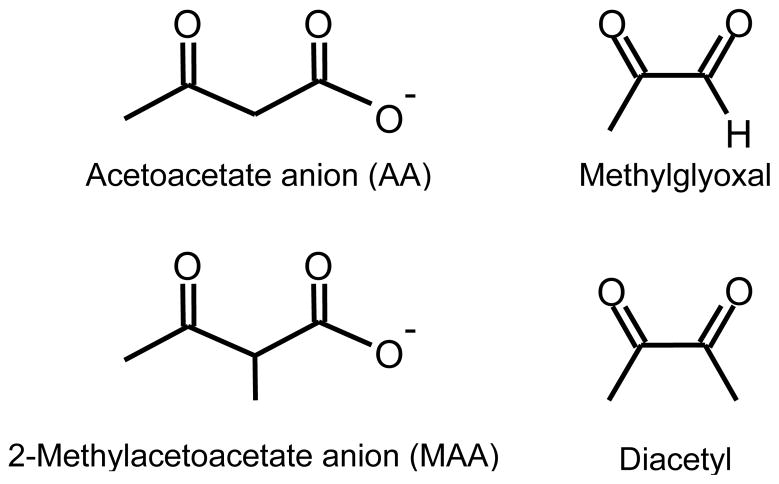
Acetoacetate (AA) and 2-methylacetoacetate (MAA) are accumulated in metabolic disorders such as diabetes and isoleucinemia. Here we examine the mechanism of AA and MAA aerobic oxidation initiated by myoglobin (Mb)/H(2)O(2). We propose a chemiluminescent route involving a dioxetanone intermediate whose thermolysis yields triplet α-dicarbonyl species (methylglyoxal and diacetyl). The observed ultraweak chemiluminescence increased linearly on raising the concentration of either Mb (10-500 μM) or AA (10-100 mM). Oxygen uptake studies revealed that MAA is almost a 100-fold more reactive than AA. EPR spin-trapping studies with MNP/MAA revealed the intermediacy of an α-carbon-centered radical and acetyl radical. The latter radical, probably derived from triplet diacetyl, is totally suppressed by sorbate, a well-known quencher of triplet carbonyls. Furthermore, an EPR signal assignable to MNP-AA(•) adduct was observed and confirmed by isotope effects. Oxygen consumption and α-dicarbonyl yield were shown to be dependent on AA or MAA concentrations (1-50 mM) and on H(2)O(2) or tert-butOOH added to the Mb-containing reaction mixtures. That ferrylMb is involved in a peroxidase cycle acting on the substrates is suggested by the reaction pH profiles and immunospin-trapping experiments. The generation of radicals and triplet dicarbonyl products by Mb/H(2)O(2)/β-ketoacids may contribute to the adverse health effects of ketogenic unbalance.
乙酰乙酸 (AA) 和 2-甲基乙酰乙酸 (MAA) 在糖尿病和异亮氨酸血症等代谢紊乱中积累。在这里,我们研究了肌红蛋白 (Mb)/H(2)O(2)引发的 AA 和 MAA 需氧氧化的机制。我们提出了一种涉及二氧杂环戊酮中间体的化学发光途径,其热解生成三重态α-二羰基化合物(甲基乙二醛和二乙酰)。观察到的超弱化学发光随着 Mb(10-500 μM)或 AA(10-100 mM)浓度的升高呈线性增加。氧摄取研究表明,MAA 的反应性几乎比 AA 高 100 倍。用 MNP/MAA 进行的 EPR 自旋捕获研究揭示了α-碳中心自由基和乙酰基自由基的中间体。后者自由基可能来自三重态二乙酰,完全被山梨酸钾抑制,山梨酸钾是一种众所周知的三重态羰基淬灭剂。此外,观察到并通过同位素效应证实了可归因于 MNP-AA(•)加合物的 EPR 信号。氧消耗和α-二羰基产物的产率取决于 AA 或 MAA 浓度(1-50 mM)以及添加到含 Mb 反应混合物中的 H(2)O(2)或叔丁基过氧氢。反应 pH 曲线和免疫自旋捕获实验表明,高铁肌红蛋白参与作用于底物的过氧化物酶循环。Mb/H(2)O(2)/β-酮酸产生自由基和三重态二羰基产物可能导致生酮失衡的不良健康影响。