Division of Allergy and Clinical Immunology, The Johns Hopkins University School of Medicine, Baltimore, MD 21224, USA.
J Immunol. 2011 Jul 1;187(1):441-9. doi: 10.4049/jimmunol.1001881. Epub 2011 May 25.
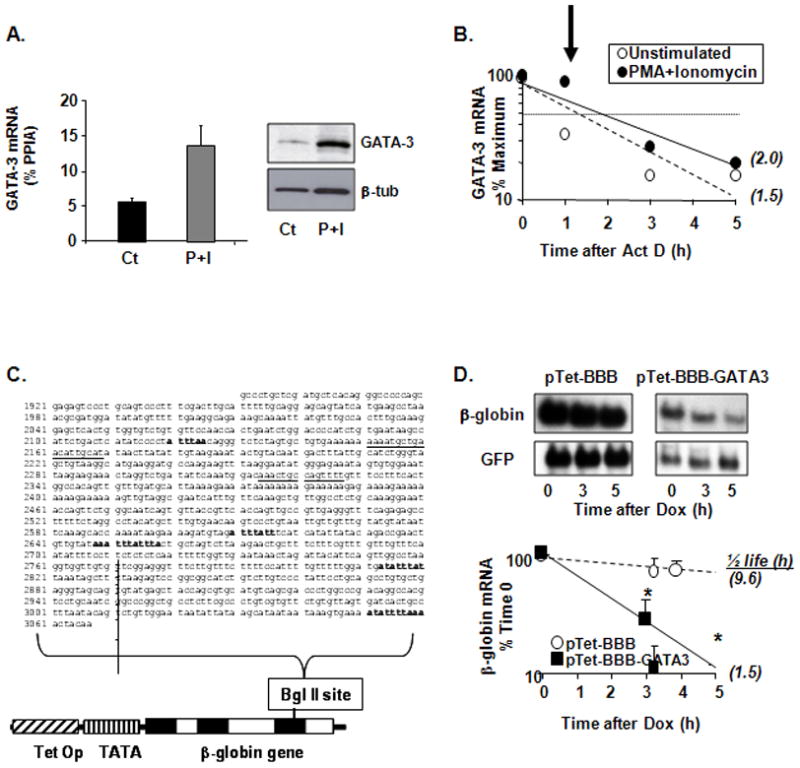
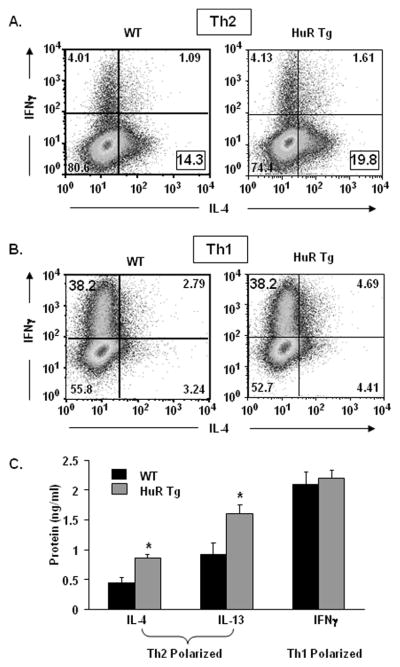
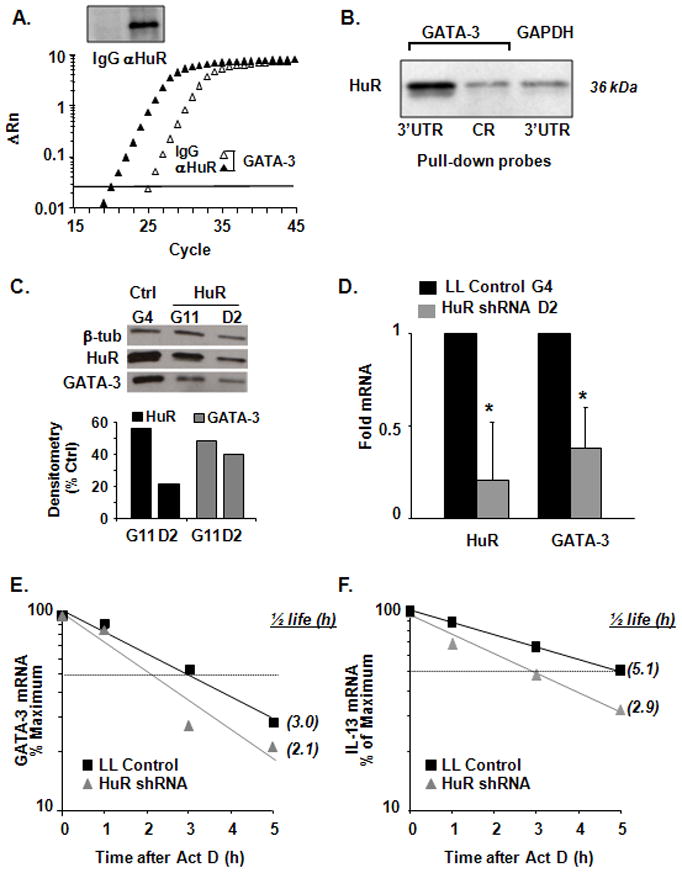
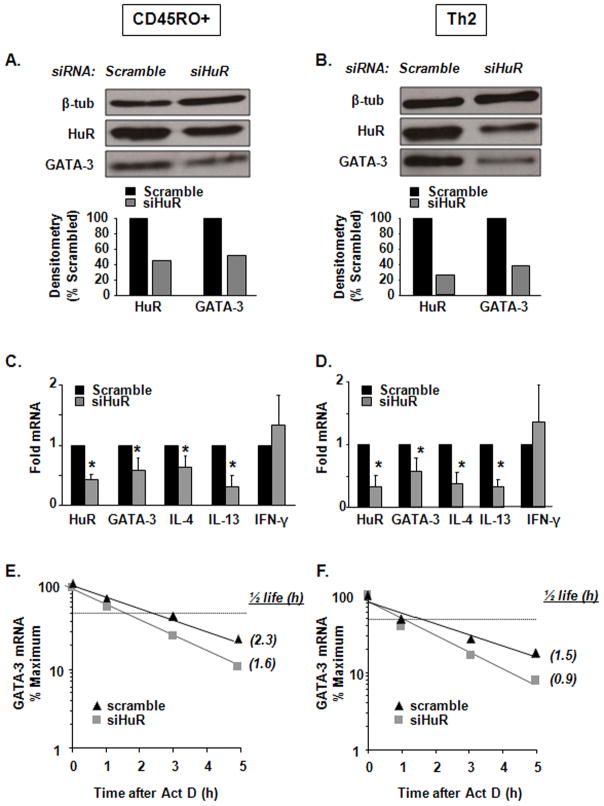
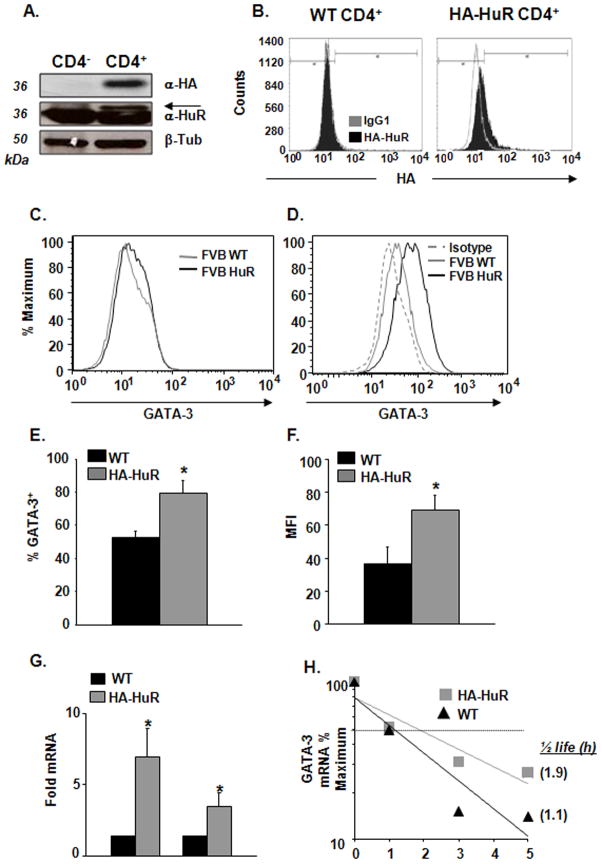
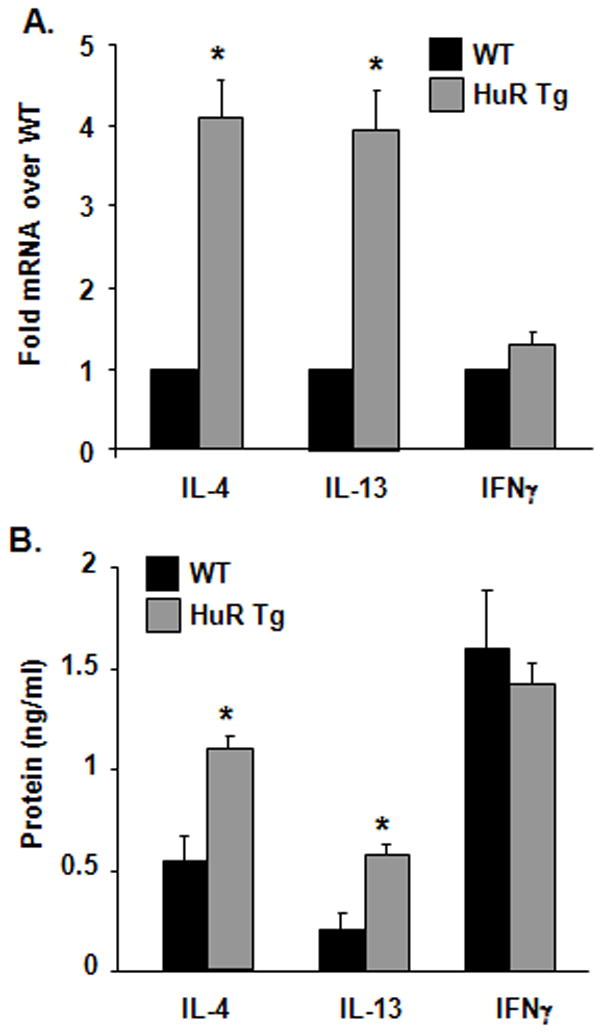
The posttranscriptional mechanisms whereby RNA-binding proteins (RBPs) regulate T cell differentiation remain unclear. RBPs can coordinately regulate the expression of functionally related genes via binding to shared regulatory sequences, such as the adenylate-uridylate-rich elements (AREs) present in the 3' untranslated region (UTR) of mRNA. The RBP HuR posttranscriptionally regulates IL-4, IL-13, and other Th2 cell-restricted transcripts. We hypothesized that the ARE-bearing GATA-3 gene, a critical regulator of Th2 polarization, is under HuR control as part of its coordinate posttranscriptional regulation of the Th2 program. We report that in parallel with stimulus-induced increase in GATA-3 mRNA and protein levels, GATA-3 mRNA half-life is increased after restimulation in the human T cell line Jurkat, in human memory and Th2 cells, and in murine Th2-skewed cells. We demonstrate by immunoprecipitation of ribonucleoprotein complexes that HuR associates with the GATA-3 endogenous transcript in human T cells and found, using biotin pulldown assay, that HuR specifically interacts with its 3'UTR. Using both loss-of-function and gain-of-function approaches in vitro and in animal models, we show that HuR is a critical mediator of stimulus-induced increase in GATA-3 mRNA and protein expression and that it positively influences GATA-3 mRNA turnover, in parallel with selective promotion of Th2 cytokine overexpression. These results suggest that HuR-driven posttranscriptional control plays a significant role in T cell development and effector function in both murine and human systems. A better understanding of HuR-mediated control of Th2 polarization may have utility in altering allergic airway inflammation in human asthmatic patients.
RNA 结合蛋白 (RBPs) 通过与共享调节序列(如 mRNA 3'非翻译区 (UTR) 中的腺苷酸-尿苷丰富元件 (ARE))结合,协调调节功能相关基因的表达。RBP HuR 在后转录水平上调节 IL-4、IL-13 和其他 Th2 细胞受限的转录物。我们假设,ARE 携带的 GATA-3 基因是 Th2 极化的关键调节因子,作为其对 Th2 程序的协调后转录调节的一部分,受 HuR 控制。我们报告说,在人 T 细胞系 Jurkat、人记忆 T 细胞和 Th2 细胞以及小鼠 Th2 偏向细胞中,与刺激诱导的 GATA-3 mRNA 和蛋白水平增加平行,GATA-3 mRNA 半衰期在再刺激后增加。我们通过免疫沉淀核糖核蛋白复合物证明 HuR 与人 T 细胞中的内源性 GATA-3 转录本结合,并通过生物素下拉测定发现 HuR 特异性与其 3'UTR 相互作用。我们在体外和动物模型中使用功能丧失和功能获得方法表明,HuR 是刺激诱导的 GATA-3 mRNA 和蛋白表达增加的关键介质,并且它与 Th2 细胞因子过表达的选择性促进平行,正向影响 GATA-3 mRNA 周转。这些结果表明,HuR 驱动的转录后控制在人和小鼠系统中的 T 细胞发育和效应功能中发挥重要作用。更好地了解 HuR 介导的 Th2 极化控制可能有助于改变人类哮喘患者的过敏性气道炎症。