Department of Microbiology and Immunology Department of Medicine, Division of Cardiology Department of Pathology, The University of Texas Health Science Center at San Antonio, 7703 Floyd Curl Drive, San Antonio, TX 78229, USA.
Aging Cell. 2011 Oct;10(5):798-806. doi: 10.1111/j.1474-9726.2011.00720.x. Epub 2011 Jun 14.
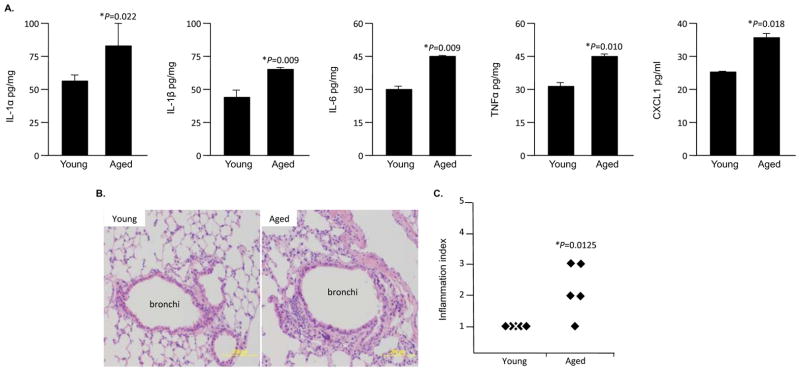
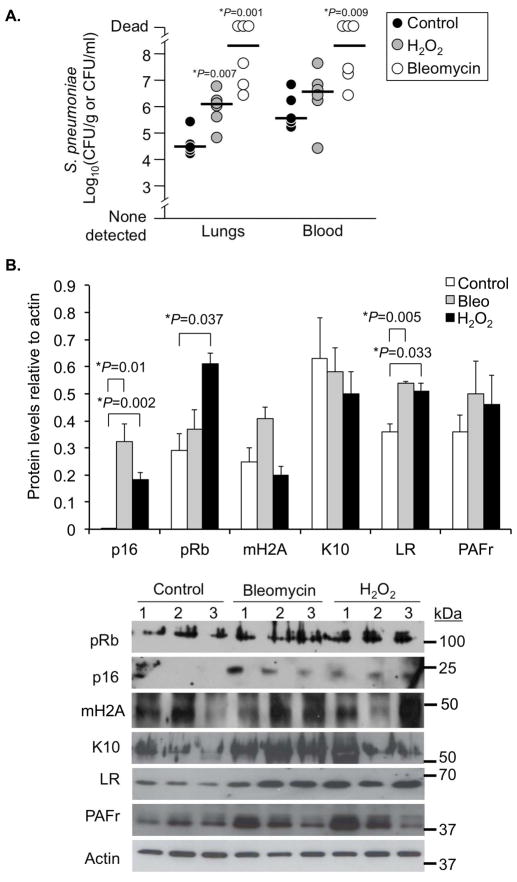
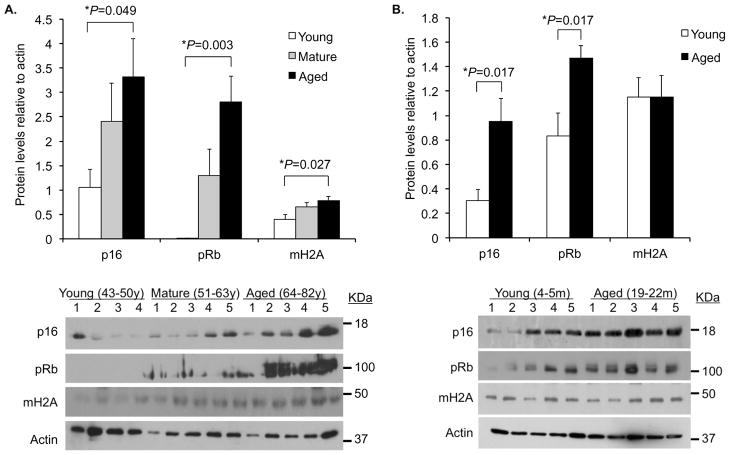
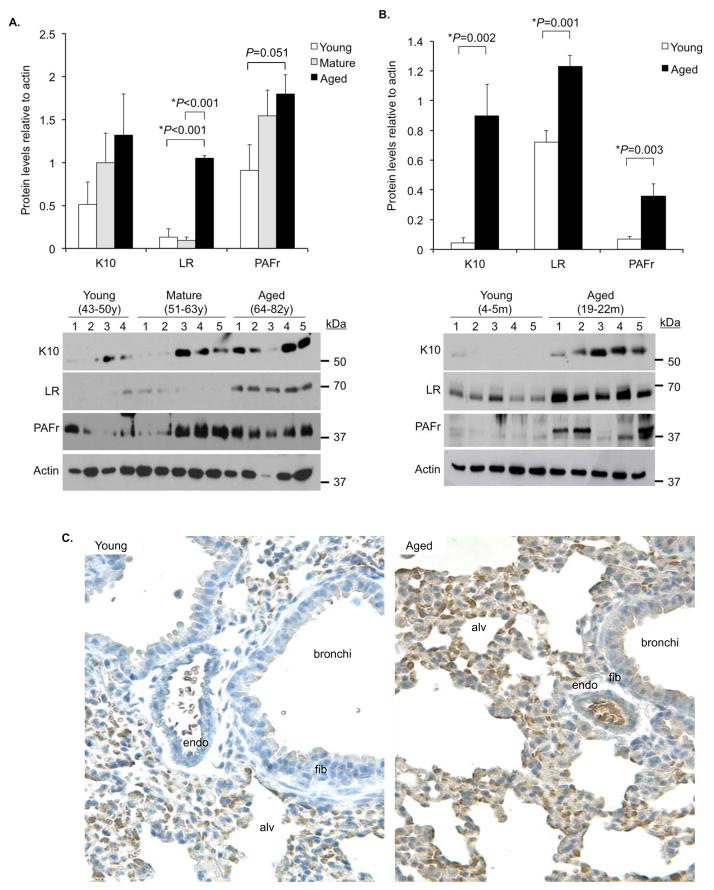
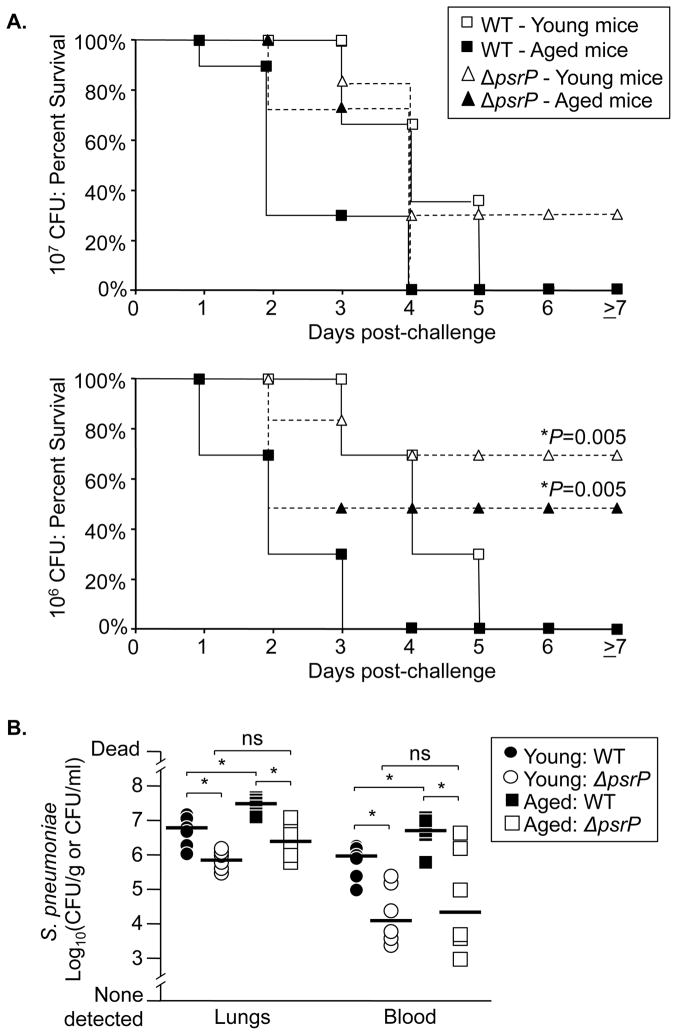
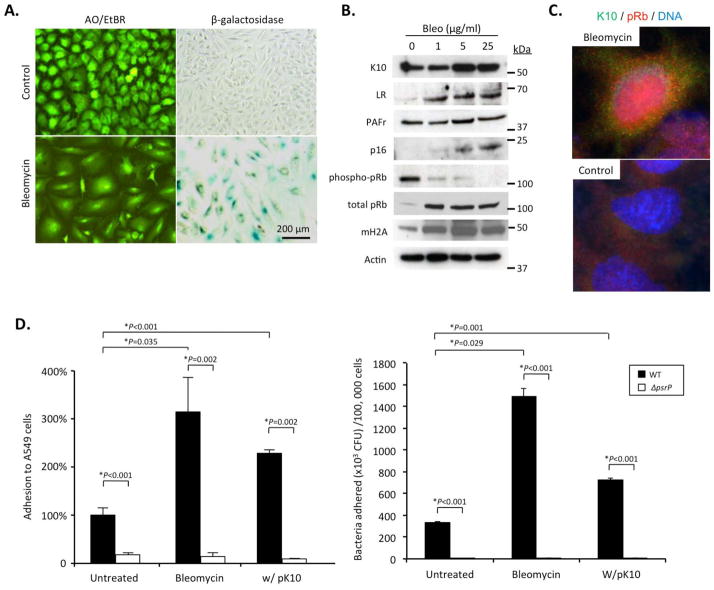
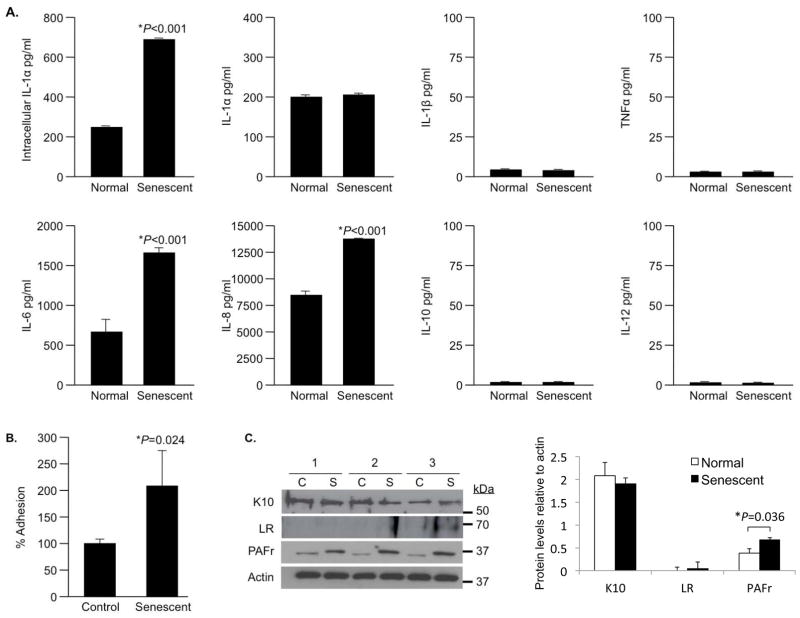
Cellular senescence is an age-associated phenomenon that promotes tumor invasiveness owing to the secretion of proinflammatory cytokines, proteases, and growth factors. Herein we demonstrate that cellular senescence also potentially increases susceptibility to bacterial pneumonia caused by Streptococcus pneumoniae (the pneumococcus), the leading cause of infectious death in the elderly. Aged mice had increased lung inflammation as determined by cytokine analysis and histopathology of lung sections. Immunoblotting for p16, pRb, and mH2A showed that elderly humans and aged mice had increased levels of these senescence markers in their lungs vs. young controls. Keratin 10 (K10), laminin receptor (LR), and platelet-activating factor receptor (PAFr), host proteins known to be co-opted for bacterial adhesion, were also increased. Aged mice were found to be highly susceptible to pneumococcal challenge in a PsrP, the pneumococcal adhesin that binds K10, dependent manner. In vitro senescent A549 lung epithelial cells had elevated K10 and LR protein levels and were up to 5-fold more permissive for bacterial adhesion. Additionally, exposure of normal cells to conditioned media from senescent cells doubled PAFr levels and pneumococcal adherence. Genotoxic stress induced by bleomycin and oxidative stress enhanced susceptibility of young mice to pneumonia and was positively correlated with enhanced p16, inflammation, and LR levels. These findings suggest that cellular senescence facilitates bacterial adhesion to cells in the lungs and provides an additional molecular mechanism for the increased incidence of community-acquired pneumonia in the elderly. This study is the first to suggest a second negative consequence for the senescence-associated secretory phenotype.
细胞衰老(cellular senescence)是一种与年龄相关的现象,它会通过分泌促炎细胞因子、蛋白酶和生长因子来促进肿瘤的侵袭性。本文中我们证明,细胞衰老也可能增加老年人对肺炎链球菌(肺炎球菌)引起的细菌性肺炎的易感性,肺炎链球菌是导致老年人感染性死亡的主要原因。通过细胞因子分析和肺组织切片的组织病理学检查,发现老年小鼠的肺部炎症增加。免疫印迹法检测 p16、pRb 和 mH2A 表明,与年轻对照组相比,老年人和老年小鼠的肺部衰老标志物水平升高。角蛋白 10(K10)、层粘连蛋白受体(LR)和血小板激活因子受体(PAFr)等宿主蛋白也被发现增加,这些蛋白已知被细菌用于黏附。研究发现,在依赖于肺炎球菌黏附素 PsrP 的情况下,年老小鼠对肺炎球菌的易感性显著增加。体外衰老的 A549 肺上皮细胞中 K10 和 LR 蛋白水平升高,对细菌黏附的允许性增加了 5 倍。此外,将正常细胞暴露于衰老细胞的条件培养基中,PAFr 水平和肺炎球菌黏附性增加了一倍。博来霉素引起的遗传毒性应激和氧化应激增强了年轻小鼠患肺炎的易感性,与 p16、炎症和 LR 水平的增强呈正相关。这些发现表明,细胞衰老促进了细菌与肺部细胞的黏附,并为老年人社区获得性肺炎发病率增加提供了另一个分子机制。本研究首次提出了衰老相关分泌表型的第二个负面影响。