University Lyon 1, INRA UMR 754, Retrovirus and Comparative Pathology, Lyon, France.
PLoS One. 2011;6(5):e18205. doi: 10.1371/journal.pone.0018205. Epub 2011 May 26.
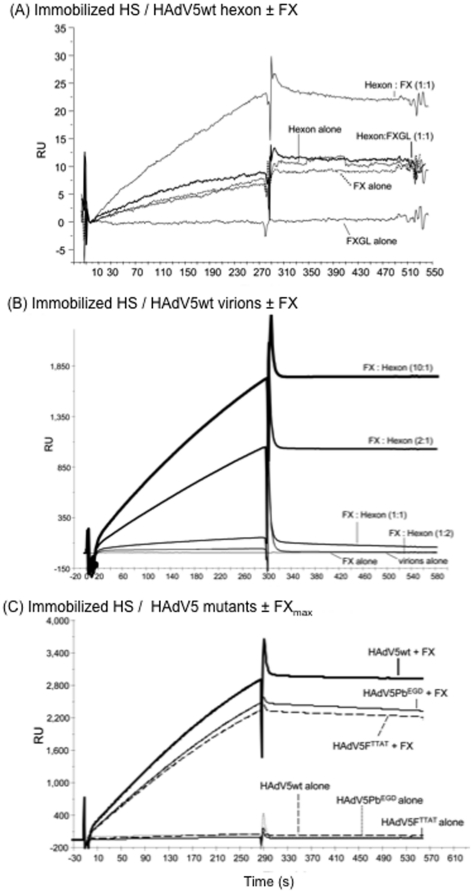
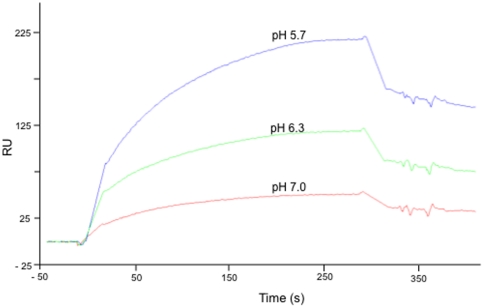
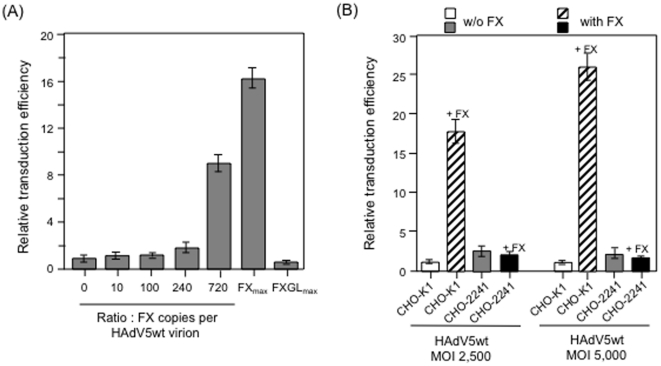
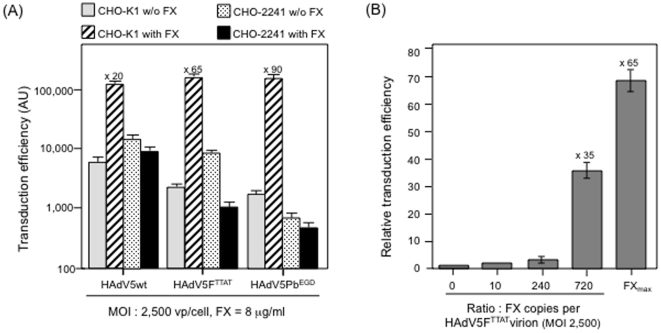
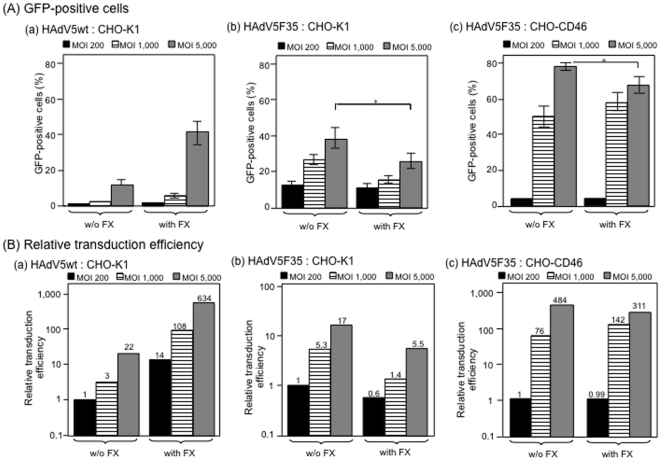
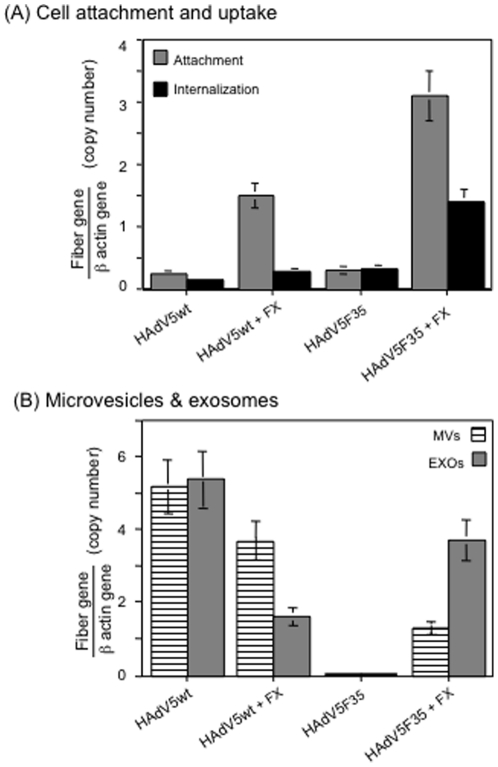
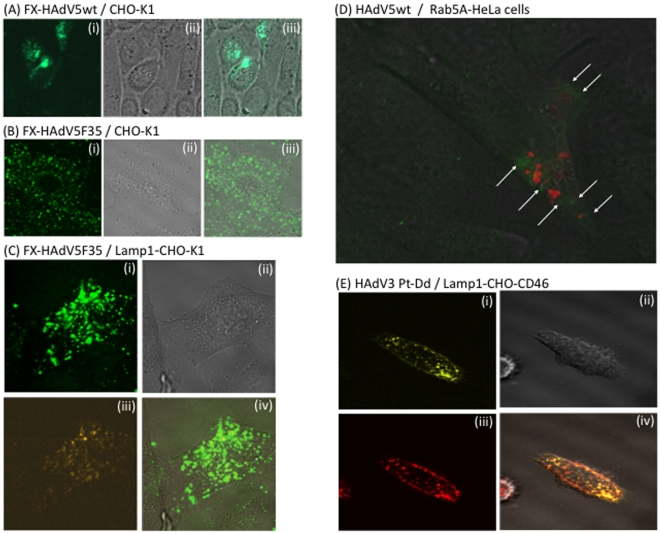
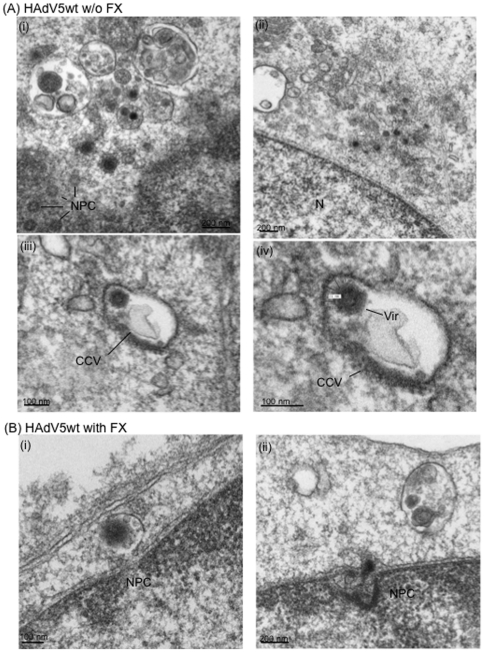
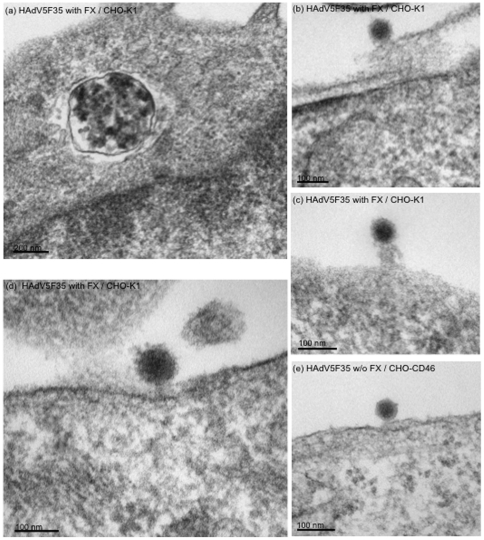
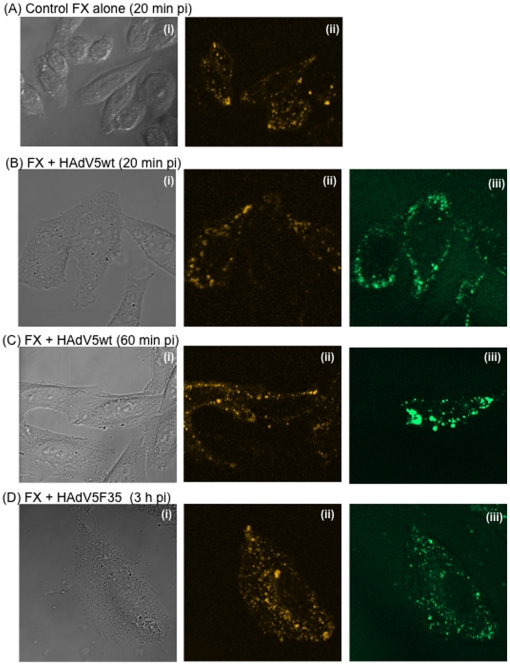
Human adenovirus serotype 5 (HAdV5)-based vectors administered intravenously accumulate in the liver as the result of their direct binding to blood coagulation factor X (FX) and subsequent interaction of the FX-HAdV5 complex with heparan sulfate proteoglycan (HSPG) at the surface of liver cells. Intriguingly, the serotype 35 fiber-pseudotyped vector HAdV5F35 has liver transduction efficiencies 4-logs lower than HAdV5, even though both vectors carry the same hexon capsomeres. In order to reconcile this apparent paradox, we investigated the possible role of other viral capsid proteins on the FX/HSPG-mediated cellular uptake of HAdV5-based vectors. Using CAR- and CD46-negative CHO cells varying in HSPG expression, we confirmed that FX bound to serotype 5 hexon protein and to HAdV5 and HAdV5F35 virions via its Gla-domain, and enhanced the binding of both vectors to surface-immobilized hypersulfated heparin and cellular HSPG. Using penton mutants, we found that the positive effect of FX on HAdV5 binding to HSPG and cell transduction did not depend on the penton base RGD and fiber shaft KKTK motifs. However, we found that FX had no enhancing effect on the HAdV5F35-mediated cell transduction, but a negative effect which did not involve the cell attachment or endocytic step, but the intracellular trafficking and nuclear import of the FX-HAdV5F35 complex. By cellular imaging, HAdV5F35 particles were observed to accumulate in the late endosomal compartment, and were released in significant amounts into the extracellular medium via exocytosis. We showed that the stability of serotype 5 hexon:FX interaction was higher at low pH compared to neutral pH, which could account for the retention of FX-HAdV5F35 complexes in the late endosomes. Our results suggested that, despite the high affinity interaction of hexon capsomeres to FX and cell surface HSPG, the adenoviral fiber acted as the dominant determinant of the internalization and trafficking pathway of HAdV5-based vectors.
人腺病毒 5 型(HAdV5)静脉内给药后,由于其直接与凝血因子 X(FX)结合,以及随后 FX-HAdV5 复合物与肝细胞表面的硫酸乙酰肝素蛋白聚糖(HSPG)相互作用,而在肝脏中积累。有趣的是,纤维假型化的血清型 35 载体 HAdV5F35 的肝脏转导效率比 HAdV5 低 4 个对数级,尽管这两种载体都携带相同的五邻体衣壳。为了解决这一明显的悖论,我们研究了其他病毒衣壳蛋白在 HAdV5 载体的 FX/HSPG 介导的细胞摄取中的可能作用。使用 CAR 和 CD46 阴性的 CHO 细胞,这些细胞的 HSPG 表达不同,我们证实 FX 通过其 Gla 结构域与血清型 5 五邻体蛋白以及 HAdV5 和 HAdV5F35 病毒颗粒结合,并增强了两种载体与表面固定的高硫酸肝素和细胞 HSPG 的结合。使用五邻体突变体,我们发现 FX 对 HAdV5 与 HSPG 结合和细胞转导的增强作用不依赖于五邻体基底 RGD 和纤维轴 KKTK 基序。然而,我们发现 FX 对 HAdV5F35 介导的细胞转导没有增强作用,但有一个负作用,该作用不涉及细胞附着或内吞步骤,而是 FX-HAdV5F35 复合物的细胞内运输和核内导入。通过细胞成像,观察到 HAdV5F35 颗粒在晚期内体隔室中积累,并通过胞吐作用大量释放到细胞外培养基中。我们表明,与中性 pH 相比,血清型 5 五邻体:FX 相互作用在低 pH 下更稳定,这可以解释为什么 FX-HAdV5F35 复合物在晚期内体中保留。我们的结果表明,尽管五邻体衣壳与 FX 和细胞表面 HSPG 具有高亲和力相互作用,但腺病毒纤维是 HAdV5 载体内化和运输途径的主要决定因素。