Department of Disease and Stress Biology, John Innes Centre, Colney Lane, Norwich, NR4 7UH, UK.
BMC Plant Biol. 2011 Jun 3;11:100. doi: 10.1186/1471-2229-11-100.
Fusarium species cause Fusarium head blight (FHB) and other important diseases of cereals. The causal agents produce trichothecene mycotoxins such as deoxynivalenol (DON). The dicotyledonous model species Arabidopsis thaliana has been used to study Fusarium-host interactions but it is not ideal for model-to-crop translation. Brachypodium distachyon (Bd) has been proposed as a new monocotyledonous model species for functional genomic studies in grass species. This study aims to assess the interaction between the most prevalent FHB-causing Fusarium species and Bd in order to develop and exploit Bd as a genetic model for FHB and other Fusarium diseases of wheat.
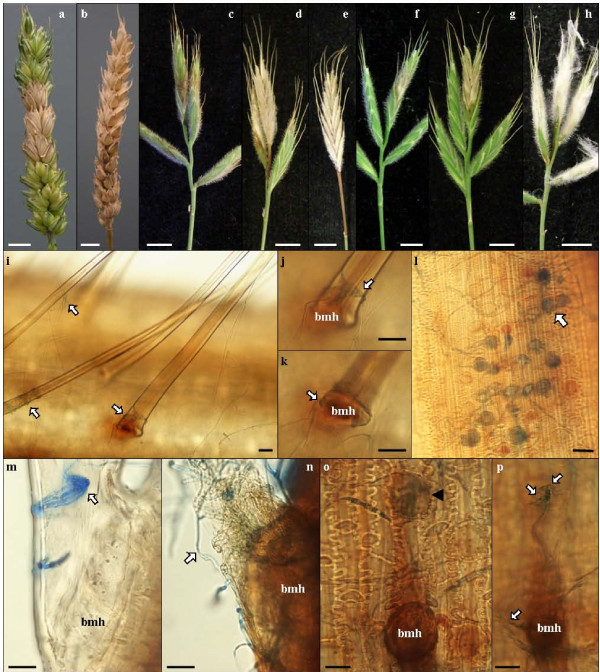
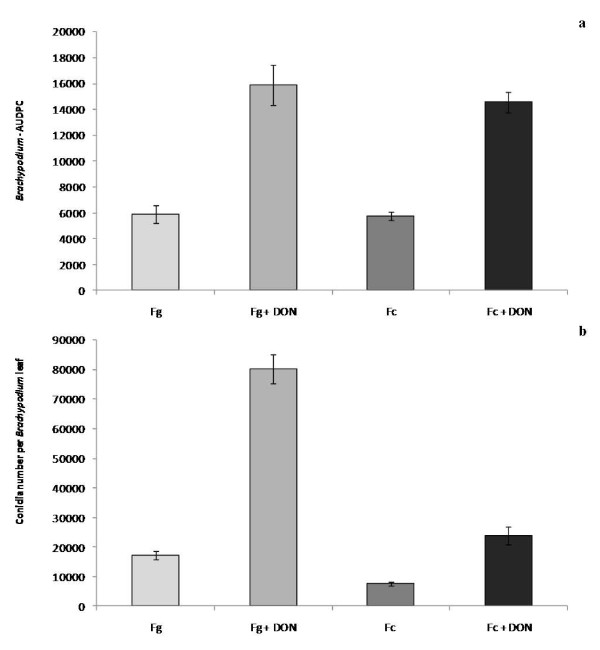
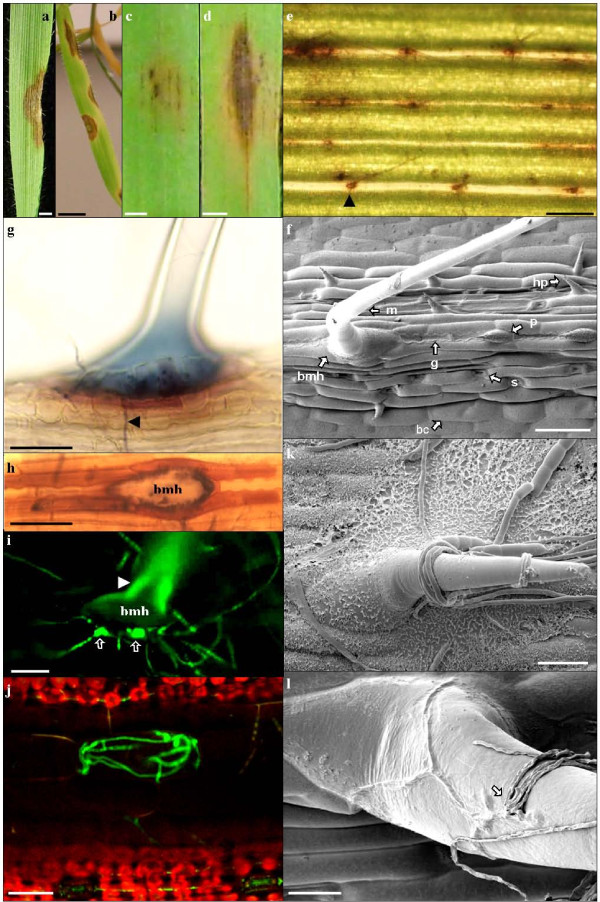
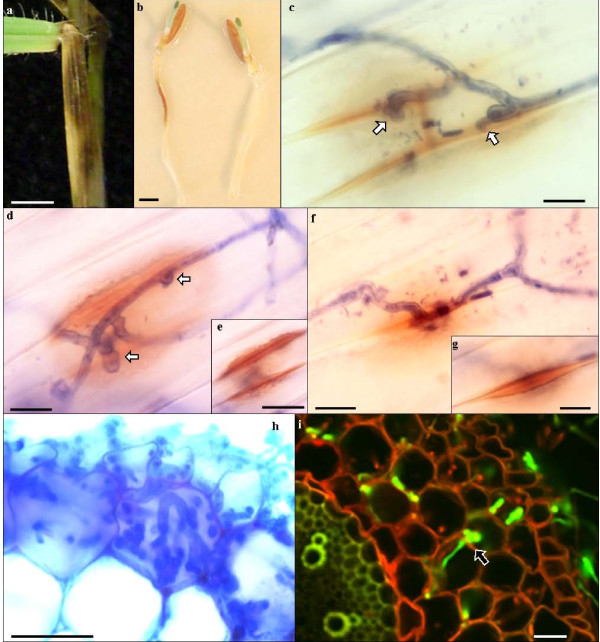
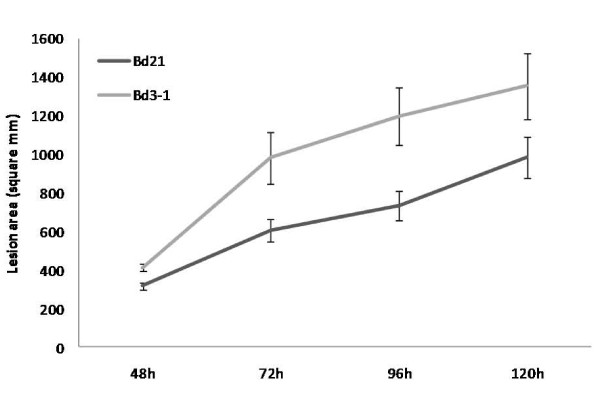
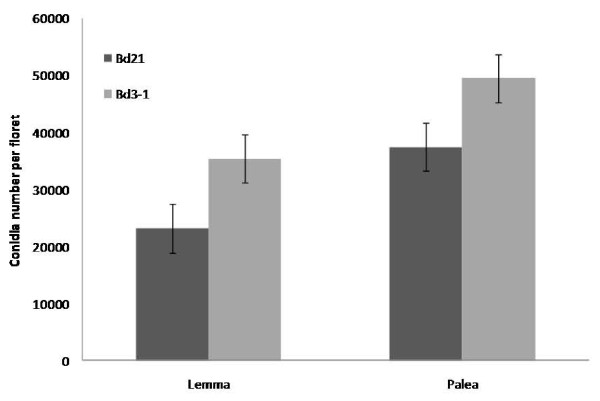
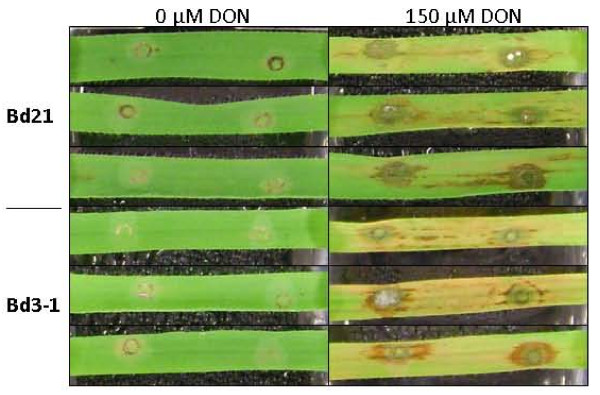
The ability of Fusarium graminearum and Fusarium culmorum to infect a range of Bd tissues was examined in various bioassays which showed that both species can infect all Bd tissues examined, including intact foliar tissues. DON accumulated in infected spike tissues at levels similar to those of infected wheat spikes. Histological studies revealed details of infection, colonisation and host response and indicate that hair cells are important sites of infection. Susceptibility to Fusarium and DON was assessed in two Bd ecotypes and revealed variation in resistance between ecotypes.
Bd exhibits characteristics of susceptibility highly similar to those of wheat, including susceptibility to spread of disease in the spikelets. Bd is the first reported plant species to allow successful infection on intact foliar tissues by FHB-causing Fusarium species. DON appears to function as a virulence factor in Bd as it does in wheat. Bd is proposed as a valuable model for undertaking studies of Fusarium head blight and other Fusarium diseases of wheat.
镰刀菌属物种引起镰孢菌头枯病(FHB)和其他谷物的重要病害。病原菌产生的交链孢霉毒素,如脱氧雪腐镰刀菌烯醇(DON)。双子叶模式物种拟南芥已被用于研究镰刀菌与宿主的相互作用,但它并不理想,无法进行模型到作物的转化。短柄草(Brachypodium distachyon,Bd)已被提议作为新的单子叶模式物种,用于禾本科植物的功能基因组研究。本研究旨在评估最常见的引起 FHB 的镰刀菌物种与 Bd 之间的相互作用,以便开发和利用 Bd 作为 FHB 和其他小麦镰刀菌病的遗传模型。
在各种生物测定中,研究了禾谷镰刀菌和尖孢镰刀菌感染 Bd 各种组织的能力,结果表明,这两个物种都可以感染所有检测到的 Bd 组织,包括完整的叶片组织。在感染的穗组织中积累了与感染的小麦穗相似水平的 DON。组织学研究揭示了感染、定殖和宿主反应的细节,并表明毛细胞是感染的重要部位。在两个 Bd 生态型中评估了对镰刀菌和 DON 的敏感性,结果显示生态型之间存在抗性差异。
Bd 表现出与小麦高度相似的易感性特征,包括穗粒中疾病传播的易感性。Bd 是第一个被报道的允许禾谷镰刀菌引起的 FHB 物种在完整的叶片组织上成功感染的植物物种。DON 似乎在 Bd 中像在小麦中一样作为一个毒力因子发挥作用。Bd 被提议作为研究 FHB 和其他小麦镰刀菌病的有价值的模型。