State Key Laboratory of Infectious Disease Diagnosis and Treatment, First Affiliated Hospital, College of Medicine, Zhejiang University, Zhejiang, China.
Virol J. 2011 Jun 5;8:274. doi: 10.1186/1743-422X-8-274.
Function exertion of specific proteins are key factors in disease progression, thus the systematical identification of those specific proteins is a prerequisite to understand various diseases. Though many proteins have been verified to impact on hepatitis, no systematical protein screening has been documented to hepatitis B virus (HBV) induced hepatitis, hindering the comprehensive understanding to this severe disease.
To identify the major proteins in the progression of HBV infection from mild stage to severe stage.
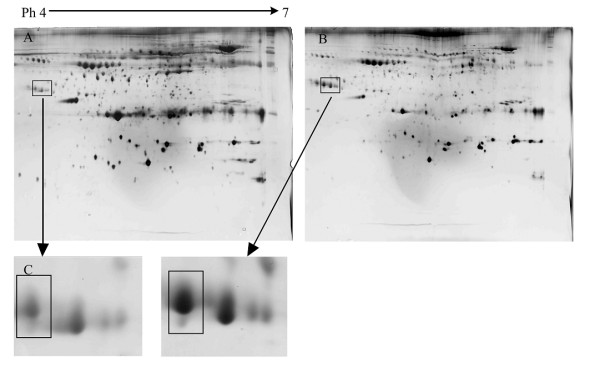
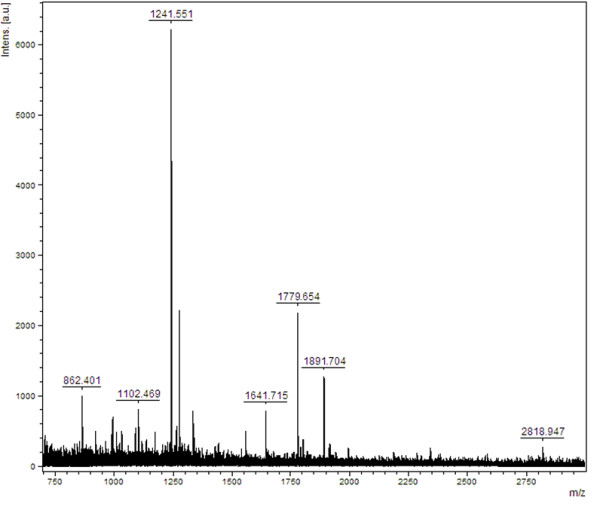
We performed an integrated strategy by combining two-dimensional electrophoresis (2-DE), peptide mass fingerprinting (PMF) analysis, and tissue microarray techniques to screen the functional proteins and detect the localization of those proteins.
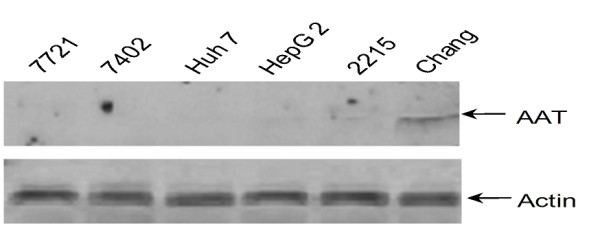
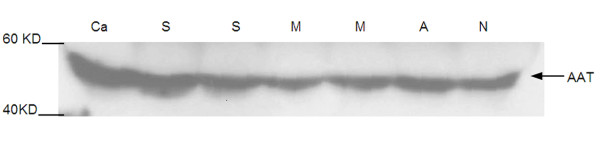
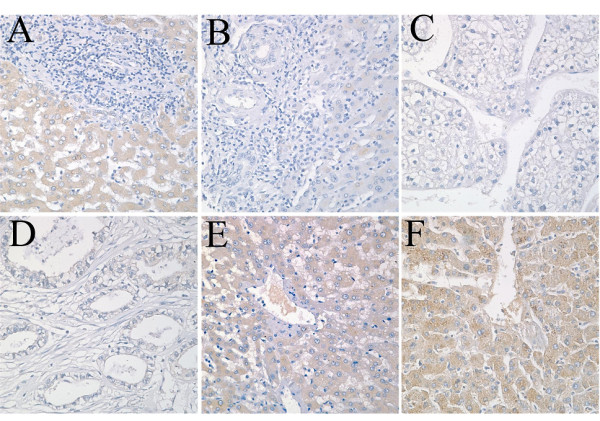
Interestingly, MS/MS identification revealed the expression level of alpha-1 antitrypsin (AAT) was significantly elevated in serum samples from patients with severe chronic hepatitis. Immunoblotting with a specific AAT antibody confirmed that AAT is highly expressed in serum samples from patients with hepatic carcinoma and severe chronic hepatitis. Furthermore, we observed that AAT is with highest expression in normal tissue and cells, but lowest in hepatic carcinoma and severe chronic hepatitis tissues and cells, suggesting the specific secretion of AAT from tissues and cells to serum.
These results suggest the possibility of AAT as a potential biomarker for hepatitis B in diagnosis.
特定蛋白质的功能发挥是疾病进展的关键因素,因此系统地识别这些特定蛋白质是理解各种疾病的前提。尽管已经验证了许多蛋白质对肝炎有影响,但尚未有针对乙型肝炎病毒(HBV)引起的肝炎的系统蛋白质筛选,这阻碍了对这种严重疾病的全面了解。
从轻度阶段到重度阶段,鉴定 HBV 感染进展过程中的主要蛋白质。
我们采用了一种整合策略,结合二维电泳(2-DE)、肽质量指纹图谱(PMF)分析和组织微阵列技术,筛选功能蛋白质并检测这些蛋白质的定位。
有趣的是,MS/MS 鉴定表明,在患有严重慢性肝炎的患者血清样本中,α-1 抗胰蛋白酶(AAT)的表达水平显著升高。用特异性 AAT 抗体进行免疫印迹证实,AAT 在肝癌和严重慢性肝炎患者的血清样本中高度表达。此外,我们观察到 AAT 在正常组织和细胞中表达最高,而在肝癌和严重慢性肝炎组织和细胞中表达最低,提示 AAT 从组织和细胞特异性分泌到血清中。
这些结果表明 AAT 作为乙型肝炎诊断潜在生物标志物的可能性。