Department of Internal Medicine, Roy J. and Lucille A. Carver College of Medicine, The University of Iowa, Iowa City, IA 52242, USA.
Cell Metab. 2011 Jun 8;13(6):627-38. doi: 10.1016/j.cmet.2011.03.020.
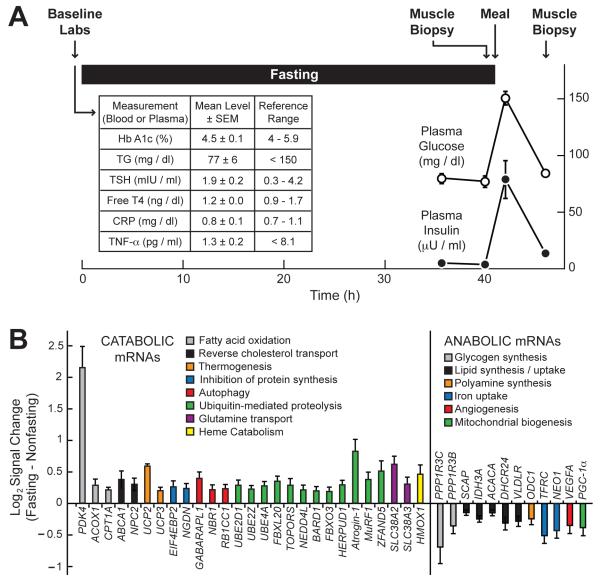
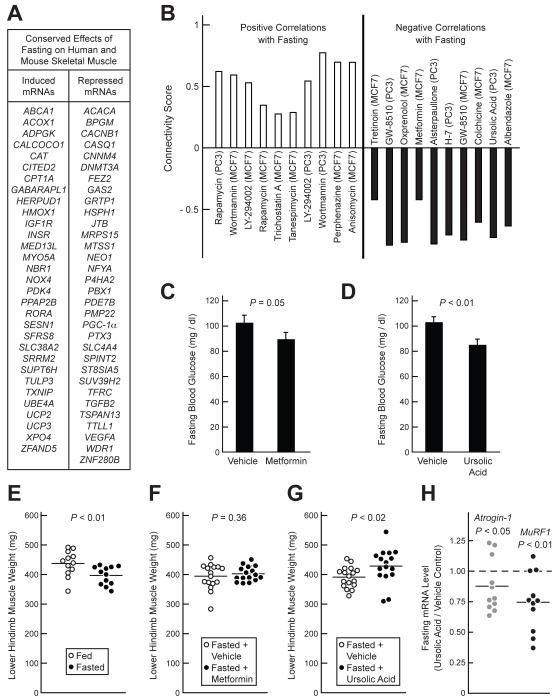
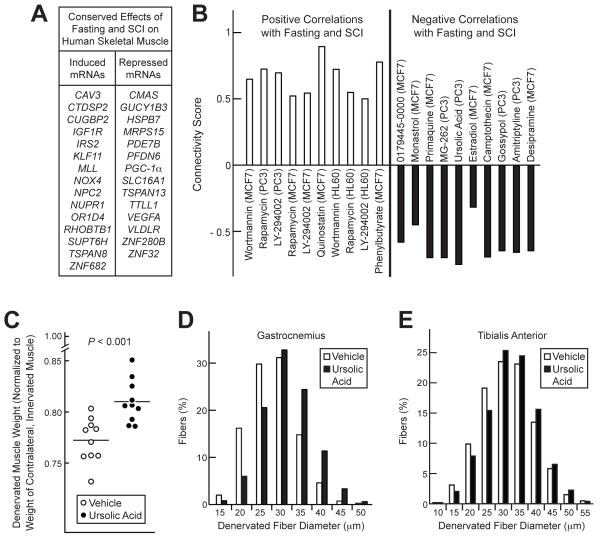
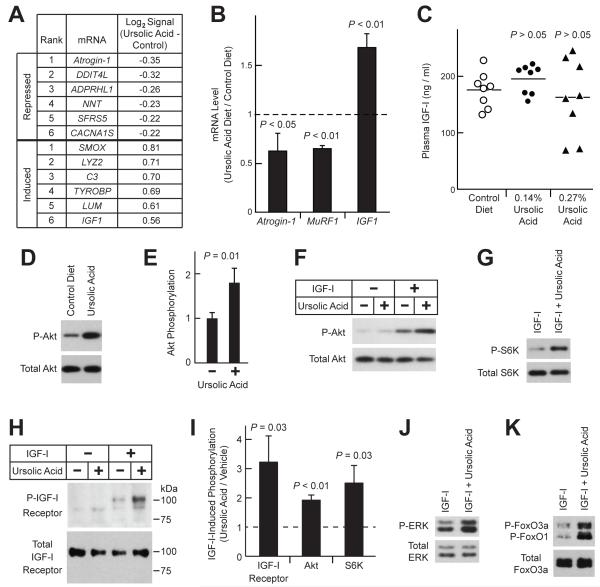
Skeletal muscle atrophy is a common and debilitating condition that lacks a pharmacologic therapy. To develop a potential therapy, we identified 63 mRNAs that were regulated by fasting in both human and mouse muscle, and 29 mRNAs that were regulated by both fasting and spinal cord injury in human muscle. We used these two unbiased mRNA expression signatures of muscle atrophy to query the Connectivity Map, which singled out ursolic acid as a compound whose signature was opposite to those of atrophy-inducing stresses. A natural compound enriched in apples, ursolic acid reduced muscle atrophy and stimulated muscle hypertrophy in mice. It did so by enhancing skeletal muscle insulin/IGF-I signaling and inhibiting atrophy-associated skeletal muscle mRNA expression. Importantly, ursolic acid's effects on muscle were accompanied by reductions in adiposity, fasting blood glucose, and plasma cholesterol and triglycerides. These findings identify a potential therapy for muscle atrophy and perhaps other metabolic diseases.
骨骼肌萎缩是一种常见且衰弱的病症,目前缺乏药物治疗。为了开发潜在的治疗方法,我们鉴定了在人类和小鼠肌肉中受禁食调控的 63 个 mRNAs,以及在人类肌肉中同时受禁食和脊髓损伤调控的 29 个 mRNAs。我们使用这两个非偏见的肌肉萎缩 mRNA 表达特征来查询连接图谱,图谱中单独鉴定出熊果酸是一种与萎缩诱导应激相反特征的化合物。熊果酸是一种在苹果中富集的天然化合物,可减少小鼠的肌肉萎缩并刺激肌肉肥大。它通过增强骨骼肌胰岛素/IGF-I 信号传导并抑制与萎缩相关的骨骼肌 mRNA 表达来实现这一点。重要的是,熊果酸对肌肉的作用伴随着脂肪减少、空腹血糖以及血浆胆固醇和甘油三酯的降低。这些发现为肌肉萎缩以及其他代谢疾病的潜在治疗方法提供了依据。