Research Department, Centre for Military Medicine, P,O, Box 50, FIN-00301 Helsinki, Finland.
BMC Musculoskelet Disord. 2011 Jun 6;12:128. doi: 10.1186/1471-2474-12-128.
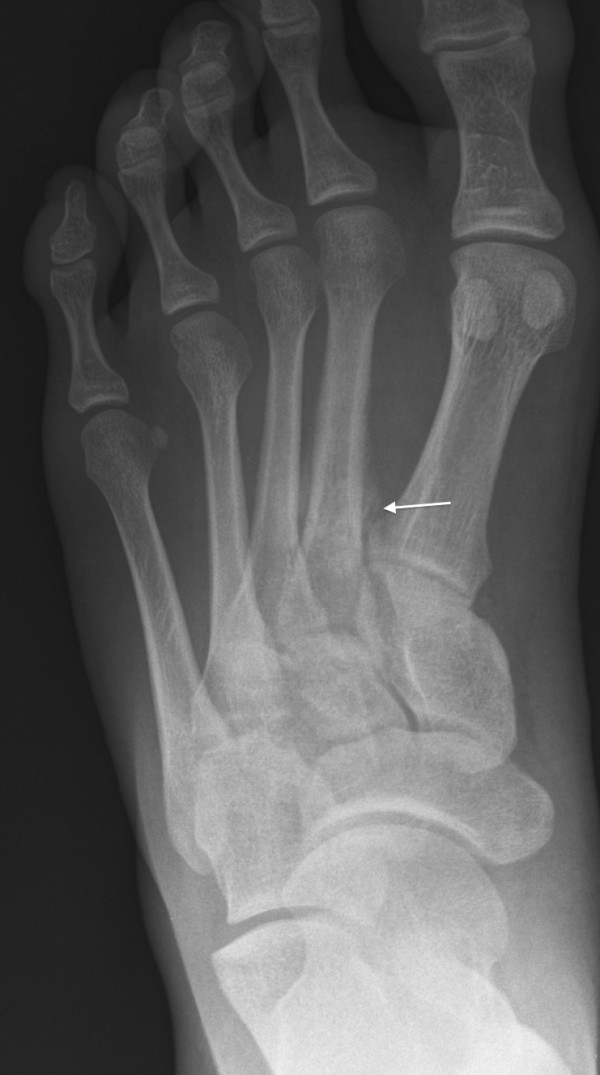
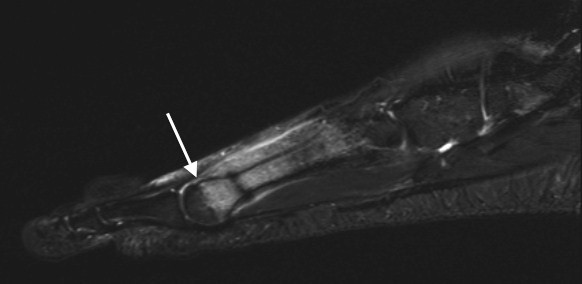
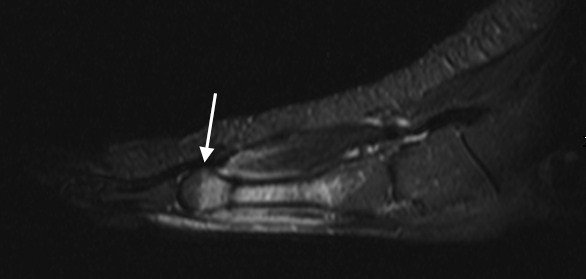
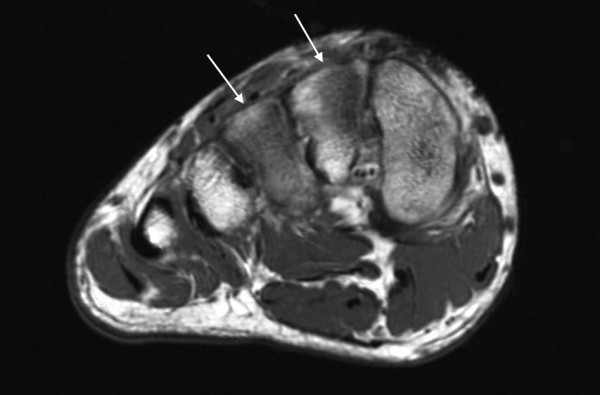
Bone stress injuries are common in athletes and military recruits. Only a minority of bone stress changes are available on plain radiographs. Acute bone stress is often visible on MRI as bone marrow edema, which is also seen in many other disease processes such as malignancies, inflammatory conditions and infections. The purpose of this study was to investigate the ability of radiographs, 1.5T and 3T MRI to identify acute bone marrow changes in the foot.
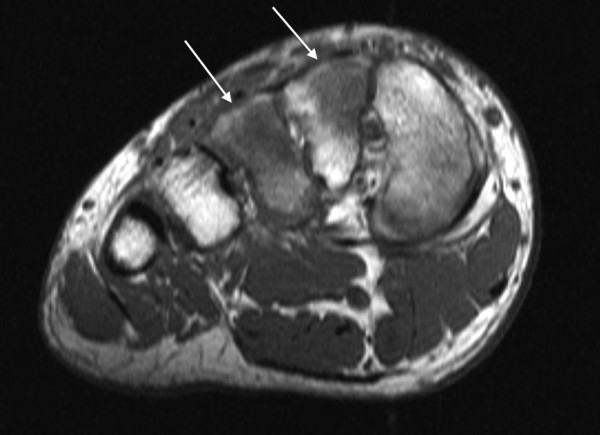
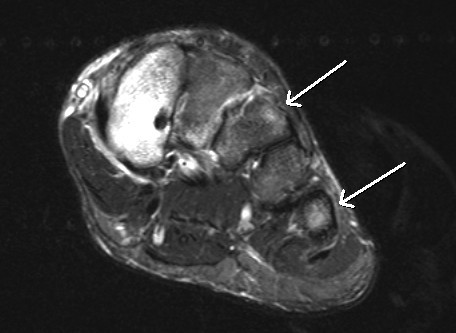
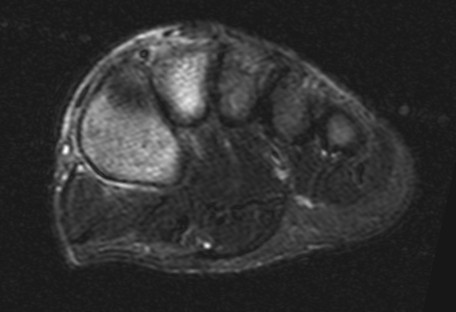
Ten patients with 12 stress fractures seen on plain radiographs underwent MRI using 1.5T and 3T scanners. T1 FSE and STIR axial, sagittal, and coronal view sequences were obtained. Two musculoskeletal radiologists interpreted the images independently and by consensus in case of disagreement.
Of the 63 acute bone stress changes seen on 3T images, 61 were also seen on 1.5T images. The sensitivity of 1.5T MRI was 97% (95% CI: 89%-99%) compared with 3T. The 3T MRI images where, therefore, at least equally sensitive to 1.5T scanners in detection of bone marrow edema. On T1-weighted sequences, 3T images were slightly superior to 1.5T images in visualizing the demarcation of the edema and bone trabeculae. The kappa-value for inter-observer variability was 0.86 in the MRI indicating substantial interobserver agreement.
Owing to slightly better resolution of 3T images, edema characterization is easier, which might aid in the differential diagnosis of the bone marrow edema. There was, however, no noteworthy difference in the sensitivity of the 1.5T and 3T images to bone marrow edema. Routine identification of acute bone stress changes and suspected stress injuries can, therefore, be made with 1.5T field strength.
骨应力损伤在运动员和新兵中很常见。只有少数骨应力变化可在普通 X 光片上看到。急性骨应力在 MRI 上通常表现为骨髓水肿,这种情况也可见于许多其他疾病过程,如恶性肿瘤、炎症性疾病和感染。本研究旨在探讨 X 线、1.5T 和 3T MRI 识别足部急性骨髓变化的能力。
10 例在普通 X 光片上发现的 12 例应力性骨折患者接受了 1.5T 和 3T 扫描仪的 MRI 检查。获得了 T1 FSE 和 STIR 轴位、矢状位和冠状位图像。两位肌肉骨骼放射科医生独立解读图像,如果意见不一致,则通过共识进行解读。
在 3T 图像上看到的 63 个急性骨应力变化中,有 61 个也在 1.5T 图像上看到。1.5T MRI 的敏感性为 97%(95%CI:89%-99%),与 3T 相比。因此,在检测骨髓水肿方面,3T MRI 图像与 1.5T 扫描仪的敏感性至少相当。在 T1 加权序列上,3T 图像在显示水肿和骨小梁的边界方面略优于 1.5T 图像。MRI 中观察者间变异的 Kappa 值为 0.86,表明观察者间存在实质性一致性。
由于 3T 图像的分辨率略高,因此更容易对水肿进行特征描述,这可能有助于骨髓水肿的鉴别诊断。然而,1.5T 和 3T 图像对骨髓水肿的敏感性没有明显差异。因此,可以使用 1.5T 场强来常规识别急性骨应力变化和疑似应力性损伤。