Transfusion Microbiology Research and Development, National Transfusion Microbiology Laboratories, National Health Service Blood and Transplant, Colindale, London, United Kingdom.
PLoS One. 2011;6(5):e19953. doi: 10.1371/journal.pone.0019953. Epub 2011 May 25.
XMRV is the most recently described retrovirus to be found in Man, firstly in patients with prostate cancer (PC) and secondly in 67% of patients with chronic fatigue syndrome (CFS) and 3.7% of controls. Both disease associations remain contentious. Indeed, a recent publication has concluded that "XMRV is unlikely to be a human pathogen". Subsequently related but different polytropic MLV (pMLV) sequences were also reported from the blood of 86.5% of patients with CFS. and 6.8% of controls. Consequently we decided to investigate blood donors for evidence of XMRV/pMLV.
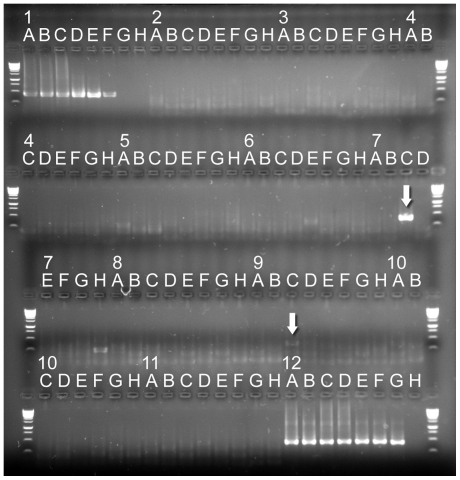
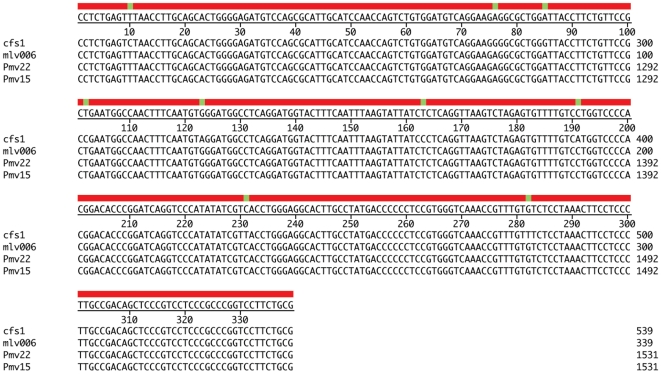
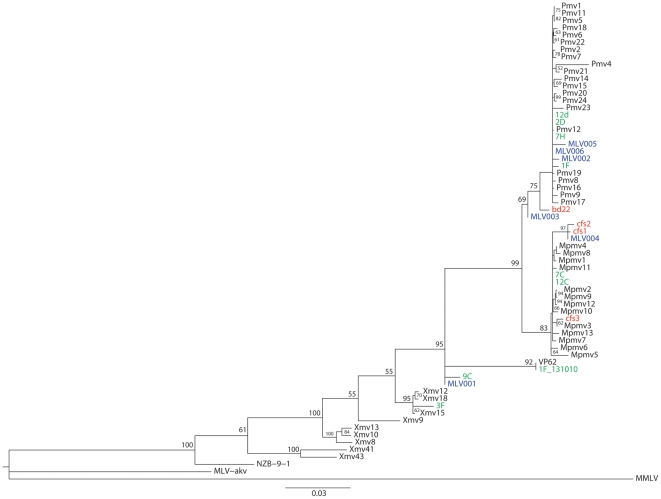
METHODOLOGY/PRINCIPAL FINDINGS: Testing of cDNA prepared from the whole blood of 80 random blood donors, generated gag PCR signals from two samples (7C and 9C). These had previously tested negative for XMRV by two other PCR based techniques. To test whether the PCR mix was the source of these sequences 88 replicates of water were amplified using Invitrogen Platinum Taq (IPT) and Applied Biosystems Taq Gold LD (ABTG). Four gag sequences (2D, 3F, 7H, 12C) were generated with the IPT, a further sequence (12D) by ABTG re-amplification of an IPT first round product. Sequence comparisons revealed remarkable similarities between these sequences, endogeous MLVs and the pMLV sequences reported in patients with CFS.
CONCLUSIONS/SIGNIFICANCE: Methodologies for the detection of viruses highly homologous to endogenous murine viruses require special caution as the very reagents used in the detection process can be a source of contamination and at a level where it is not immediately apparent. It is suggested that such contamination is likely to explain the apparent presence of pMLV in CFS.
XMRV 是最近在人类中发现的逆转录病毒,首先在前列腺癌 (PC) 患者中发现,其次在 67%的慢性疲劳综合征 (CFS) 患者和 3.7%的对照组中发现。这两种疾病的关联仍然存在争议。事实上,最近的一份出版物得出结论,“XMRV 不太可能是人类病原体”。随后,还从 86.5%的 CFS 患者和 6.8%的对照组的血液中报告了相关但不同的多嗜性 MLV (pMLV) 序列。因此,我们决定调查献血者是否有 XMRV/pMLV 的证据。
方法/主要发现:对 80 名随机献血者的全血 cDNA 进行检测,从两个样本(7C 和 9C)中产生 gag PCR 信号。这两个样本之前已经通过另外两种基于 PCR 的技术检测为 XMRV 阴性。为了测试 PCR 混合物是否是这些序列的来源,用 Invitrogen Platinum Taq (IPT) 和 Applied Biosystems Taq Gold LD (ABTG) 对 88 个重复的水进行扩增。IPT 产生了 4 个 gag 序列(2D、3F、7H、12C),ABTG 通过重新扩增 IPT 第一轮产物生成了另一个序列(12D)。序列比较显示,这些序列与内源性 MLV 和 CFS 患者报告的 pMLV 序列之间存在显著相似性。
结论/意义:检测与内源性鼠病毒高度同源的病毒的方法需要特别小心,因为检测过程中使用的试剂本身可能是污染的来源,而且这种污染在短时间内并不明显。有人认为,这种污染很可能解释了 pMLV 在 CFS 中的明显存在。