Centre for Cancer Biology, SA Pathology, Frome Road Adelaide, South Australia 5000, Australia.
Nucleic Acids Res. 2011 Sep 1;39(16):6845-53. doi: 10.1093/nar/gkr330. Epub 2011 Jun 7.
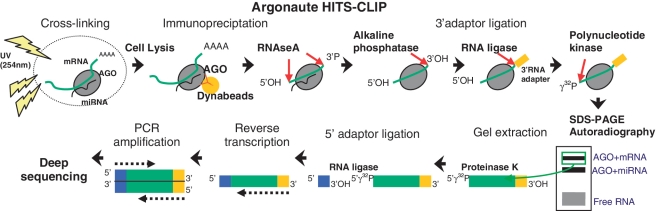
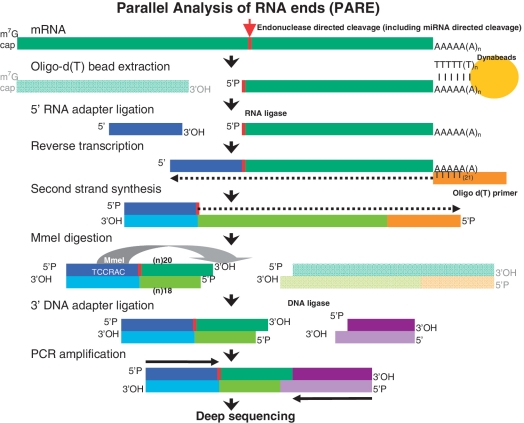
MicroRNAs (miRNAs) are important regulators of eukaryotic gene expression in most biological processes. They act by guiding the RNAi-induced silencing complex (RISC) to partially complementary sequences in target mRNAs to suppress gene expression by a combination of translation inhibition and mRNA decay. The commonly accepted mechanism of miRNA targeting in animals involves an interaction between the 5'-end of the miRNA called the 'seed region' and the 3' untranslated region (3'-UTR) of the mRNA. Many target prediction algorithms are based around such a model, though increasing evidence demonstrates that targeting can also be mediated through sites other than the 3'-UTR and that seed region base pairing is not always required. The power and validity of such in silico data can be therefore hindered by the simplified rules used to represent targeting interactions. Experimentation is essential to identify genuine miRNA targets, however many experimental modalities exist and their limitations need to be understood. This review summarizes and critiques the existing experimental techniques for miRNA target identification.
MicroRNAs (miRNAs) 是真核生物中大多数生物过程中基因表达的重要调控因子。它们通过引导 RNA 诱导的沉默复合物(RISC)与靶 mRNA 中部分互补序列结合,通过翻译抑制和 mRNA 降解的组合来抑制基因表达。动物中 miRNA 靶向的普遍接受的机制涉及 miRNA 的 5'端,称为“种子区”,与 mRNA 的 3'非翻译区(3'-UTR)之间的相互作用。许多靶标预测算法都是基于这样的模型,但越来越多的证据表明,靶标也可以通过 3'-UTR 以外的位点介导,并且种子区碱基配对并不总是必需的。因此,用于表示靶向相互作用的简化规则会限制此类计算机数据的有效性和准确性。实验是识别真正的 miRNA 靶标的必要手段,但是存在许多实验方式,需要了解它们的局限性。这篇综述总结和评价了 miRNA 靶标识别的现有实验技术。