• 文献检索
  • 文档翻译
  • 深度研究
  • 学术资讯
  • Suppr Zotero 插件Zotero 插件
  • 邀请有礼
  • 套餐&价格
  • 历史记录
应用&插件
Suppr Zotero 插件Zotero 插件浏览器插件Mac 客户端Windows 客户端微信小程序
定价
高级版会员购买积分包购买API积分包
服务
文献检索文档翻译深度研究API 文档MCP 服务
关于我们
关于 Suppr公司介绍联系我们用户协议隐私条款
关注我们

Suppr 超能文献

核心技术专利:CN118964589B侵权必究
粤ICP备2023148730 号-1Suppr @ 2026

文献检索

告别复杂PubMed语法,用中文像聊天一样搜索,搜遍4000万医学文献。AI智能推荐,让科研检索更轻松。

立即免费搜索

文件翻译

保留排版,准确专业,支持PDF/Word/PPT等文件格式,支持 12+语言互译。

免费翻译文档

深度研究

AI帮你快速写综述,25分钟生成高质量综述,智能提取关键信息,辅助科研写作。

立即免费体验

自私的大脑:压力与饮食行为

The selfish brain: stress and eating behavior.

作者信息

Peters Achim, Kubera Britta, Hubold Christian, Langemann Dirk

机构信息

Medical Clinic 1, University of Luebeck Luebeck, Germany.

出版信息

Front Neurosci. 2011 May 30;5:74. doi: 10.3389/fnins.2011.00074. eCollection 2011.

DOI:10.3389/fnins.2011.00074
PMID:21660101
原文链接:https://pmc.ncbi.nlm.nih.gov/articles/PMC3105244/
Abstract

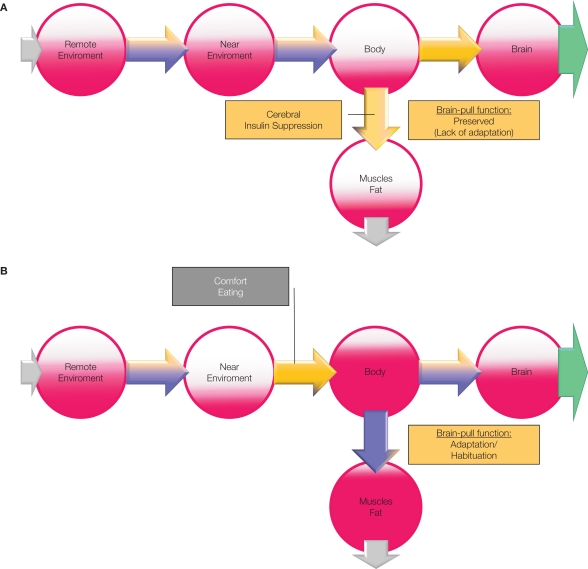
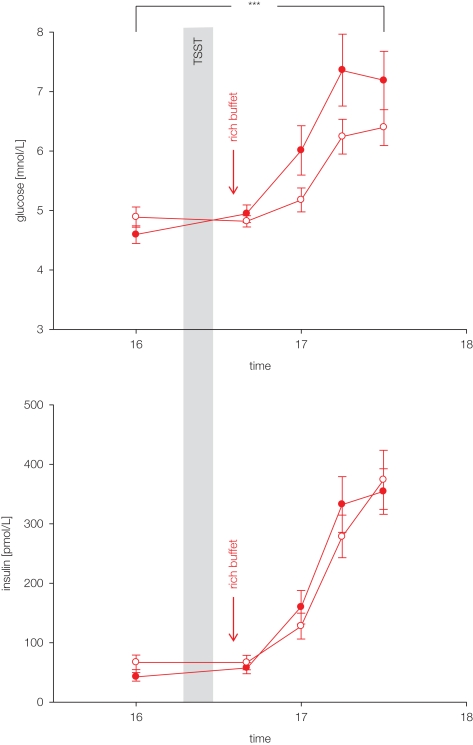
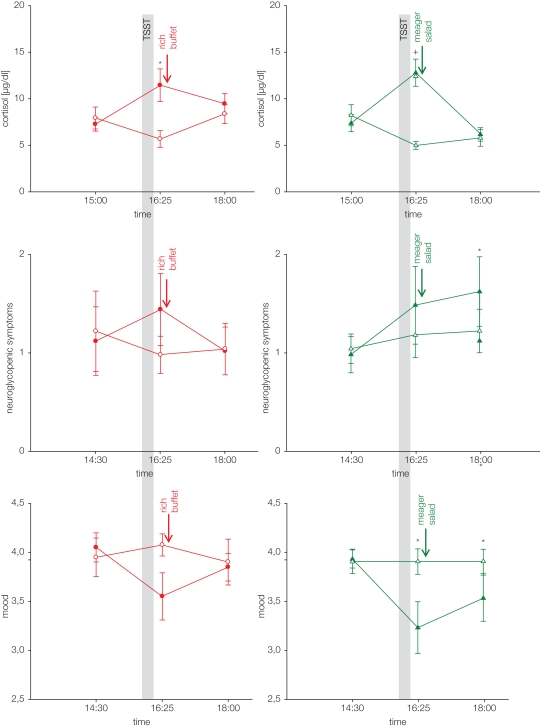
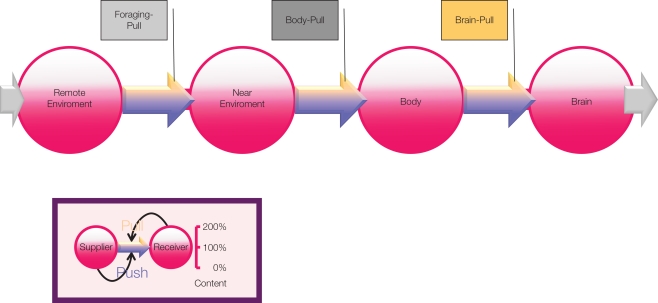
The brain occupies a special hierarchical position in human energy metabolism. If cerebral homeostasis is threatened, the brain behaves in a "selfish" manner by competing for energy resources with the body. Here we present a logistic approach, which is based on the principles of supply and demand known from economics. In this "cerebral supply chain" model, the brain constitutes the final consumer. In order to illustrate the operating mode of the cerebral supply chain, we take experimental data which allow assessing the supply, demand and need of the brain under conditions of psychosocial stress. The experimental results show that the brain under conditions of psychosocial stress actively demands energy from the body, in order to cover its increased energy needs. The data demonstrate that the stressed brain uses a mechanism referred to as "cerebral insulin suppression" to limit glucose fluxes into peripheral tissue (muscle, fat) and to enhance cerebral glucose supply. Furthermore psychosocial stress elicits a marked increase in eating behavior in the post-stress phase. Subjects ingested more carbohydrates without any preference for sweet ingredients. These experimentally observed changes of cerebral demand, supply and need are integrated into a logistic framework describing the supply chain of the selfish brain.

摘要

大脑在人体能量代谢中占据特殊的层级地位。如果大脑的内环境稳态受到威胁,它会通过与身体争夺能量资源的方式表现出“自私”行为。在此,我们提出一种基于经济学中供求原理的逻辑方法。在这个“大脑供应链”模型中,大脑构成最终消费者。为了阐明大脑供应链的运作模式,我们采用了实验数据,这些数据能够评估心理社会压力条件下大脑的供应、需求和需求情况。实验结果表明,处于心理社会压力条件下的大脑会积极地从身体获取能量,以满足其增加的能量需求。数据显示,处于压力下的大脑会利用一种被称为“大脑胰岛素抑制”的机制来限制葡萄糖流入外周组织(肌肉、脂肪),并增加大脑的葡萄糖供应。此外,心理社会压力会在压力后阶段引发进食行为的显著增加。受试者摄入了更多碳水化合物,且对甜味成分没有偏好。这些通过实验观察到的大脑需求、供应和需求的变化被整合到一个描述自私大脑供应链的逻辑框架中。
https://cdn.ncbi.nlm.nih.gov/pmc/blobs/5401/3105244/c0e933c0ca84/fnins-05-00074-g005.jpg
https://cdn.ncbi.nlm.nih.gov/pmc/blobs/5401/3105244/4e8bb85e6abe/fnins-05-00074-g001.jpg
https://cdn.ncbi.nlm.nih.gov/pmc/blobs/5401/3105244/03582ef53b97/fnins-05-00074-g002.jpg
https://cdn.ncbi.nlm.nih.gov/pmc/blobs/5401/3105244/eaa3805c75fb/fnins-05-00074-g003.jpg
https://cdn.ncbi.nlm.nih.gov/pmc/blobs/5401/3105244/5cb4faba5ef0/fnins-05-00074-g004.jpg
https://cdn.ncbi.nlm.nih.gov/pmc/blobs/5401/3105244/c0e933c0ca84/fnins-05-00074-g005.jpg
https://cdn.ncbi.nlm.nih.gov/pmc/blobs/5401/3105244/4e8bb85e6abe/fnins-05-00074-g001.jpg
https://cdn.ncbi.nlm.nih.gov/pmc/blobs/5401/3105244/03582ef53b97/fnins-05-00074-g002.jpg
https://cdn.ncbi.nlm.nih.gov/pmc/blobs/5401/3105244/eaa3805c75fb/fnins-05-00074-g003.jpg
https://cdn.ncbi.nlm.nih.gov/pmc/blobs/5401/3105244/5cb4faba5ef0/fnins-05-00074-g004.jpg
https://cdn.ncbi.nlm.nih.gov/pmc/blobs/5401/3105244/c0e933c0ca84/fnins-05-00074-g005.jpg

相似文献

1
The selfish brain: stress and eating behavior.自私的大脑:压力与饮食行为
Front Neurosci. 2011 May 30;5:74. doi: 10.3389/fnins.2011.00074. eCollection 2011.
2
The selfish brain: Competition for energy resources.自私的大脑:争夺能源资源。
Am J Hum Biol. 2011 Jan-Feb;23(1):29-34. doi: 10.1002/ajhb.21106.
3
The brain's supply and demand in obesity.肥胖状态下大脑的供需情况
Front Neuroenergetics. 2012 Mar 8;4:4. doi: 10.3389/fnene.2012.00004. eCollection 2012 Jan 10.
4
How the selfish brain organizes its supply and demand.自私的大脑如何组织其供需关系。
Front Neuroenergetics. 2010 Jun 9;2:7. doi: 10.3389/fnene.2010.00007. eCollection 2010.
5
The selfish brain: competition for energy resources.自私的大脑:对能量资源的竞争
Prog Brain Res. 2006;153:129-40. doi: 10.1016/S0079-6123(06)53007-9.
6
Proximal Disruption of Brain Energy Supply Raises Systemic Blood Glucose: A Systematic Review.脑能量供应近端中断会升高全身血糖:一项系统综述。
Front Neurosci. 2021 Jun 24;15:685031. doi: 10.3389/fnins.2021.685031. eCollection 2021.
7
Brain Mass (Energy) Resistant to Hyperglycaemic Oversupply: A Systematic Review.对高血糖过量供应具有抗性的脑质量(能量):一项系统综述。
Front Neurosci. 2021 Nov 4;15:740502. doi: 10.3389/fnins.2021.740502. eCollection 2021.
8
Build-ups in the supply chain of the brain: on the neuroenergetic cause of obesity and type 2 diabetes mellitus.大脑供应链中的堆积物:论肥胖症和2型糖尿病的神经能量成因。
Front Neuroenergetics. 2009 Apr 28;1:2. doi: 10.3389/neuro.14.002.2009. eCollection 2009.
9
The selfish brain: competition for energy resources.自私的大脑:对能量资源的争夺
Neurosci Biobehav Rev. 2004 Apr;28(2):143-80. doi: 10.1016/j.neubiorev.2004.03.002.
10
Selfish brain and selfish immune system interplay: A theoretical framework for metabolic comorbidities of mood disorders.自私的大脑和自私的免疫系统相互作用:情绪障碍代谢共病的理论框架。
Neurosci Biobehav Rev. 2017 Jan;72:43-49. doi: 10.1016/j.neubiorev.2016.11.010. Epub 2016 Nov 18.

引用本文的文献

1
Therapeutic ketogenic diet as treatment for anorexia nervosa.治疗性生酮饮食作为神经性厌食症的治疗方法。
Front Nutr. 2024 Sep 4;11:1392135. doi: 10.3389/fnut.2024.1392135. eCollection 2024.
2
Social Isolation, Brain Food Cue Processing, Eating Behaviors, and Mental Health Symptoms.社交隔离、大脑食物线索加工、饮食行为与心理健康症状。
JAMA Netw Open. 2024 Apr 1;7(4):e244855. doi: 10.1001/jamanetworkopen.2024.4855.
3
Childhood Obesity: A Potential Key Factor in the Development of Glioblastoma Multiforme.儿童肥胖:多形性胶质母细胞瘤发展中的一个潜在关键因素。

本文引用的文献

1
Why doesn't the brain lose weight, when obese people diet?为什么肥胖的人节食时大脑不会减重?
Obes Facts. 2011;4(2):151-7. doi: 10.1159/000327676. Epub 2011 Apr 7.
2
How the selfish brain organizes its supply and demand.自私的大脑如何组织其供需关系。
Front Neuroenergetics. 2010 Jun 9;2:7. doi: 10.3389/fnene.2010.00007. eCollection 2010.
3
Endogenous cannabinoid signaling is essential for stress adaptation.内源性大麻素信号传导对于应激适应至关重要。
Life (Basel). 2022 Oct 21;12(10):1673. doi: 10.3390/life12101673.
4
Brain activations show association with subsequent endocrine responses to oral glucose challenge in a satiation-level dependent manner.大脑激活以饱腹感水平依赖的方式与随后对口服葡萄糖挑战的内分泌反应相关联。
Compr Psychoneuroendocrinol. 2021 Mar 29;6:100055. doi: 10.1016/j.cpnec.2021.100055. eCollection 2021 May.
5
The transition between acute and chronic infections in light of energy control: a mathematical model of energy flow in response to infection.从能量控制的角度看急性感染与慢性感染的转变:能量流对感染反应的数学模型。
J R Soc Interface. 2022 Jun;19(191):20220206. doi: 10.1098/rsif.2022.0206. Epub 2022 Jun 22.
6
Coping Strategies Influence Cardiometabolic Risk Factors in Chronic Psychological Stress: A Post Hoc Analysis of A Randomized Pilot Study.应对策略对慢性心理应激中心血管代谢危险因素的影响:一项随机先导研究的事后分析。
Nutrients. 2021 Dec 24;14(1):77. doi: 10.3390/nu14010077.
7
A mixed methods analysis of environmental and household chaos: considerations for early-childhood obesity research.环境与家庭杂乱的混合方法分析:儿童肥胖研究的相关考虑。
BMC Public Health. 2021 Oct 16;21(1):1867. doi: 10.1186/s12889-021-11936-w.
8
The mediating role of emotional eating in the relationship between perceived stress and dietary intake quality in Hispanic/Latino adolescents.情绪性进食在西班牙裔/拉丁裔青少年感知压力与饮食摄入质量之间的中介作用。
Eat Behav. 2021 Aug;42:101537. doi: 10.1016/j.eatbeh.2021.101537. Epub 2021 Jun 30.
9
The impact of maternal care and blood glucose availability on the cortisol stress response in fasted women.母亲关怀和血糖供应对禁食女性皮质醇应激反应的影响。
J Neural Transm (Vienna). 2021 Sep;128(9):1287-1300. doi: 10.1007/s00702-021-02350-y. Epub 2021 May 12.
10
Single-base-resolution methylome of giant panda's brain, liver and pancreatic tissue.大熊猫脑、肝脏和胰腺组织的单碱基分辨率甲基化组
PeerJ. 2019 Oct 17;7:e7847. doi: 10.7717/peerj.7847. eCollection 2019.
Proc Natl Acad Sci U S A. 2010 May 18;107(20):9406-11. doi: 10.1073/pnas.0914661107. Epub 2010 May 3.
4
Build-ups in the supply chain of the brain: on the neuroenergetic cause of obesity and type 2 diabetes mellitus.大脑供应链中的堆积物:论肥胖症和2型糖尿病的神经能量成因。
Front Neuroenergetics. 2009 Apr 28;1:2. doi: 10.3389/neuro.14.002.2009. eCollection 2009.
5
Postnatal stress produces hyperglycemia in adult rats exposed to hypoxia-ischemia.产后应激会在暴露于缺氧缺血环境的成年大鼠中引发高血糖。
Pediatr Res. 2009 Sep;66(3):278-82. doi: 10.1203/PDR.0b013e3181b1bd1b.
6
Psychosocial stress and change in weight among US adults.美国成年人的心理社会压力与体重变化
Am J Epidemiol. 2009 Jul 15;170(2):181-92. doi: 10.1093/aje/kwp104. Epub 2009 May 22.
7
The development of glucose intolerance after focal cerebral ischemia participates in subsequent neuronal damage.局灶性脑缺血后葡萄糖耐量异常的发展参与了随后的神经元损伤。
Brain Res. 2009 Jul 7;1279:174-81. doi: 10.1016/j.brainres.2009.05.014. Epub 2009 May 13.
8
Acute stress-related changes in eating in the absence of hunger.在无饥饿感时与急性应激相关的饮食变化。
Obesity (Silver Spring). 2009 Jan;17(1):72-7. doi: 10.1038/oby.2008.493. Epub 2008 Nov 6.
9
Metabolism-independent sugar sensing in central orexin neurons.中枢食欲素神经元中不依赖代谢的糖感知
Diabetes. 2008 Oct;57(10):2569-76. doi: 10.2337/db08-0548. Epub 2008 Jun 30.
10
Does sympathoadrenal activity predict changes in body fat? An 18-y follow-up study.交感肾上腺活动能否预测体脂变化?一项18年的随访研究。
Am J Clin Nutr. 2008 Jun;87(6):1596-601. doi: 10.1093/ajcn/87.6.1596.