Sloan-Kettering Institute, Memorial Sloan-Kettering Cancer Center, New York, New York 10065, USA.
J Cell Physiol. 2011 Sep;226(9):2215-21. doi: 10.1002/jcp.22561.
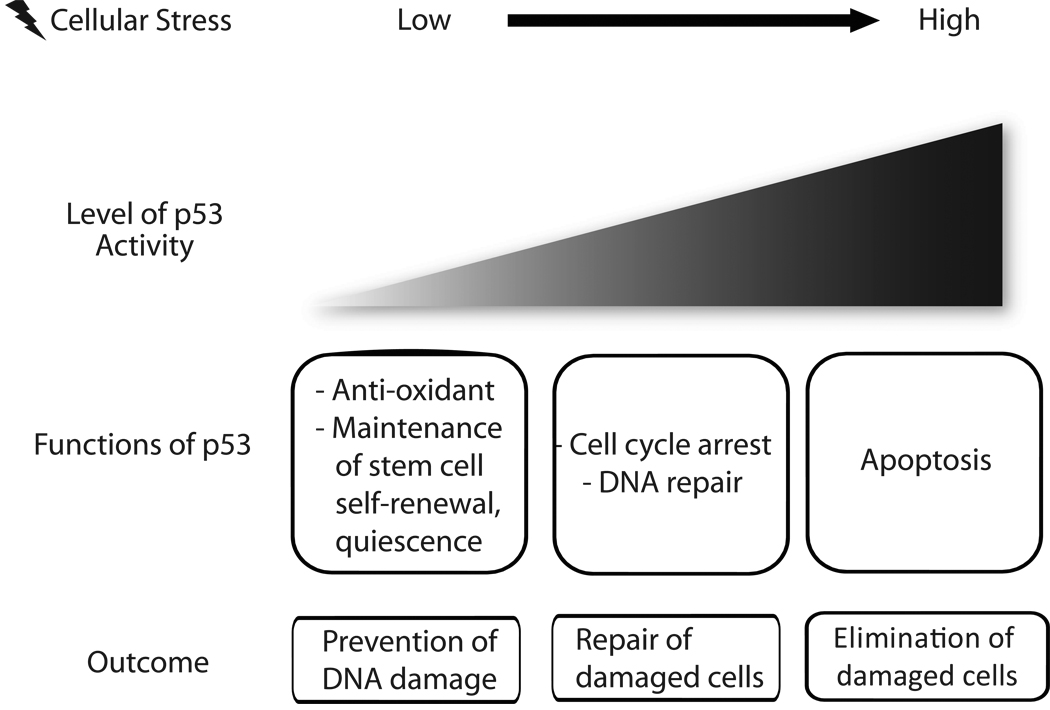
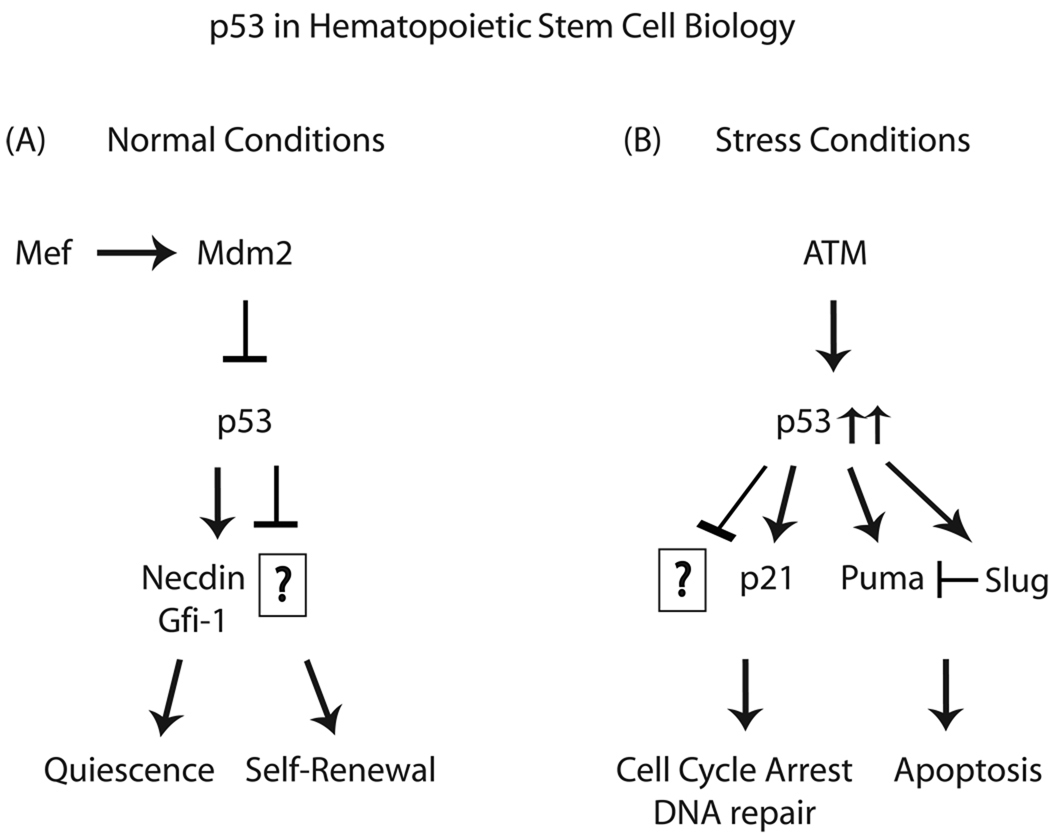
The p53 tumor suppressor protein is a key transcription factor that regulates several signaling pathways involved in the cell's response to stress. Through stress-induced activation, p53 accumulates and triggers the expression of target genes that protect the genetic integrity of all cells including hematopoietic stem cells (HSCs). These protective mechanisms include cell-cycle arrest, DNA repair, induction of apoptosis, or initiation of senescence. In addition to its function under stress conditions, p53 has important functions during steady-state hematopoiesis, regulating HSC quiescence and self-renewal. In addition, it appears that p53 levels affect HSC competition for the hematopoietic niche, with the less p53 activated HSCs preferentially surviving. The specific genes and precise mechanisms underlying p53's effects on normal HSCs are slowly being clarified. p53 also plays an important role in leukemia stem cell (LSC) behavior, with p53 loss affecting drug resistance and disease progression. Pharmacologic activation of p53 function could overcome the adverse impact of p53 inactivation in LSCs. Thus, understanding the p53 regulatory mechanisms active in HSCs and LSCs may promote the development of new therapeutic strategies that could eliminate the population of largely quiescent LSCs.
p53 肿瘤抑制蛋白是一种关键的转录因子,可调节细胞对应激反应的几种信号通路。通过应激诱导激活,p53 积累并触发靶基因的表达,从而保护所有细胞(包括造血干细胞 [HSCs])的遗传完整性。这些保护机制包括细胞周期停滞、DNA 修复、诱导细胞凋亡或启动衰老。除了在应激条件下的功能外,p53 在稳态造血过程中也具有重要功能,调节 HSC 静止和自我更新。此外,似乎 p53 水平会影响 HSC 对造血龛的竞争,其中激活较少的 p53 的 HSC 更优先存活。p53 对正常 HSC 的影响的具体基因和精确机制正在慢慢阐明。p53 在白血病干细胞(LSC)行为中也起着重要作用,p53 的缺失会影响药物耐药性和疾病进展。p53 功能的药理学激活可以克服 LSCs 中 p53 失活的不利影响。因此,了解 HSCs 和 LSCs 中 p53 的调节机制可能会促进开发新的治疗策略,以消除大部分静止的 LSC 群体。