Institute for Genome Sciences and Policy, Duke University, Durham, North Carolina, United States of America.
PLoS One. 2011;6(6):e20622. doi: 10.1371/journal.pone.0020622. Epub 2011 Jun 6.
Many computational microRNA target prediction tools are focused on several key features, including complementarity to 5'seed of miRNAs and evolutionary conservation. While these features allow for successful target identification, not all miRNA target sites are conserved and adhere to canonical seed complementarity. Several studies have propagated the use of energy features of mRNA:miRNA duplexes as an alternative feature. However, different independent evaluations reported conflicting results on the reliability of energy-based predictions. Here, we reassess the usefulness of energy features for mammalian target prediction, aiming to relax or eliminate the need for perfect seed matches and conservation requirement.
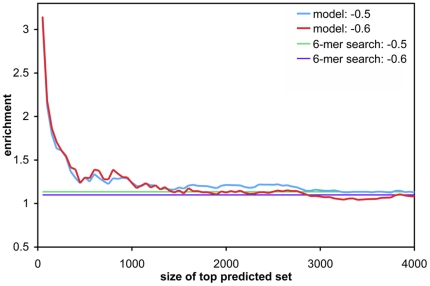
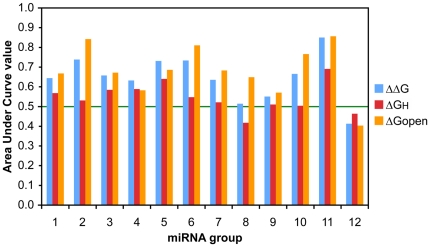
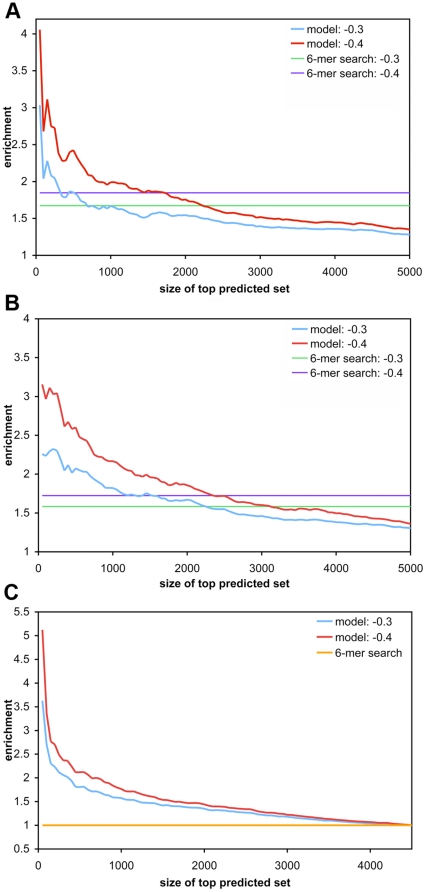
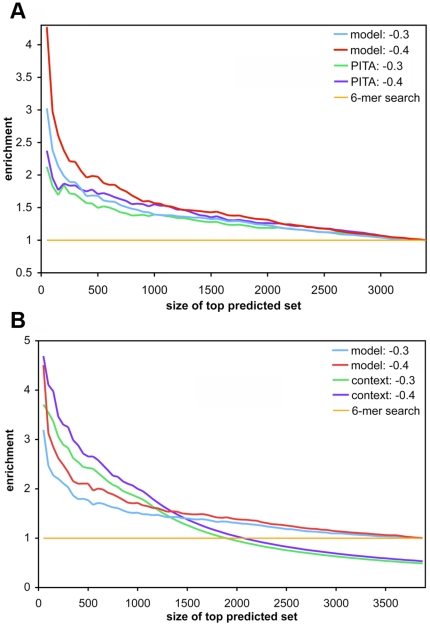
METHODOLOGY/PRINCIPAL FINDINGS: We detect significant differences of energy features at experimentally supported human miRNA target sites and at genome-wide sites of AGO protein interaction. This trend is confirmed on datasets that assay the effect of miRNAs on mRNA and protein expression changes, and a simple linear regression model leads to significant correlation of predicted versus observed expression change. Compared to 6-mer seed matches as baseline, application of our energy-based model leads to ∼3-5-fold enrichment on highly down-regulated targets, and allows for prediction of strictly imperfect targets with enrichment above baseline.
CONCLUSIONS/SIGNIFICANCE: In conclusion, our results indicate significant promise for energy-based miRNA target prediction that includes a broader range of targets without having to use conservation or impose stringent seed match rules.
许多计算 miRNA 靶标预测工具都集中在几个关键特征上,包括与 miRNA 5'种子的互补性和进化保守性。虽然这些特征允许成功地识别靶标,但并非所有 miRNA 靶标位点都是保守的,并且符合规范的种子互补性。一些研究已经推广了使用 mRNA:miRNA 双链体的能量特征作为替代特征。然而,不同的独立评估报告了基于能量的预测可靠性的相互矛盾的结果。在这里,我们重新评估能量特征在哺乳动物靶标预测中的有用性,旨在放宽或消除对完美种子匹配和保守性要求的需求。
方法/主要发现:我们在实验支持的人类 miRNA 靶标位点和全基因组 AGO 蛋白相互作用位点检测到能量特征的显著差异。这一趋势在检测 miRNA 对 mRNA 和蛋白质表达变化影响的数据集上得到了证实,并且简单的线性回归模型导致预测的表达变化与观察到的表达变化之间存在显著的相关性。与 6 -mer 种子匹配作为基线相比,我们的基于能量的模型的应用导致高度下调靶标的富集约 3-5 倍,并且允许在不使用保守性或施加严格种子匹配规则的情况下预测严格不完美的靶标。
结论/意义:总之,我们的结果表明,基于能量的 miRNA 靶标预测具有很大的潜力,它可以包括更广泛的靶标,而不必使用保守性或施加严格的种子匹配规则。