Department of Biochemistry and Biophysics, University of Rochester Medical Center, 601 Elmwood Avenue, Rochester, New York 14642, USA.
Nature. 2011 Jun 15;474(7351):395-8. doi: 10.1038/nature10165.
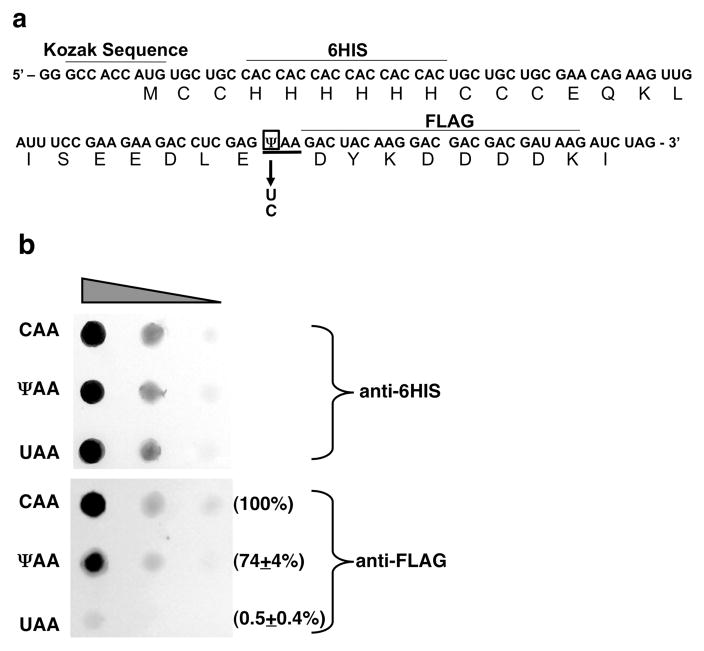
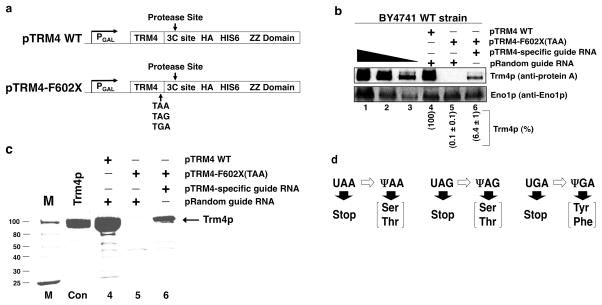
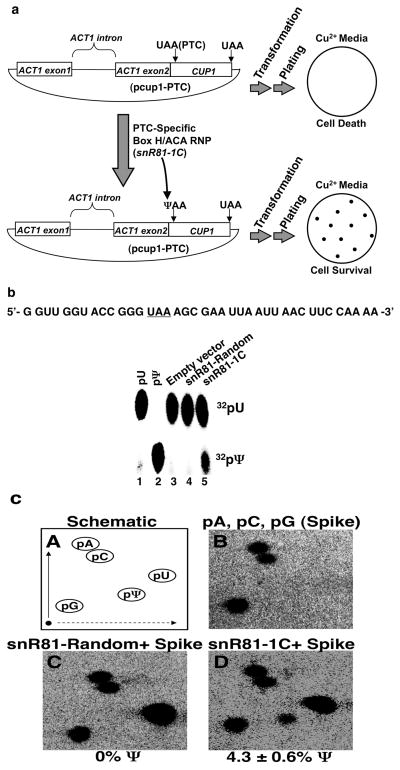
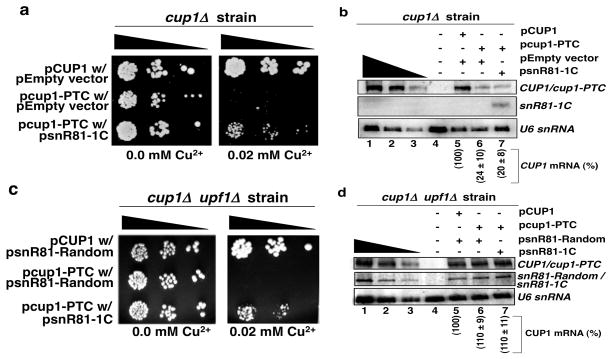
All three translation termination codons, or nonsense codons, contain a uridine residue at the first position of the codon. Here, we demonstrate that pseudouridylation (conversion of uridine into pseudouridine (Ψ), ref. 4) of nonsense codons suppresses translation termination both in vitro and in vivo. In vivo targeting of nonsense codons is accomplished by the expression of an H/ACA RNA capable of directing the isomerization of uridine to Ψ within the nonsense codon. Thus, targeted pseudouridylation represents a novel approach for promoting nonsense suppression in vivo. Remarkably, we also show that pseudouridylated nonsense codons code for amino acids with similar properties. Specifically, ΨAA and ΨAG code for serine and threonine, whereas ΨGA codes for tyrosine and phenylalanine, thus suggesting a new mode of decoding. Our results also suggest that RNA modification, as a naturally occurring mechanism, may offer a new way to expand the genetic code.
所有三个翻译终止密码子,即无意义密码子,在密码子的第一位都含有尿嘧啶残基。在这里,我们证明了无意义密码子的假尿嘧啶化(将尿嘧啶转化为假尿嘧啶(Ψ),参考文献 4)在体外和体内均能抑制翻译终止。体内无意义密码子的靶向是通过表达一种能够在无意义密码子内将尿嘧啶异构化为 Ψ 的 H/ACA RNA 来实现的。因此,靶向假尿嘧啶化代表了一种在体内促进无意义抑制的新方法。值得注意的是,我们还表明,假尿嘧啶化的无意义密码子编码具有相似性质的氨基酸。具体来说,ΨAA 和 ΨAG 编码丝氨酸和苏氨酸,而 ΨGA 编码酪氨酸和苯丙氨酸,因此这表明了一种新的解码方式。我们的结果还表明,RNA 修饰作为一种自然发生的机制,可能为扩展遗传密码提供一种新途径。