INSERM U1042, Grenoble, France.
Am J Respir Crit Care Med. 2011 Sep 15;184(6):724-31. doi: 10.1164/rccm.201012-2033OC. Epub 2011 Jun 16.
The highly prevalent obstructive sleep apnea syndrome (OSA) with its main component intermittent hypoxia (IH) is a risk factor for cardiovascular mortality. The poor knowledge of its pathophysiology has limited the development of specific treatments, whereas the gold standard treatment, continuous positive airway pressure, may not fully reverse the chronic consequences of OSA and has limited acceptance in some patients.
To examine the contribution of IH-induced inflammation to the cardiovascular complications of OSA.
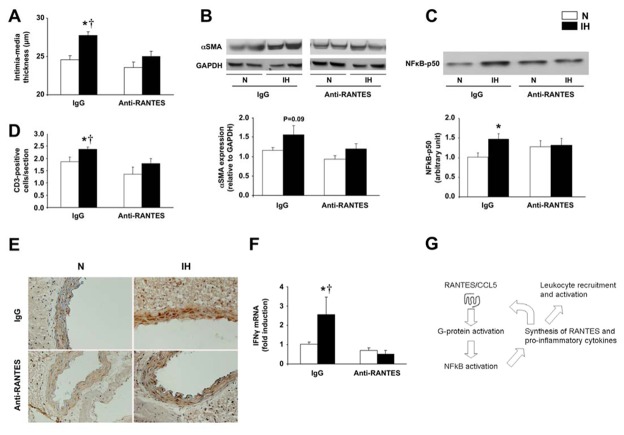
We investigated systemic and vascular inflammatory changes in C57BL6 mice exposed to IH (21-5% Fi(O(2)), 60-s cycle) or normoxia 8 hours per day up to 14 days. Vascular alterations were reassessed in mice treated with a blocking antibody of regulated upon activation, normal T-cell expressed and secreted (RANTES)/CC chemokine ligand 5 (CCL5) signaling pathway, or with the IgG isotype control throughout the IH exposure.
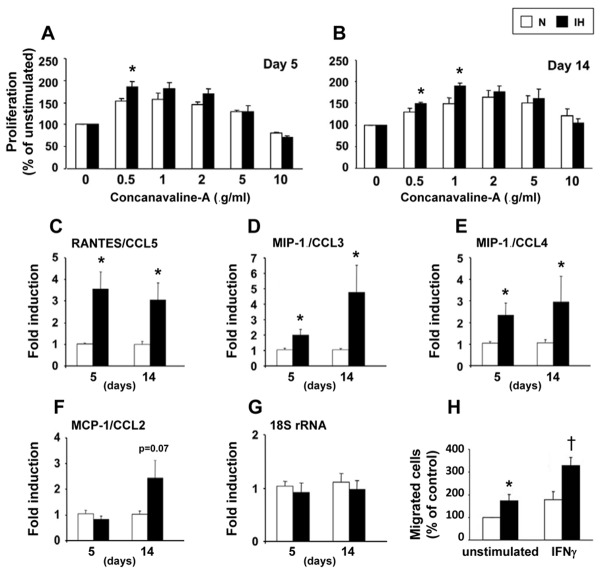
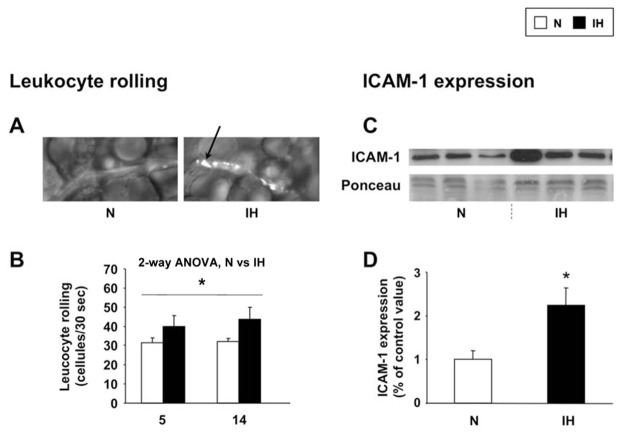
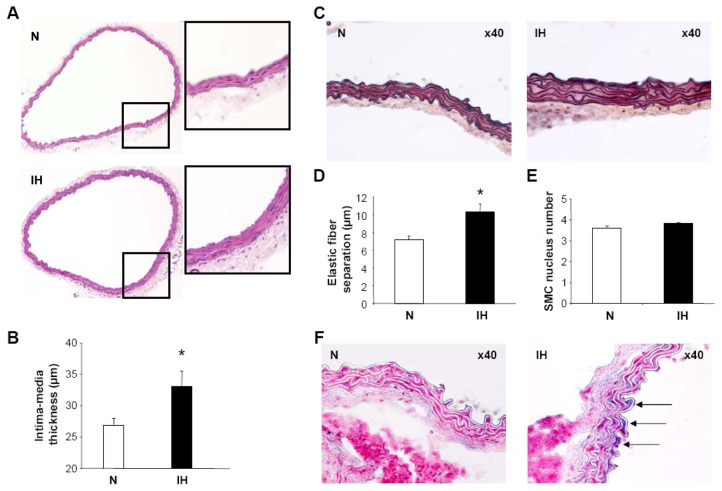
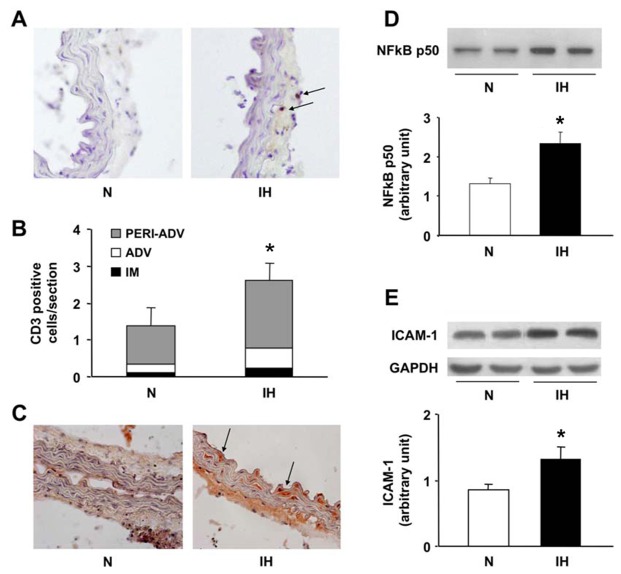
IH induced systemic inflammation combining increased splenic lymphocyte proliferation and chemokine expression, with early and predominant RANTES/CCL5 alterations, and enhanced splenocyte migration toward RANTES/CCL5. IH also induced structural and inflammatory vascular alterations. Leukocyte-endothelium adhesive interactions were increased, attested by leukocyte rolling and intercellular adhesion molecule-1 expression in mesenteric vessels. Aortas had increased intima-media thickness with elastic fiber alterations, mucoid depositions, nuclear factor-κB-p50 and intercellular adhesion molecule-1 overexpression, hypertrophy of smooth-muscle cells overexpressing RANTES/CCL5, and adventitial-periadventitial T-lymphocyte infiltration. RANTES/CCL5 neutralization prevented both intima-media thickening and inflammatory alterations, independently of the IH-associated proatherogenic dyslipidemia.
Inflammation is a determinant mechanism for IH-induced preatherosclerotic remodeling involving RANTES/CCL5, a key chemokine in atherogenesis. Characterization of the inflammatory response could allow identifying at-risk patients for complications, and its pharmacologic manipulation may represent a potential complementary treatment of sleep apnea consequences.
普遍存在的阻塞性睡眠呼吸暂停综合征(OSA)及其主要成分间歇性低氧(IH)是心血管死亡率的一个危险因素。对其病理生理学的了解不足限制了特定治疗方法的发展,而持续气道正压通气这一黄金标准治疗方法可能无法完全逆转 OSA 的慢性后果,并且在某些患者中接受程度有限。
研究 IH 诱导的炎症对 OSA 心血管并发症的贡献。
我们在 C57BL6 小鼠中研究了暴露于 IH(21-5% Fi(O(2)),60 秒周期)或常氧 8 小时/天达 14 天的系统性和血管炎症变化。在整个 IH 暴露过程中,用调节活化正常 T 细胞表达和分泌(RANTES)/CC 趋化因子配体 5(CCL5)信号通路的阻断抗体或 IgG 同型对照处理的小鼠中重新评估血管改变。
IH 诱导了全身性炎症,包括脾淋巴细胞增殖和趋化因子表达增加,早期和主要的 RANTES/CCL5 改变,以及增强了脾细胞向 RANTES/CCL5 的迁移。IH 还诱导了结构性和炎症性血管改变。白细胞-内皮细胞黏附相互作用增加,肠系膜血管中白细胞滚动和细胞间黏附分子-1 表达证明了这一点。主动脉的内膜-中膜厚度增加,弹性纤维改变,黏蛋白沉积,核因子-κB-p50 和细胞间黏附分子-1 过度表达,RANTES/CCL5 过度表达的平滑肌细胞肥大,以及 adventitial-periadventitial T 淋巴细胞浸润。RANTES/CCL5 中和作用可预防内膜-中膜增厚和炎症改变,与 IH 相关的致动脉粥样硬化血脂异常无关。
炎症是 IH 诱导的前动脉粥样硬化重塑的决定因素机制,涉及 RANTES/CCL5,这是动脉粥样硬化形成中的关键趋化因子。炎症反应的特征可识别易患并发症的患者,其药理作用可能代表睡眠呼吸暂停后果的潜在补充治疗。