Research Centre for Pharmaceutical Care and Pharmaco-economics, Katholieke Universiteit Leuven, O&N2 bus 521, Herestraat 49, 3000 Leuven, Belgium.
Orphanet J Rare Dis. 2011 Jun 17;6:42. doi: 10.1186/1750-1172-6-42.
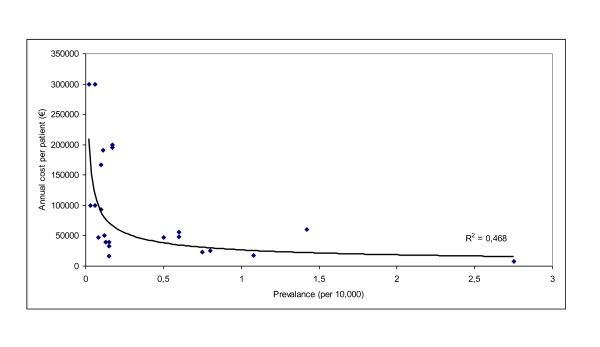
Pricing and reimbursement of orphan drugs are an issue of high priority for policy makers, legislators, health care professionals, industry leaders, academics and patients. This study aims to conduct a literature review to provide insight into the drivers of orphan drug pricing and reimbursement. Although orphan drug pricing follows the same economic logic as drug pricing in general, the monopolistic power of orphan drugs results in high prices: a) orphan drugs benefit from a period of marketing exclusivity; b) few alternative health technologies are available; c) third-party payers and patients have limited negotiating power; d) manufacturers attempt to maximise orphan drug prices within the constraints of domestic pricing and reimbursement policies; and e) substantial R&D costs need to be recouped from a small number of patients. Although these conditions apply to some orphan drugs, they do not apply to all orphan drugs. Indeed, the small number of patients treated with an orphan drug and the limited economic viability of orphan drugs can be questioned in a number of cases. Additionally, manufacturers have an incentive to game the system by artificially creating monopolistic market conditions. Given their high price for an often modest effectiveness, orphan drugs are unlikely to provide value for money. However, additional criteria are used to inform reimbursement decisions in some countries. These criteria may include: the seriousness of the disease; the availability of other therapies to treat the disease; and the cost to the patient if the medicine is not reimbursed. Therefore, the maximum cost per unit of outcome that a health care payer is willing to pay for a drug could be set higher for orphan drugs to which society attaches a high social value. There is a need for a transparent and evidence-based approach towards orphan drug pricing and reimbursement. Such an approach should be targeted at demonstrating the relative effectiveness, cost-effectiveness and economic viability of orphan drugs with a view to informing pricing and reimbursement decisions.
孤儿药的定价和报销是政策制定者、立法者、医疗保健专业人员、行业领导者、学者和患者高度关注的问题。本研究旨在进行文献回顾,深入了解孤儿药定价和报销的驱动因素。尽管孤儿药定价遵循与一般药物定价相同的经济逻辑,但孤儿药的垄断力量导致了高价:a)孤儿药受益于一段时间的市场独占期;b)可供选择的健康技术很少;c)第三方支付者和患者的谈判能力有限;d)制造商试图在国内定价和报销政策的限制下最大限度地提高孤儿药价格;e)需要从少数患者身上收回大量的研发成本。虽然这些情况适用于一些孤儿药,但并不适用于所有孤儿药。事实上,在许多情况下,接受孤儿药治疗的患者人数很少,孤儿药的经济可行性有限,可以受到质疑。此外,制造商有动机通过人为创造垄断市场条件来操纵系统。鉴于孤儿药的高价和相对有限的疗效,孤儿药不太可能物有所值。然而,一些国家在做出报销决定时会使用额外的标准。这些标准可能包括:疾病的严重程度;治疗该疾病的其他疗法的可用性;以及如果药物得不到报销,患者的成本。因此,对于社会赋予高社会价值的孤儿药,医疗保健支付者每单位结果愿意支付的药物最高成本可以设定得更高。需要采用透明和基于证据的方法来确定孤儿药的价格和报销。这种方法的目的应该是证明孤儿药的相对有效性、成本效益和经济可行性,以便为定价和报销决策提供信息。