Immune Disease Institute and Program in Cellular and Molecular Medicine, Children's Hospital, Department of Pediatrics, Harvard Medical School, Boston, Massachusetts, USA.
Nat Immunol. 2011 Jun 19;12(8):770-7. doi: 10.1038/ni.2050.
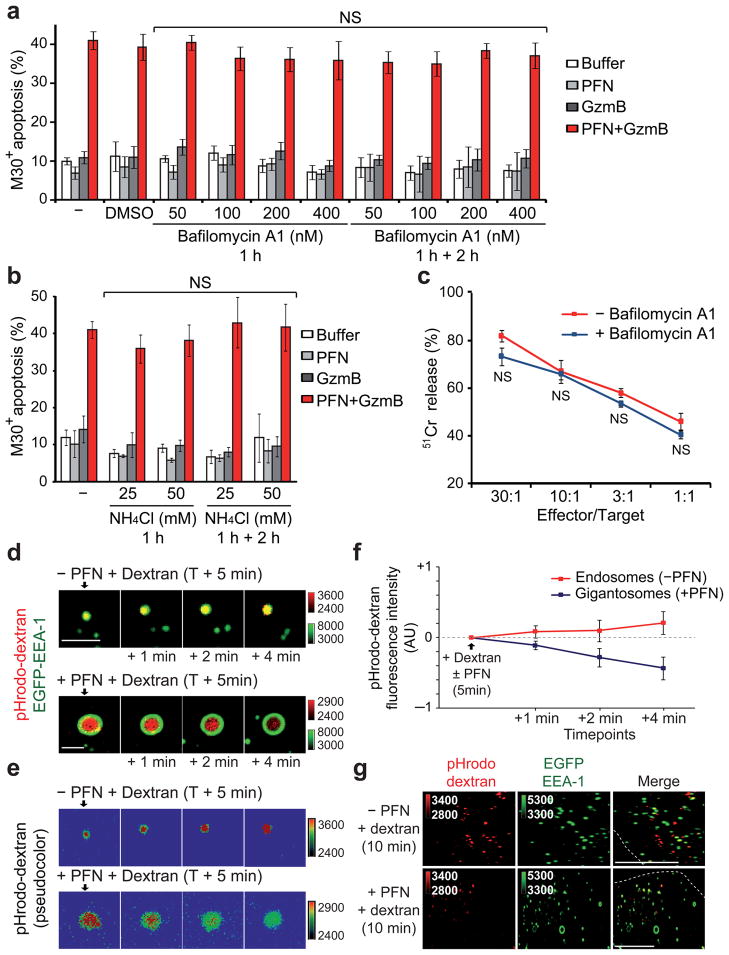
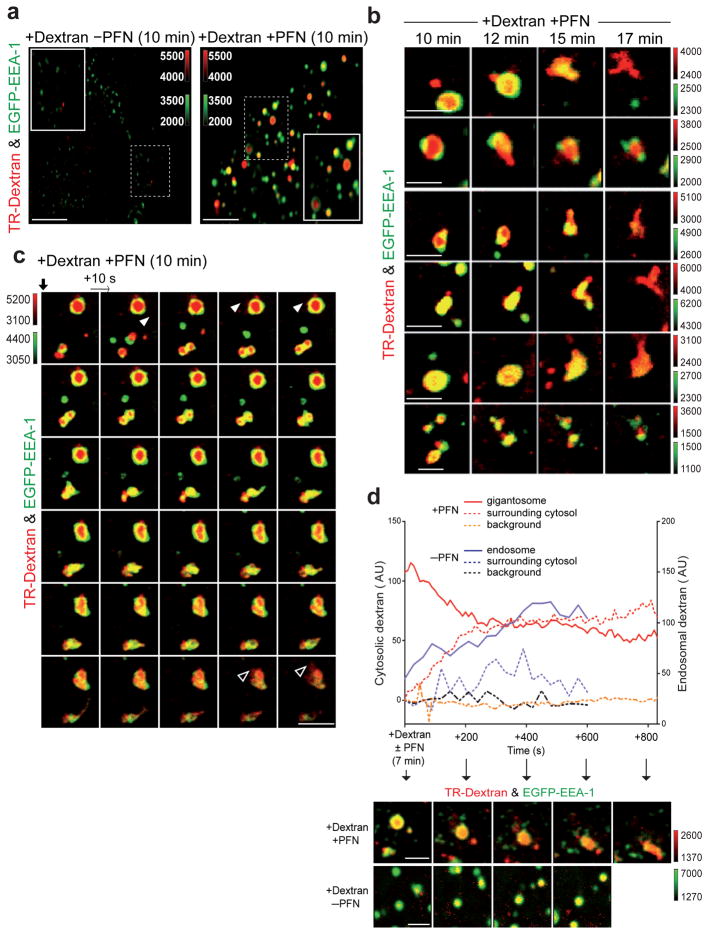
How the pore-forming protein perforin delivers apoptosis-inducing granzymes to the cytosol of target cells is uncertain. Perforin induces a transient Ca2+ flux in the target cell, which triggers a process to repair the damaged cell membrane. As a consequence, both perforin and granzymes are endocytosed into enlarged endosomes called 'gigantosomes'. Here we show that perforin formed pores in the gigantosome membrane, allowing endosomal cargo, including granzymes, to be gradually released. After about 15 min, gigantosomes ruptured, releasing their remaining content. Thus, perforin delivers granzymes by a two-step process that involves first transient pores in the cell membrane that trigger the endocytosis of granzyme and perforin and then pore formation in endosomes to trigger cytosolic release.
穿孔素如何将凋亡诱导颗粒酶递送到靶细胞的细胞质尚不清楚。穿孔素在靶细胞中诱导瞬时 Ca2+ 流,从而触发修复受损细胞膜的过程。因此,穿孔素和颗粒酶都被内吞到称为“巨内体”的扩大的内体中。在这里,我们表明穿孔素在巨内体膜上形成孔,允许包括颗粒酶在内的内体货物逐渐释放。大约 15 分钟后,巨内体破裂,释放出剩余的内容物。因此,穿孔素通过两步过程将颗粒酶递送到细胞质中,该过程首先涉及细胞膜上的瞬时孔,这些孔触发颗粒酶和穿孔素的内吞作用,然后在内体中形成孔以触发细胞质释放。