Institute for Perception, Action, and Behaviour, University of Edinburgh, Edinburgh, United Kingdom.
PLoS One. 2011;6(6):e20100. doi: 10.1371/journal.pone.0020100. Epub 2011 Jun 1.
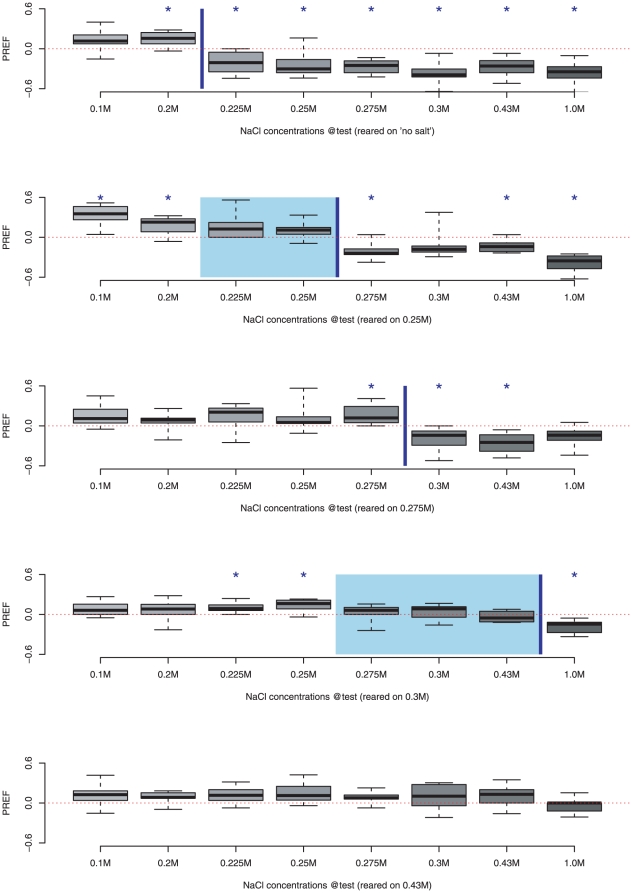
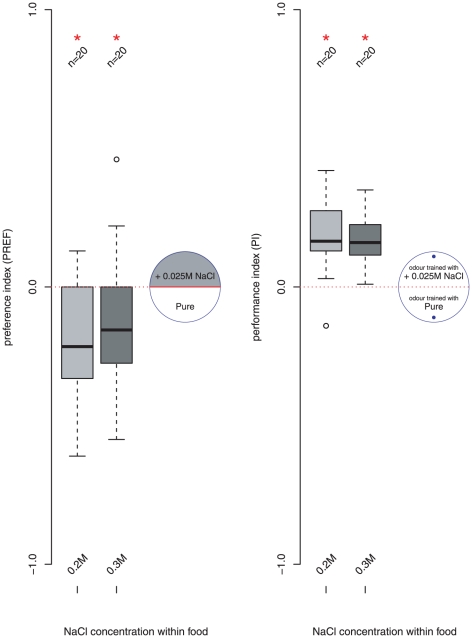
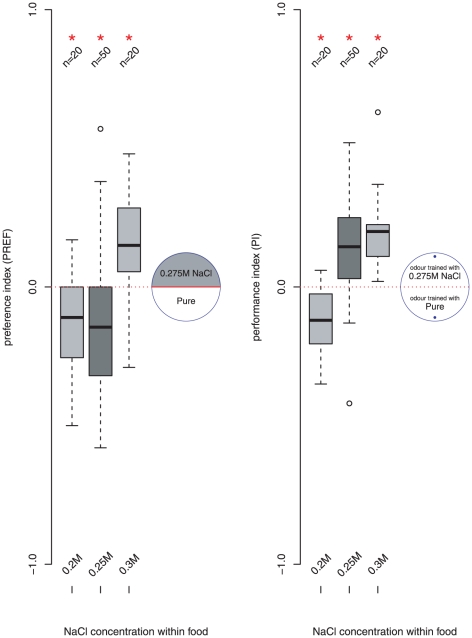
Drosophila larvae change from exhibiting attraction to aversion as the concentration of salt in a substrate is increased. However, some aversive concentrations appear to act as positive reinforcers, increasing attraction to an odour with which they have been paired. We test whether this surprising dissociation between the unconditioned and conditioned response depends on the larvae's experience of salt concentration in their food. We find that although the point at which a NaCl concentration becomes aversive shifts with different rearing experience, the dissociation remains evident. Testing larvae using a substrate 0.025 M above the NaCl concentration on which the larvae were reared consistently results in aversive choice behaviour but appetitive reinforcement effects.
当基质中的盐浓度增加时,果蝇幼虫会从表现出吸引力转变为厌恶感。然而,一些厌恶的浓度似乎起到了正强化物的作用,增加了它们与配对气味的吸引力。我们测试了这种在非条件反应和条件反应之间令人惊讶的分离是否取决于幼虫在食物中对盐浓度的体验。我们发现,尽管不同的饲养经验会改变使 NaCl 浓度变得厌恶的临界点,但这种分离仍然明显。使用基质测试幼虫,该基质的 NaCl 浓度比幼虫饲养的浓度高 0.025 M,这会导致厌恶的选择行为,但也会产生食欲强化效应。