Faculty of Kinesiology, University of Calgary, Calgary, AB, Canada.
Faculty of Nursing, University of Calgary, Calgary, AB, Canada.
J Foot Ankle Res. 2011 Jun 21;4(1):18. doi: 10.1186/1757-1146-4-18.
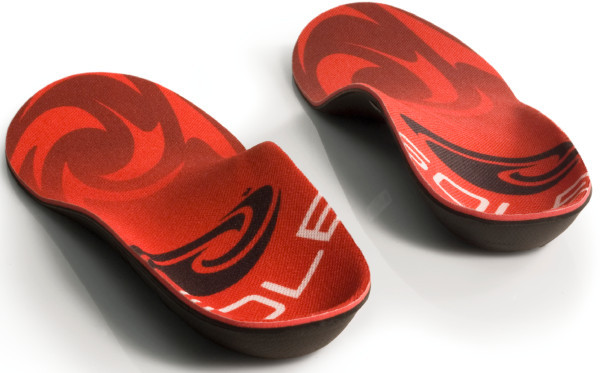
Semi-custom foot orthoses (SCO) are thought to be a cost-effective alternative to custom-made devices. However, previous biomechanical research involving either custom or SCO has only focused on rearfoot biomechanics. The purpose of this study was therefore to determine changes in multi-segment foot biomechanics during shod walking with and without an SCO. We chose to investigate an SCO device that incorporates a heat-moulding process, to further understand if the moulding process would significantly alter rearfoot, midfoot, or shank kinematics as compared to a no-orthotic condition. We hypothesized the SCO, whether moulded or non-moulded, would reduce peak rearfoot eversion, tibial internal rotation, arch deformation, and plantar fascia strain as compared to the no-orthoses condition.
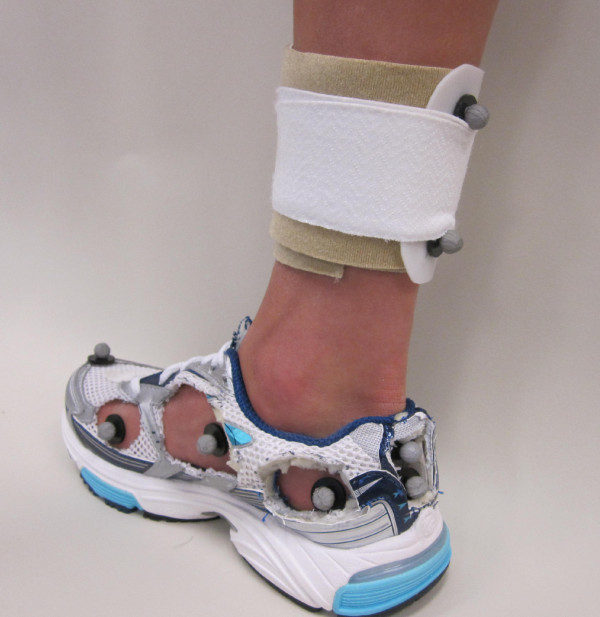
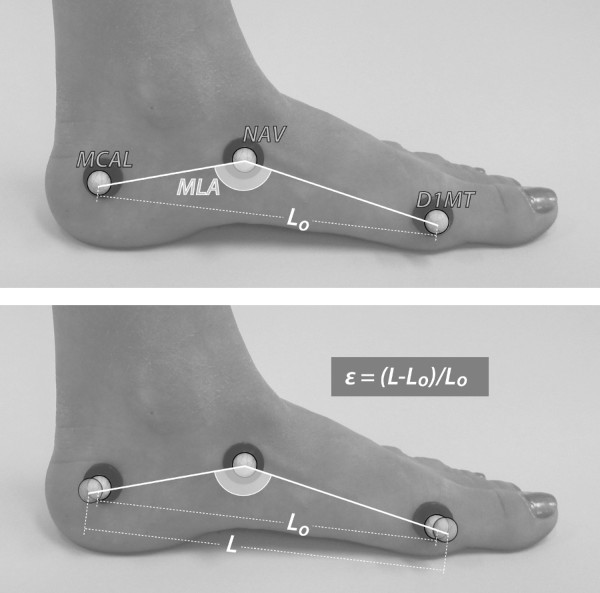
Twenty participants had retroreflective markers placed on the right limb to represent forefoot, midfoot, rearfoot and shank segments. 3D kinematics were recorded using an 8-camera motion capture system while participants walked on a treadmill.
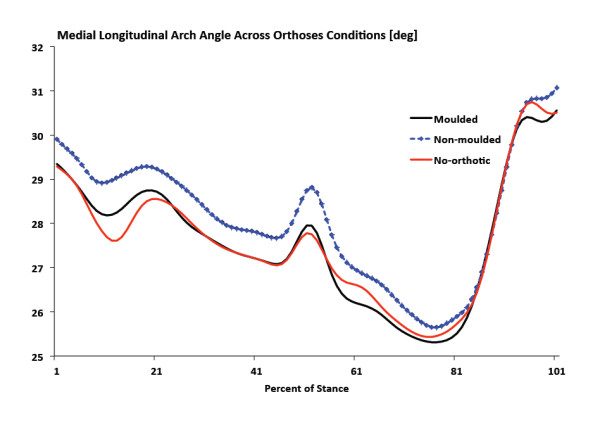
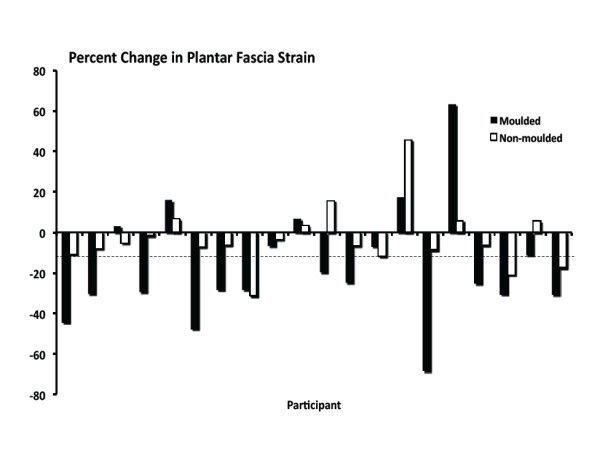
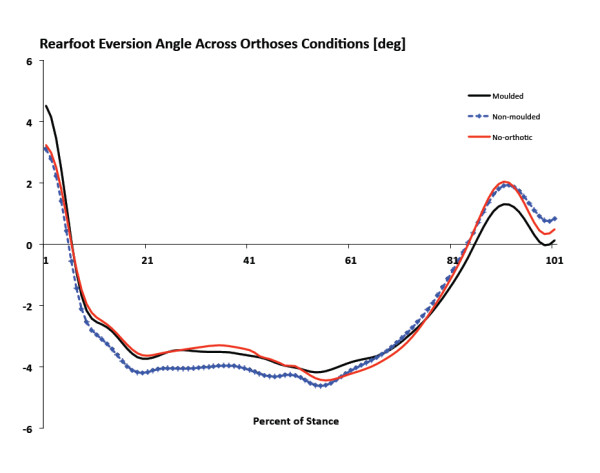
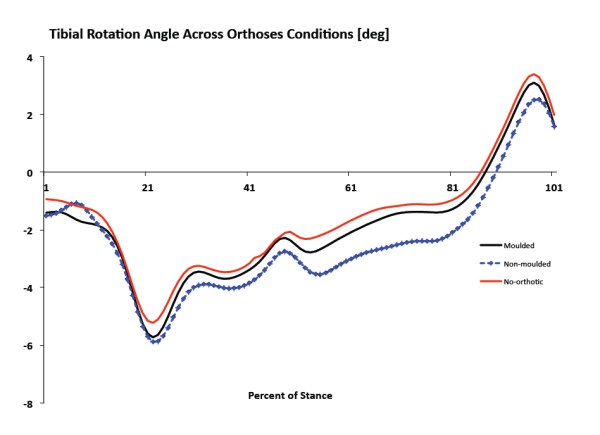
Plantar fascia strain was reduced by 34% when participants walked in either the moulded or non-moulded SCO condition compared to no-orthoses. However, there were no significant differences in peak rearfoot eversion, tibial internal rotation, or medial longitudinal arch angles between any conditions.
A semi-custom moulded orthotic does not control rearfoot, shank, or arch deformation but does, however, reduce plantar fascia strain compared to walking without an orthoses. Heat-moulding the orthotic device does not have a measurable effect on any biomechanical variables compared to the non-moulded condition. These data may, in part, help explain the clinical efficacy of orthotic devices.
半定制足矫形器(SCO)被认为是一种具有成本效益的替代定制设备的方法。然而,之前涉及定制或 SCO 的生物力学研究仅关注于后足生物力学。因此,本研究的目的是确定在有和没有 SCO 的情况下,穿鞋行走时多节段足部生物力学的变化。我们选择研究一种采用热成型工艺的 SCO 装置,以进一步了解与无矫形器状态相比,成型过程是否会显著改变后足、中足或胫骨的运动学。我们假设与无矫形器状态相比,SCO(无论是否成型)会降低后足外翻峰值、胫骨内旋、足弓变形和足底筋膜应变。
20 名参与者的右侧肢体上放置了反光标记,以代表前足、中足、后足和胫骨段。参与者在跑步机上行走时,使用 8 相机运动捕捉系统记录 3D 运动学。
与无矫形器状态相比,参与者在穿着成型或非成型 SCO 时,足底筋膜应变分别降低了 34%。然而,在任何条件下,后足外翻峰值、胫骨内旋或内侧纵弓角度均无显著差异。
半定制成型矫形器不能控制后足、胫骨或足弓变形,但与不使用矫形器相比,确实可以减少足底筋膜应变。与非成型状态相比,热成型矫形器装置对任何生物力学变量都没有可测量的影响。这些数据可能部分解释了矫形器的临床疗效。