School of Computing Sciences, University of East Anglia, Norwich, UK.
PLoS Comput Biol. 2011 Jun;7(6):e1002071. doi: 10.1371/journal.pcbi.1002071. Epub 2011 Jun 16.
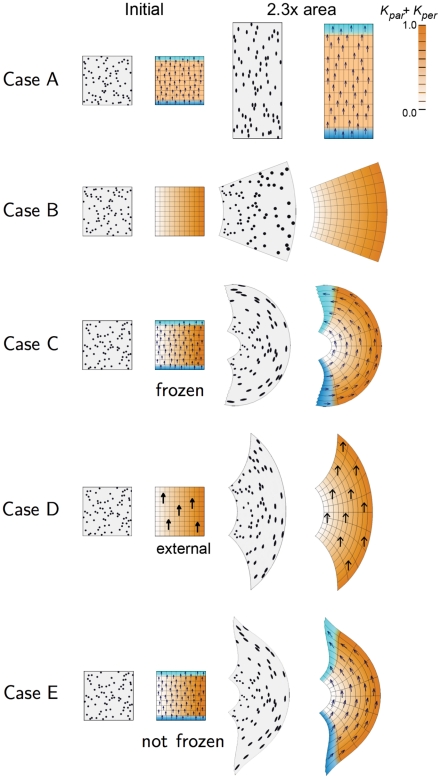
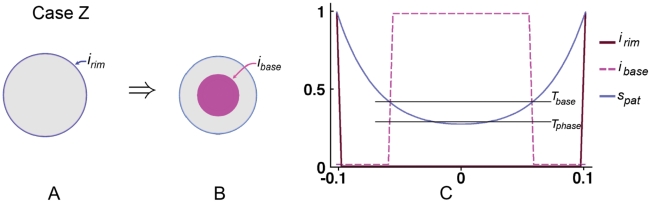
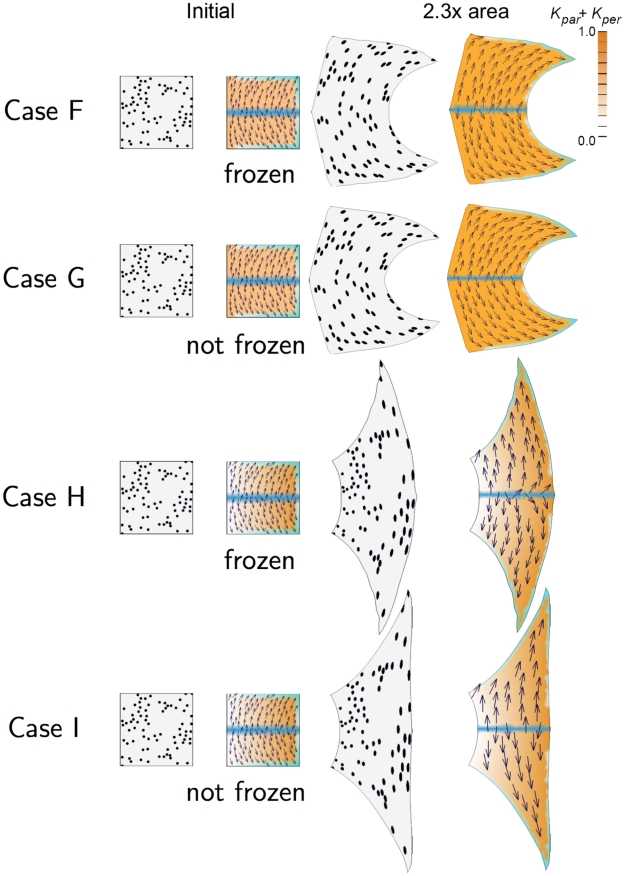
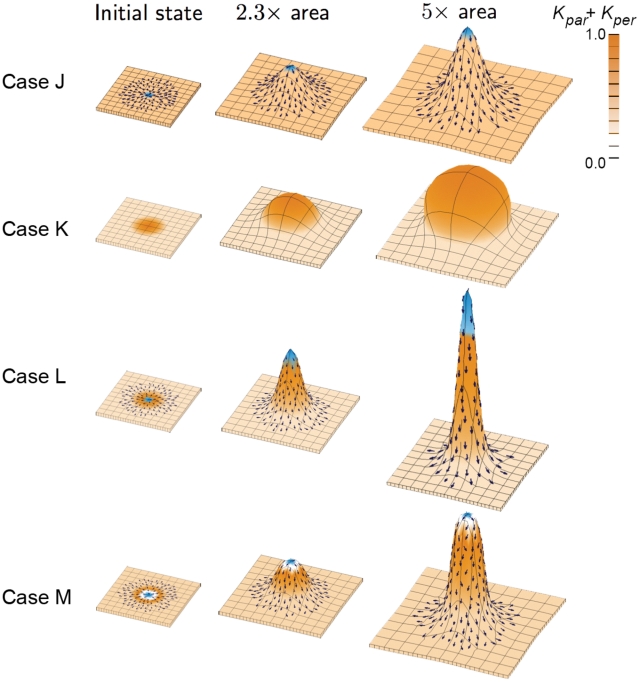
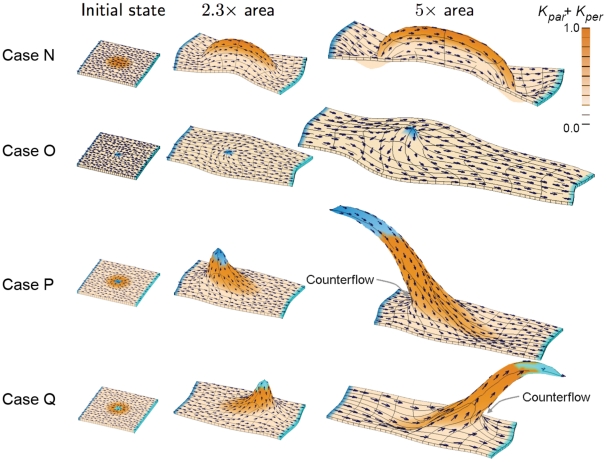
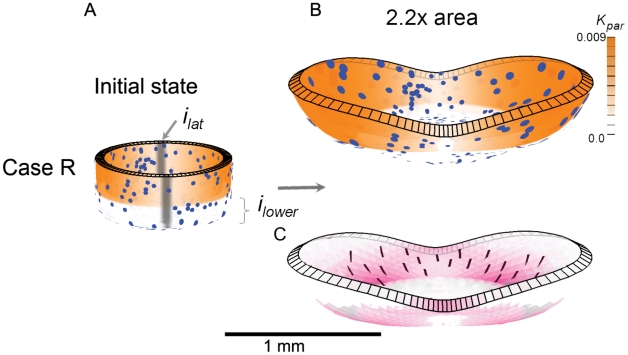
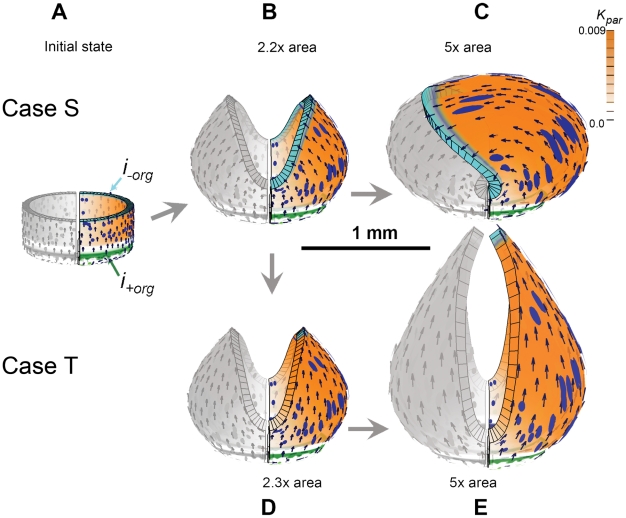
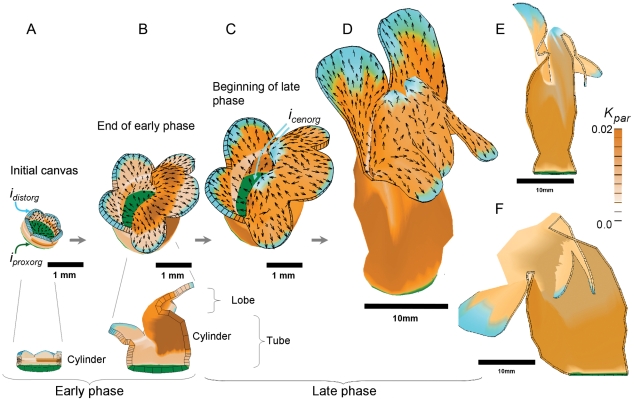
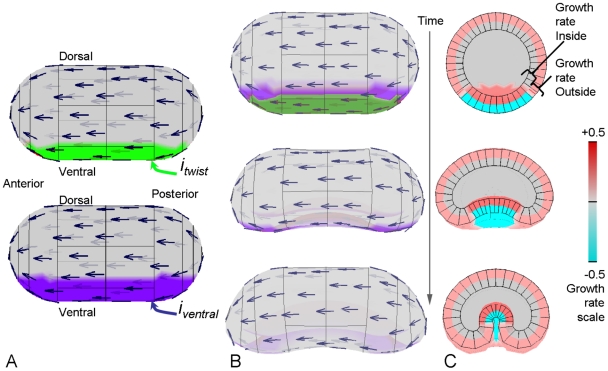
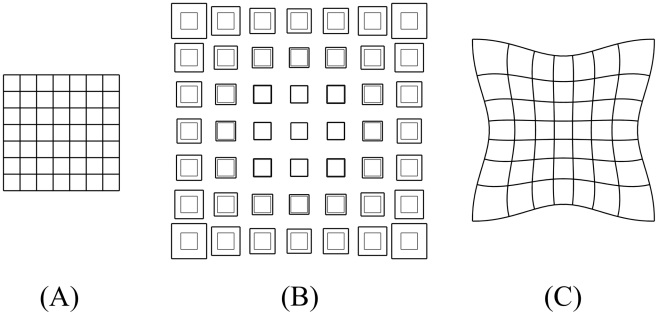
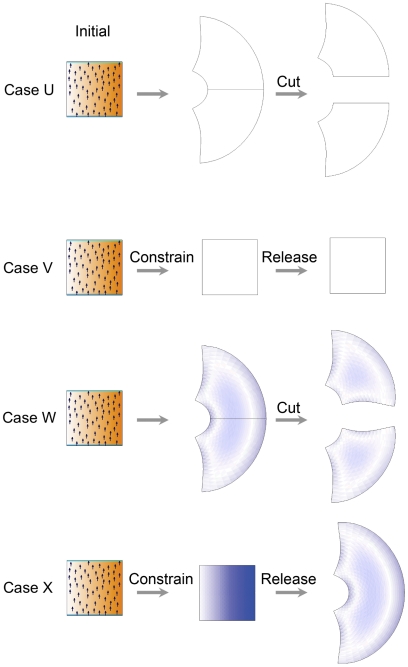
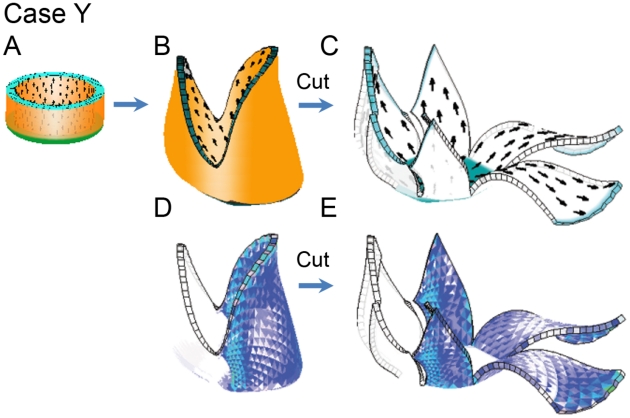
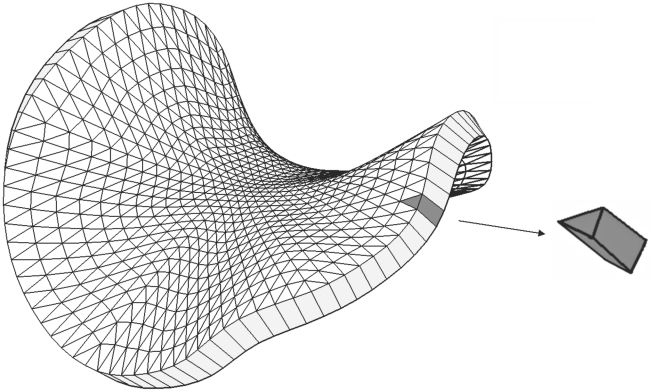
A major problem in biology is to understand how complex tissue shapes may arise through growth. In many cases this process involves preferential growth along particular orientations raising the question of how these orientations are specified. One view is that orientations are specified through stresses in the tissue (axiality-based system). Another possibility is that orientations can be specified independently of stresses through molecular signalling (polarity-based system). The axiality-based system has recently been explored through computational modelling. Here we develop and apply a polarity-based system which we call the Growing Polarised Tissue (GPT) framework. Tissue is treated as a continuous material within which regionally expressed factors under genetic control may interact and propagate. Polarity is established by signals that propagate through the tissue and is anchored in regions termed tissue polarity organisers that are also under genetic control. Rates of growth parallel or perpendicular to the local polarity may then be specified through a regulatory network. The resulting growth depends on how specified growth patterns interact within the constraints of mechanically connected tissue. This constraint leads to the emergence of features such as curvature that were not directly specified by the regulatory networks. Resultant growth feeds back to influence spatial arrangements and local orientations of tissue, allowing complex shapes to emerge from simple rules. Moreover, asymmetries may emerge through interactions between polarity fields. We illustrate the value of the GPT-framework for understanding morphogenesis by applying it to a growing Snapdragon flower and indicate how the underlying hypotheses may be tested by computational simulation. We propose that combinatorial intractions between orientations and rates of growth, which are a key feature of polarity-based systems, have been exploited during evolution to generate a range of observed biological shapes.
生物学中的一个主要问题是理解复杂的组织形状如何通过生长而产生。在许多情况下,这个过程涉及到沿着特定方向的优先生长,这就提出了这些方向是如何被指定的问题。一种观点认为,方向是通过组织中的应力来指定的(基于轴向的系统)。另一种可能性是,方向可以通过分子信号而独立于应力来指定(基于极性的系统)。基于轴向的系统最近已经通过计算建模进行了探索。在这里,我们开发并应用了一种基于极性的系统,我们称之为“生长极化组织(GPT)框架”。组织被视为一种连续的材料,其中受遗传控制的区域表达因子可以相互作用和传播。极性是通过在组织中传播的信号来建立的,并锚定在受遗传控制的组织极性组织者区域中。然后可以通过调节网络指定与局部极性平行或垂直的生长速度。由此产生的生长取决于指定的生长模式如何在机械连接组织的约束下相互作用。这种约束导致出现了曲率等特征,而这些特征并不是由调节网络直接指定的。由此产生的生长会反馈回来影响组织的空间排列和局部方向,从而使复杂的形状从简单的规则中涌现出来。此外,通过极性场之间的相互作用,可能会出现不对称性。我们通过将 GPT 框架应用于生长的金鱼草花来展示它在理解形态发生中的价值,并指出通过计算模拟如何检验其潜在假设。我们提出,基于极性的系统的关键特征之一是取向和生长速度之间的组合相互作用,在进化过程中被利用来产生一系列观察到的生物形状。