Research Group of Functional Genomics and Proteomics, K.U.Leuven, Leuven, Belgium.
PLoS One. 2011;6(6):e20043. doi: 10.1371/journal.pone.0020043. Epub 2011 Jun 15.
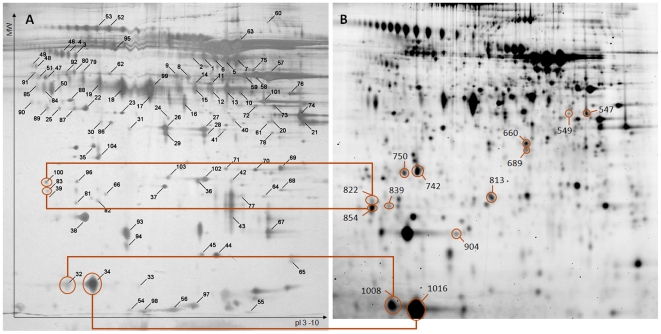
The eusocial societies of honeybees, where the queen is the only fertile female among tens of thousands sterile worker bees, have intrigued scientists for centuries. The proximate factors, which cause the inhibition of worker bee ovaries, remain largely unknown; as are the factors which cause the activation of worker ovaries upon the loss of queen and brood in the colony. In an attempt to reveal key players in the regulatory network, we made a proteomic comparison of hemolymph profiles of workers with completely activated ovaries vs. rudimentary ovaries. An unexpected finding of this study is the correlation between age matched worker sterility and the enrichment of Picorna-like virus proteins. Fertile workers, on the other hand, show the upregulation of potential components of the immune system. It remains to be investigated whether viral infections contribute to worker sterility directly or are the result of a weaker immune system of sterile workers.
蜜蜂的群居社会中,数以万计的不育工蜂中只有一只蜂王是可育的,这一现象令科学家们着迷了数个世纪。导致工蜂卵巢被抑制的直接因素在很大程度上仍是未知的;而当蜂群中失去蜂王和幼虫时,导致工蜂卵巢被激活的因素也是未知的。为了揭示调控网络中的关键因子,我们对完全激活卵巢的工蜂和原始卵巢的血淋巴图谱进行了蛋白质组学比较。这项研究的一个意外发现是,与年龄匹配的工蜂不育性相关的,是豌豆病毒样蛋白的富集。另一方面,可育工蜂表现出潜在免疫系统成分的上调。病毒感染是直接导致工蜂不育,还是不育工蜂免疫系统较弱的结果,仍有待研究。