Department of Cell Biology, Harvard Medical School, Boston, MA 02115, USA.
Cell. 2011 Jun 24;145(7):1023-35. doi: 10.1016/j.cell.2011.05.026.
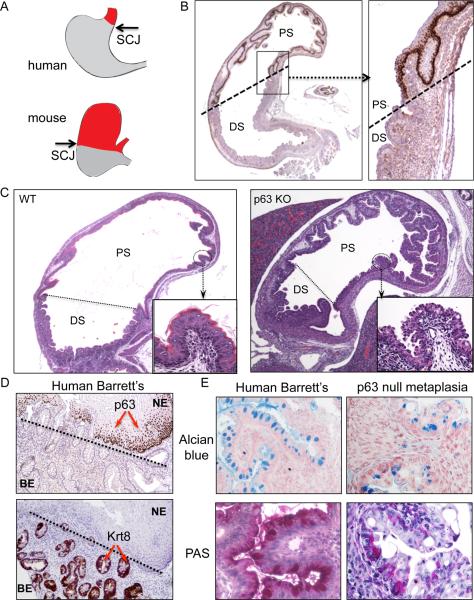
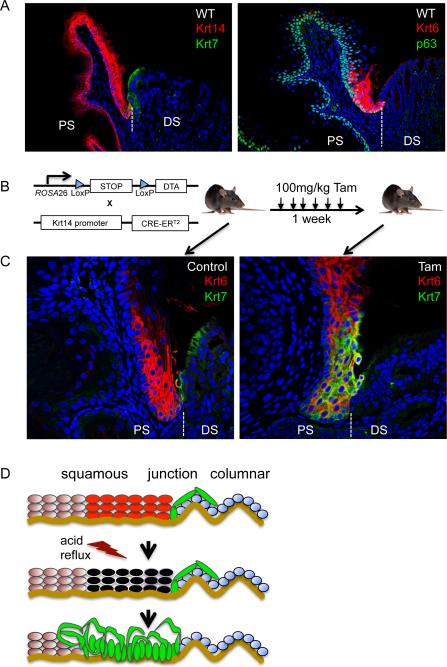
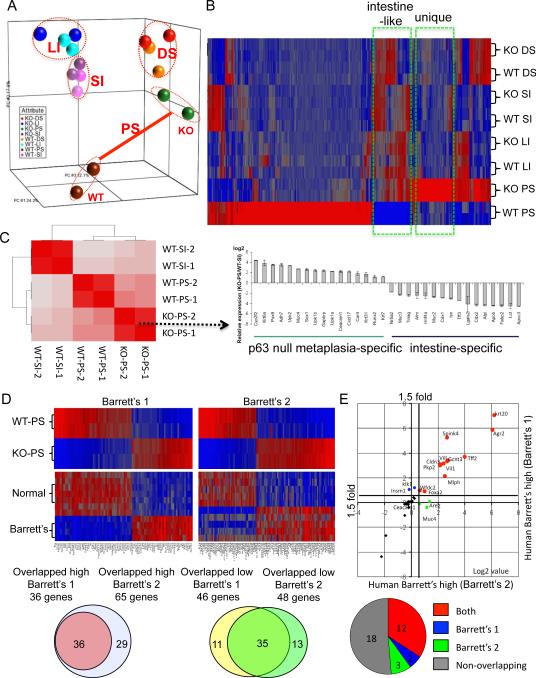
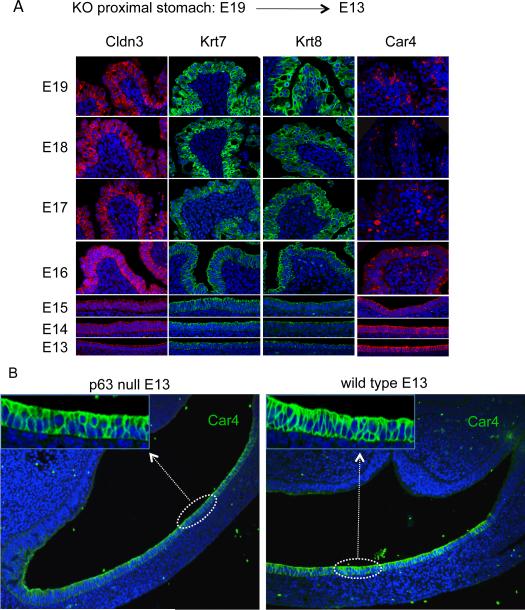
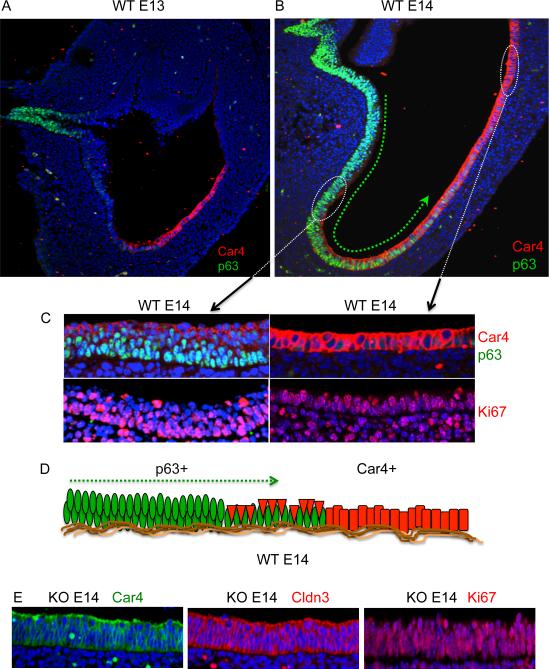
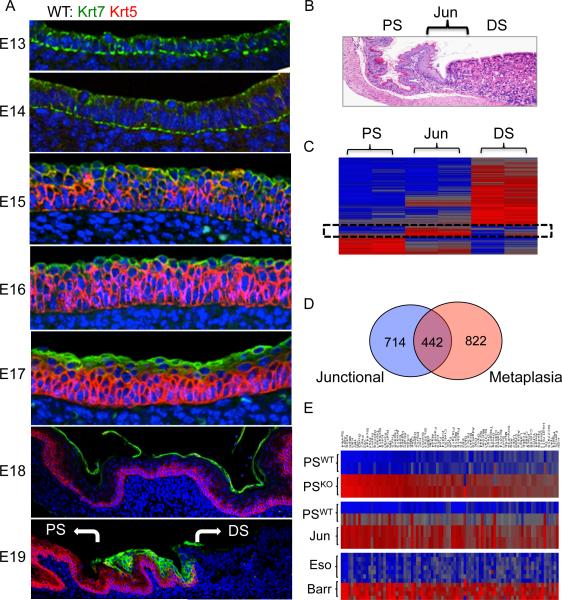
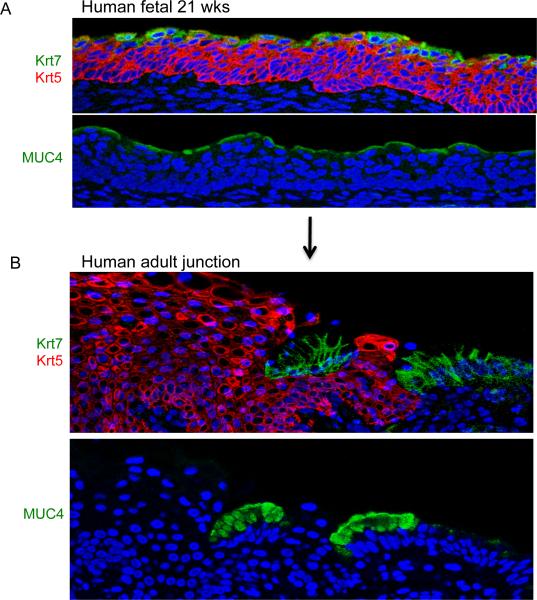
Barrett's esophagus is an intestine-like metaplasia and precursor of esophageal adenocarcinoma. Triggered by gastroesophageal reflux disease, the origin of this metaplasia remains unknown. p63-deficient mice, which lack squamous epithelia, may model acid-reflux damage. We show here that p63 null embryos rapidly develop intestine-like metaplasia with gene expression profiles similar to Barrett's metaplasia. We track its source to a unique embryonic epithelium that is normally undermined and replaced by p63-expressing cells. Significantly, we show that a discrete population of these embryonic cells persists in adult mice and humans at the squamocolumnar junction, the source of Barrett's metaplasia. We show that upon programmed damage to the squamous epithelium, these embryonic cells migrate toward adjacent, specialized squamous cells in a process that may recapitulate early Barrett's. Our findings suggest that certain precancerous lesions, such as Barrett's, initiate not from genetic alterations but from competitive interactions between cell lineages driven by opportunity.
巴雷特食管是一种肠样化生,也是食管腺癌的前身。这种化生由胃食管反流病引发,但起源尚不清楚。缺乏鳞状上皮的 p63 缺陷型小鼠可能会模拟胃酸反流损伤。我们在此表明,p63 缺失的胚胎会迅速发展出类似巴雷特食管的肠样化生,其基因表达谱也与之相似。我们追踪其来源,发现一种独特的胚胎上皮组织通常会被 p63 表达细胞破坏和取代。重要的是,我们发现这些胚胎细胞中的一个离散群体在成年小鼠和人类的鳞柱状交界处仍然存在,而该处正是巴雷特食管化生的源头。我们表明,在对鳞状上皮进行程序性损伤后,这些胚胎细胞会向相邻的特化鳞状细胞迁移,这一过程可能再现早期的巴雷特食管。我们的研究结果表明,某些癌前病变,如巴雷特食管,并非起源于基因突变,而是由机会驱动的细胞谱系间竞争相互作用引起的。