Behm-Ansmant Isabelle, Helm Mark, Motorin Yuri
Laboratoire ARN-RNP Maturation-Structure-Fonction, Enzymologie Moléculaire et Structurale (AREMS), UMR 7214 CNRS-UHP, Nancy Université, boulevard des Aiguillettes, BP 70239, 54506 Vandoeuvre-les-Nancy, France.
J Nucleic Acids. 2011;2011:408053. doi: 10.4061/2011/408053. Epub 2011 Apr 13.
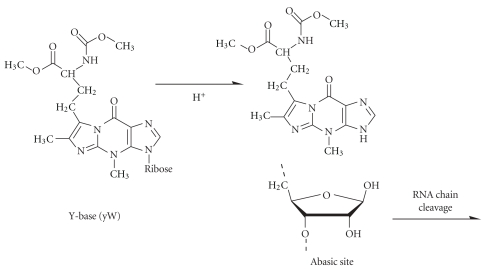
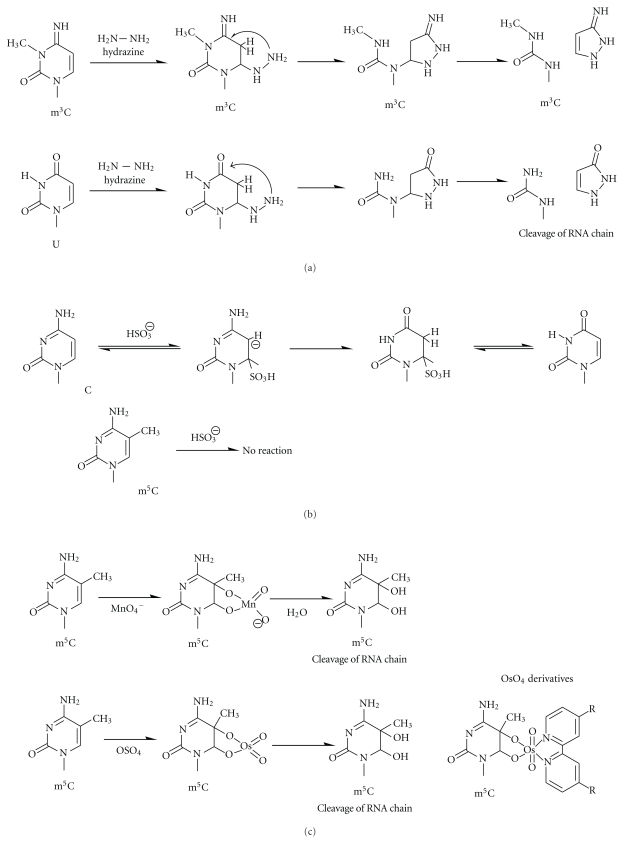
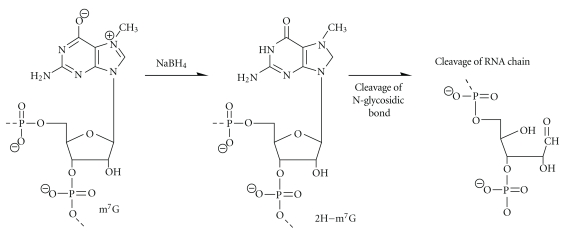
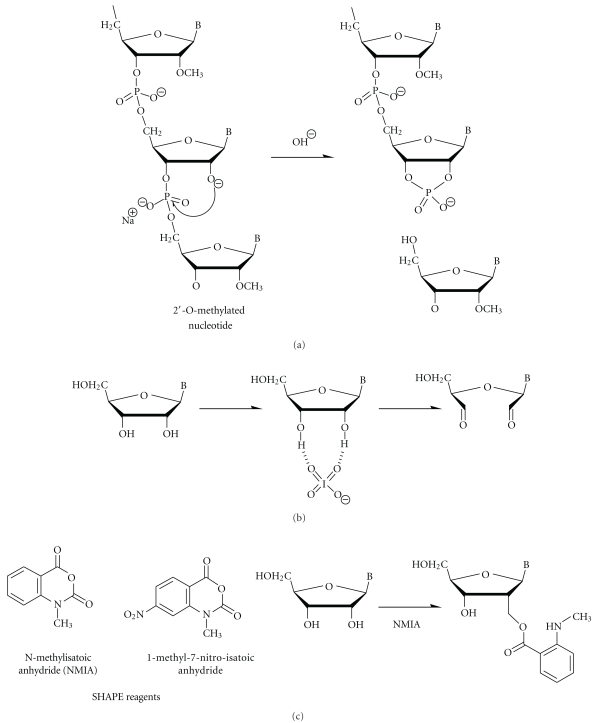
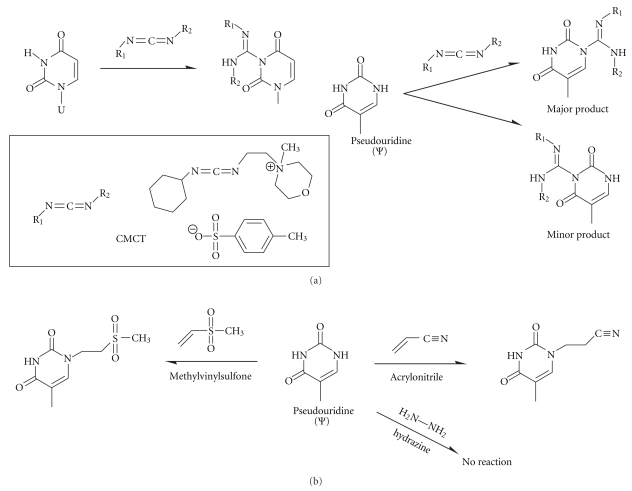
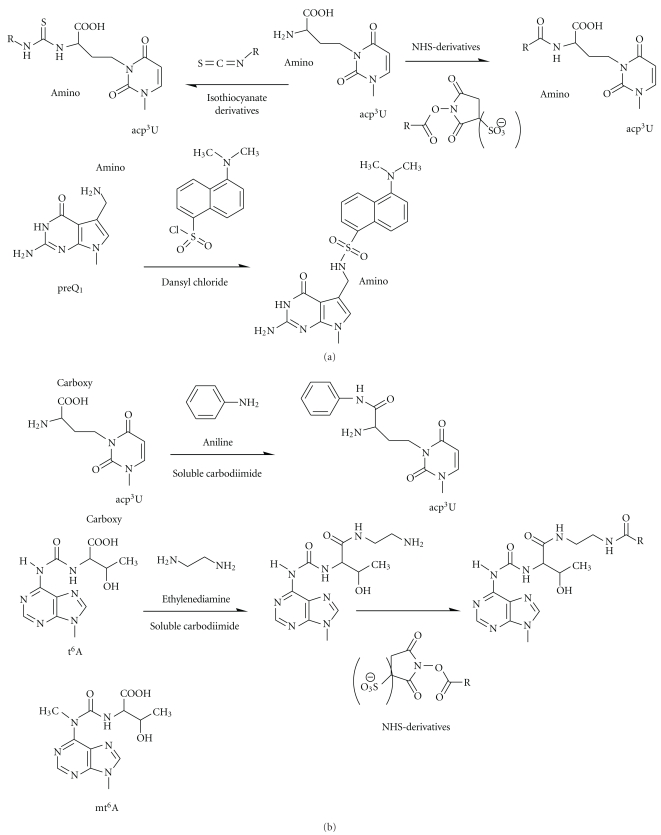
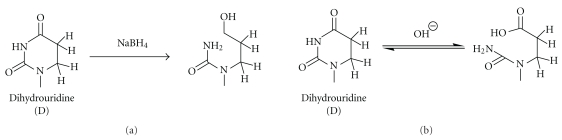
Naturally occurring cellular RNAs contain an impressive number of chemically distinct modified residues which appear posttranscriptionally, as a result of specific action of the corresponding RNA modification enzymes. Over 100 different chemical modifications have been identified and characterized up to now. Identification of the chemical nature and exact position of these modifications is typically based on 2D-TLC analysis of nucleotide digests, on HPLC coupled with mass spectrometry, or on the use of primer extension by reverse transcriptase. However, many modified nucleotides are silent in reverse transcription, since the presence of additional chemical groups frequently does not change base-pairing properties. In this paper, we give a summary of various chemical approaches exploiting the specific reactivity of modified nucleotides in RNA for their detection.
天然存在的细胞RNA含有大量化学性质不同的修饰残基,这些残基在转录后出现,是相应RNA修饰酶特定作用的结果。到目前为止,已经鉴定并表征了100多种不同的化学修饰。这些修饰的化学性质和确切位置的鉴定通常基于核苷酸消化产物的二维薄层层析分析、与质谱联用的高效液相色谱法,或基于逆转录酶引物延伸的方法。然而,许多修饰的核苷酸在逆转录过程中是沉默的,因为额外化学基团的存在通常不会改变碱基配对特性。在本文中,我们总结了利用RNA中修饰核苷酸的特定反应性进行检测的各种化学方法。