Tourkina Elena, Bonner Michael, Oates James, Hofbauer Ann, Richard Mathieu, Znoyko Sergei, Visconti Richard P, Zhang Jing, Hatfield Corey M, Silver Richard M, Hoffman Stanley
Division of Rheumatology and Immunology, Department of Medicine, Medical University of South Carolina, 171 Ashley Avenue, Charleston, SC 29425, USA.
Fibrogenesis Tissue Repair. 2011 Jul 1;4(1):15. doi: 10.1186/1755-1536-4-15.
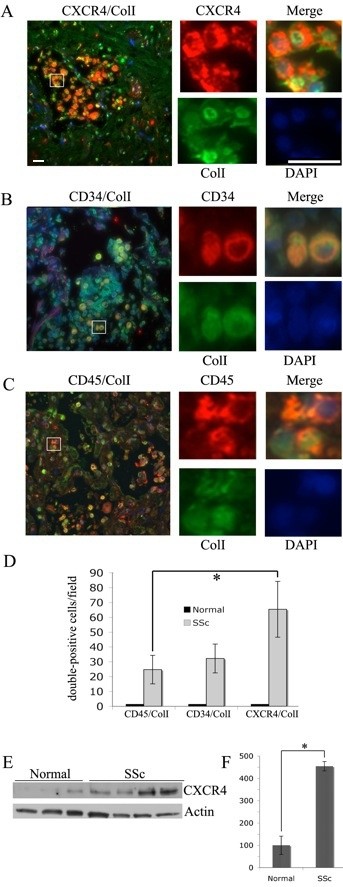
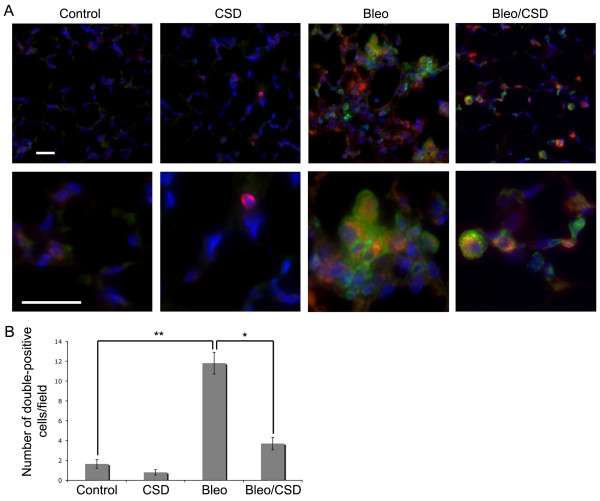
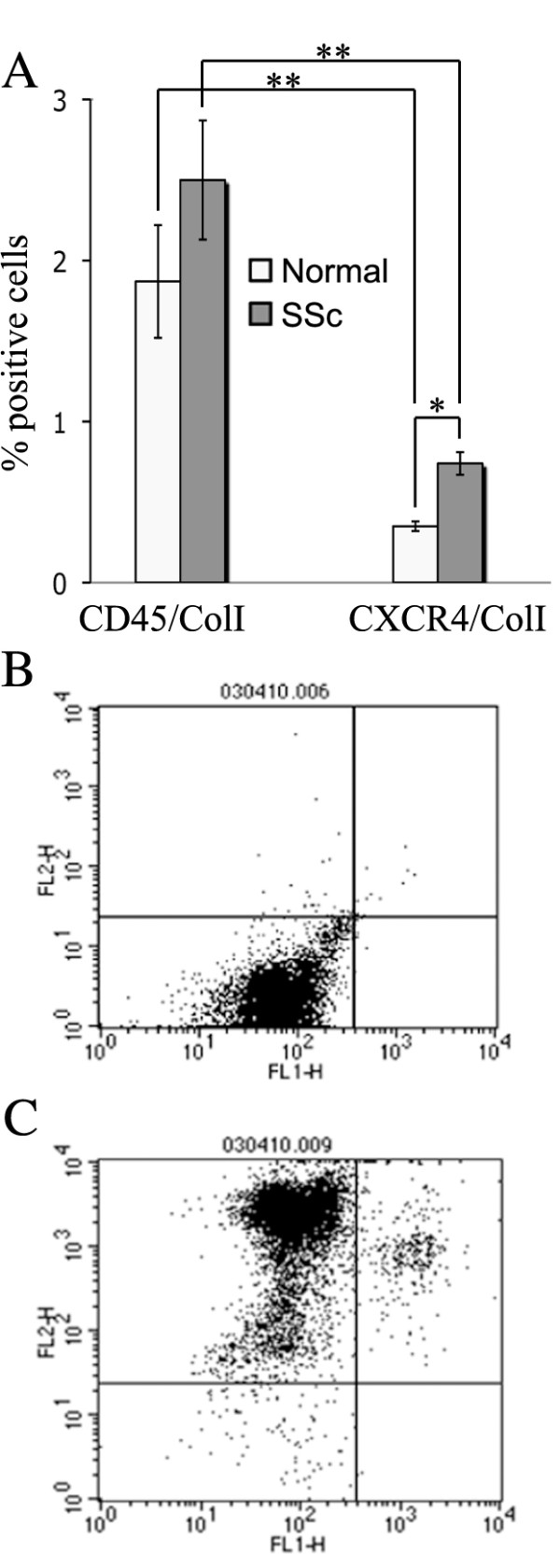
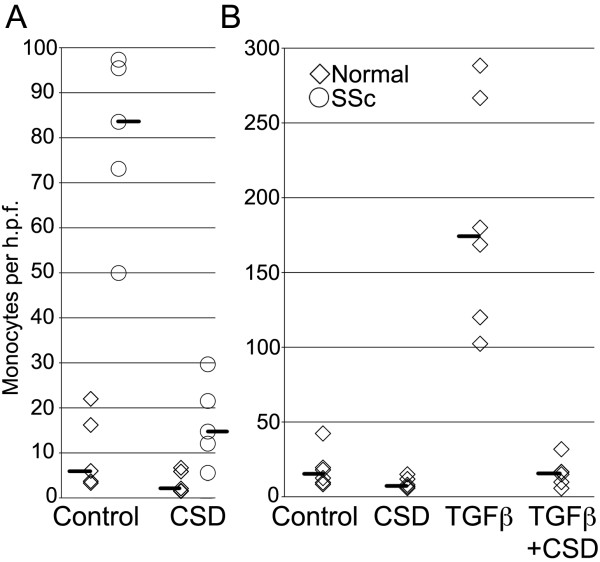
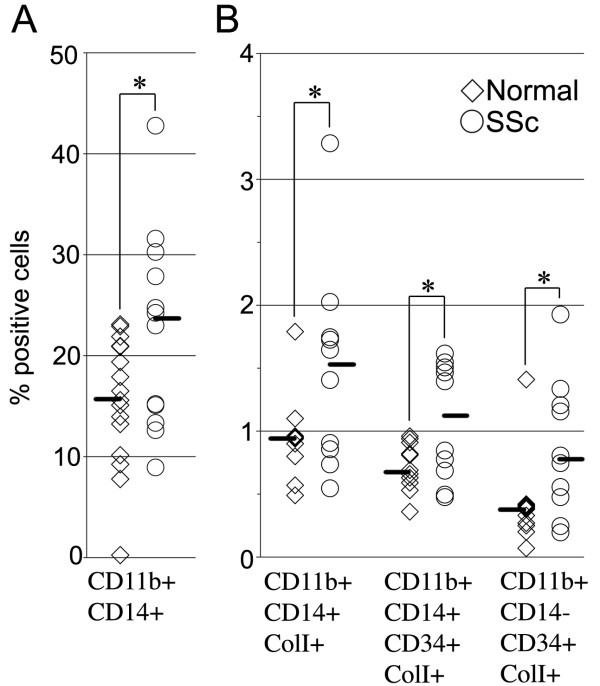
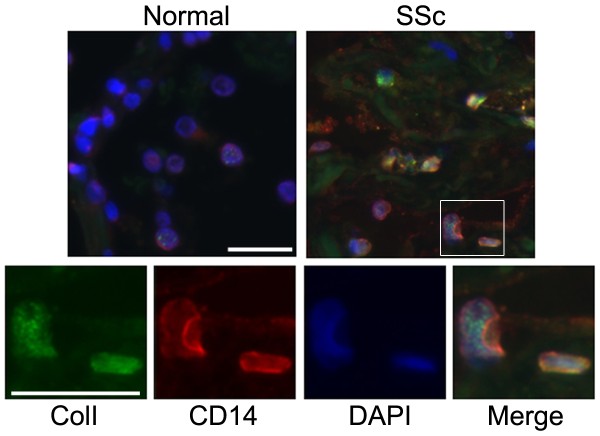
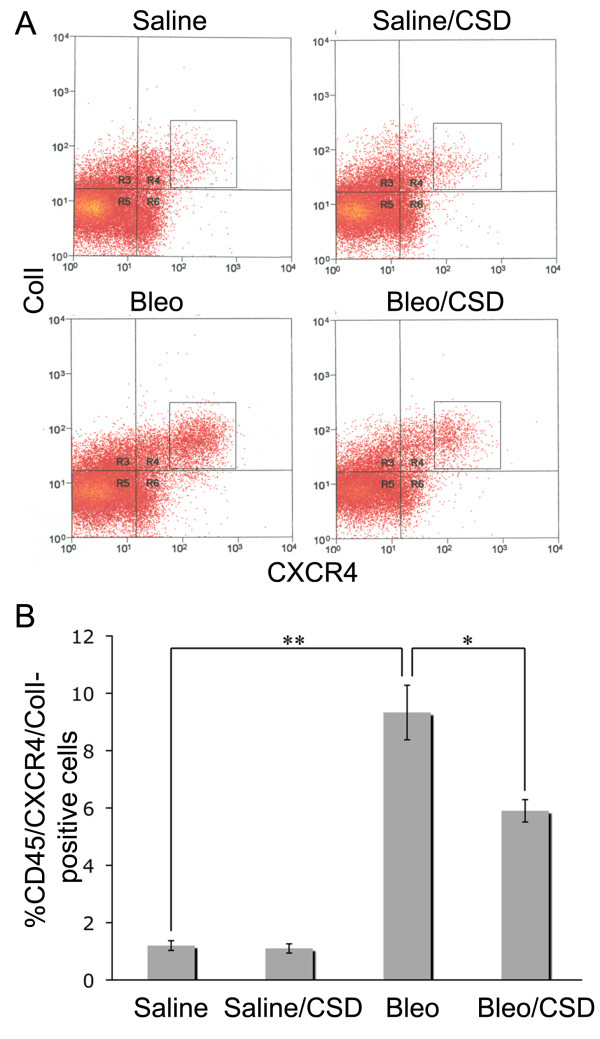
Interstitial lung disease (ILD) is a major cause of morbidity and mortality in scleroderma (systemic sclerosis, or SSc). Fibrocytes are a monocyte-derived cell population implicated in the pathogenesis of fibrosing disorders. Given the recently recognized importance of caveolin-1 in regulating function and signaling in SSc monocytes, in the present study we examined the role of caveolin-1 in the migration and/or trafficking and phenotype of monocytes and fibrocytes in fibrotic lung disease in human patients and an animal model. These studies fill a gap in our understanding of how monocytes and fibrocytes contribute to SSc-ILD pathology. We found that C-X-C chemokine receptor type 4-positive (CXCR4+)/collagen I-positive (ColI+), CD34+/ColI+ and CD45+/ColI+ cells are present in SSc-ILD lungs, but not in control lungs, with CXCR4+ cells being most prevalent. Expression of CXCR4 and its ligand, stromal cell-derived factor 1 (CXCL12), are also highly upregulated in SSc-ILD lung tissue. SSc monocytes, which lack caveolin-1 and therefore overexpress CXCR4, exhibit almost sevenfold increased migration toward CXCL12 compared to control monocytes. Restoration of caveolin-1 function by administering the caveolin scaffolding domain (CSD) peptide reverses this hypermigration. Similarly, transforming growth factor β-treated normal monocytes lose caveolin-1, overexpress CXCR4 and exhibit 15-fold increased monocyte migration that is CSD peptide-sensitive. SSc monocytes exhibit a different phenotype than normal monocytes, expressing high levels of ColI, CD14 and CD34. Because ColI+/CD14+ cells are prevalent in SSc blood, we looked for such cells in lung tissue and confirmed their presence in SSc-ILD lungs but not in normal lungs. Finally, in the bleomycin model of lung fibrosis, we show that CSD peptide diminishes fibrocyte accumulation in the lungs. Our results suggest that low caveolin-1 in SSc monocytes contributes to ILD via effects on cell migration and phenotype and that the hyperaccumulation of fibrocytes in SSc-ILD may result from the altered phenotype and migratory activity of their monocyte precursors.
间质性肺疾病(ILD)是硬皮病(系统性硬化症,或SSc)发病和死亡的主要原因。纤维细胞是一种源自单核细胞的细胞群体,与纤维化疾病的发病机制有关。鉴于最近认识到小窝蛋白-1在调节SSc单核细胞功能和信号传导中的重要性,在本研究中,我们研究了小窝蛋白-1在人类患者和动物模型的纤维化肺病中单核细胞和纤维细胞的迁移和/或运输以及表型中的作用。这些研究填补了我们对单核细胞和纤维细胞如何导致SSc-ILD病理的理解空白。我们发现,C-X-C趋化因子受体4阳性(CXCR4+)/I型胶原蛋白阳性(ColI+)、CD34+/ColI+和CD45+/ColI+细胞存在于SSc-ILD肺组织中,但不存在于对照肺组织中,其中CXCR4+细胞最为普遍。CXCR4及其配体基质细胞衍生因子1(CXCL12)在SSc-ILD肺组织中的表达也高度上调。缺乏小窝蛋白-1并因此过度表达CXCR4的SSc单核细胞与对照单核细胞相比,向CXCL12的迁移增加了近7倍。通过给予小窝蛋白支架结构域(CSD)肽恢复小窝蛋白-1功能可逆转这种过度迁移。同样,经转化生长因子β处理的正常单核细胞会失去小窝蛋白-1,过度表达CXCR4,并表现出对CSD肽敏感的单核细胞迁移增加15倍。SSc单核细胞表现出与正常单核细胞不同的表型,高表达ColI、CD14和CD34。由于ColI+/CD14+细胞在SSc血液中普遍存在,我们在肺组织中寻找此类细胞,并证实它们存在于SSc-ILD肺组织中,而不存在于正常肺组织中。最后,在博来霉素诱导的肺纤维化模型中,我们表明CSD肽可减少肺中纤维细胞的积聚。我们的结果表明,SSc单核细胞中低水平的小窝蛋白-1通过对细胞迁移和表型的影响导致ILD,并且SSc-ILD中纤维细胞的过度积聚可能源于其单核细胞前体的表型改变和迁移活性。