Department of General Dentistry, Ninth People's Hospital, School of Stomatology, Shanghai Jiao Tong University School of Medicine, Shanghai Key Laboratory of Stomatology, 639 Zhi Zao Ju Road, Shanghai, 200011, China.
BMC Complement Altern Med. 2011 Jul 5;11:54. doi: 10.1186/1472-6882-11-54.
Our previous studies showed that Salvianolic acid B (Sal B) inhibited 7,12-dimethylbenz[a]anthracene (DMBA)-induced oral carcinogenesis in hamsters and such anti-cancer effects might be related to the inhibition of angiogenesis. This study was aimed to further investigate the anti-proliferative effect of Sal B on the most common type of oral cancer, oral squamous cell carcinoma (OSCC) and the possible mechanisms of action with respect to angiogenesis inhibition.
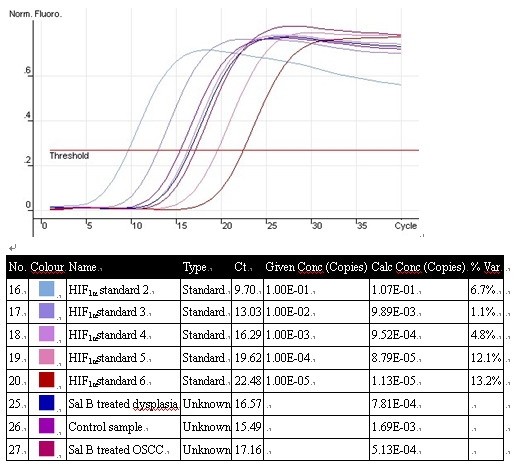
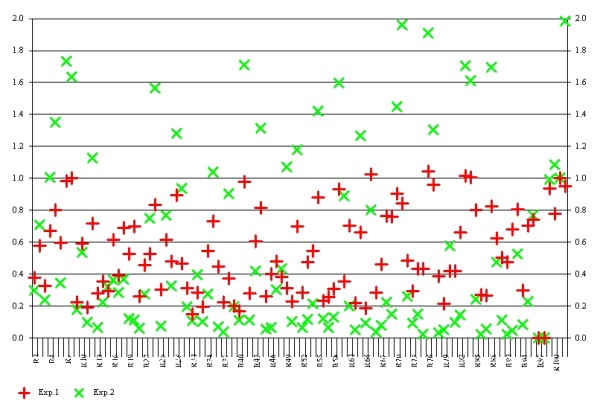
Two well-characterized oral squamous cell carcinoma cell lines, CAL27 and SCC4, and premalignant leukoplakia cells were treated with different concentrations of Sal B. Cytotoxicity was assessed by MTT assay. cDNA microarray was utilized to evaluate the expression of 96 genes known to be involved in modulating the biological processes of angiogenesis. Real-time reverse transcription-polymerase chain reaction analysis was conducted to confirm the cDNA microarray data.
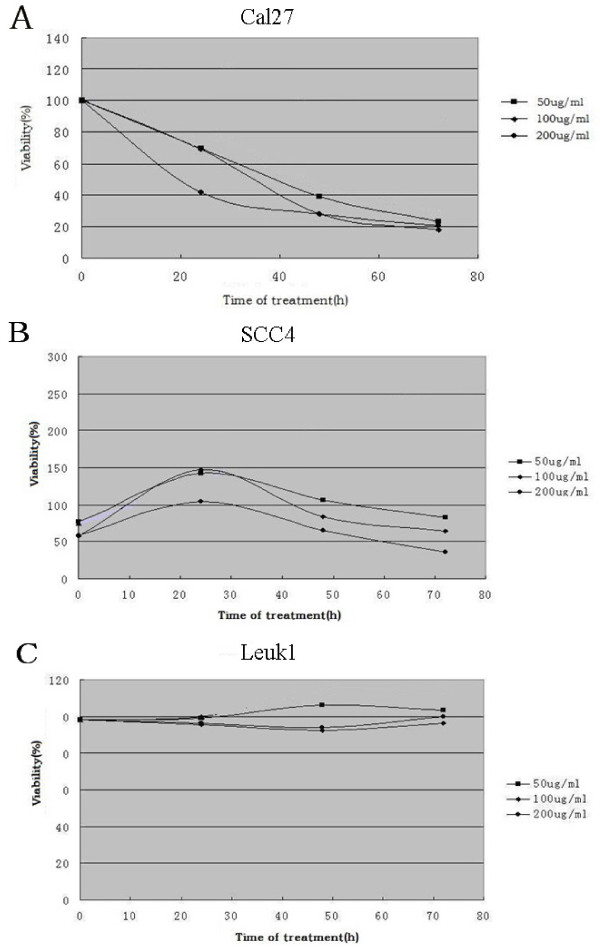
Sal B induced growth inhibition in OSCC cell lines but had limited effects on premalignant cells. A total of 17 genes showed a greater than 3-fold change when comparing Sal B treated OSCC cells to the control. Among these genes, HIF-1α, TNFα and MMP9 are specifically inhibited, expression of THBS2 was up-regulated.
Sal B has inhibitory effect on OSCC cell growth. The antitumor effect can be attributed to anti-angiogenic potential induced by a decreased expression of some key regulator genes of angiogenesis. Sal B may be a promising modality for treating oral squamous cell carcinoma.
我们之前的研究表明,丹酚酸 B(Sal B)抑制了 7,12-二甲基苯并[a]蒽(DMBA)诱导的仓鼠口腔致癌作用,这种抗癌作用可能与抑制血管生成有关。本研究旨在进一步研究 Sal B 对最常见的口腔癌——口腔鳞状细胞癌(OSCC)的抗增殖作用及其对血管生成抑制的可能作用机制。
用不同浓度的 Sal B 处理两种经过充分鉴定的口腔鳞状细胞癌细胞系 CAL27 和 SCC4 以及癌前白斑细胞。通过 MTT 法评估细胞毒性。利用 cDNA 微阵列评估已知参与调节血管生成生物学过程的 96 个基因的表达。通过实时逆转录聚合酶链反应分析来验证 cDNA 微阵列数据。
Sal B 诱导 OSCC 细胞系生长抑制,但对癌前细胞的作用有限。与对照组相比,OSCC 细胞中 17 个基因的表达变化超过 3 倍。在这些基因中,HIF-1α、TNFα 和 MMP9 被特异性抑制,THBS2 的表达上调。
Sal B 对 OSCC 细胞生长具有抑制作用。抗肿瘤作用归因于某些关键血管生成调节基因表达下调引起的抗血管生成潜力。Sal B 可能是治疗口腔鳞状细胞癌的一种有前途的方法。