Xiao Zhun, Liu Wei, Mu Yong-Ping, Zhang Hua, Wang Xiao-Ning, Zhao Chang-Qing, Chen Jia-Mei, Liu Ping
Institute of Interdisciplinary Medicine, Shanghai University of Traditional Chinese Medicine, Shanghai, China.
Institute of Liver Diseases, Key Laboratory of Liver and Kidney Diseases (Ministry of Education), Shuguang Hospital Affiliated to Shanghai University of Traditional Chinese Medicine, Shanghai, China.
Front Pharmacol. 2020 Nov 11;11:572373. doi: 10.3389/fphar.2020.572373. eCollection 2020.
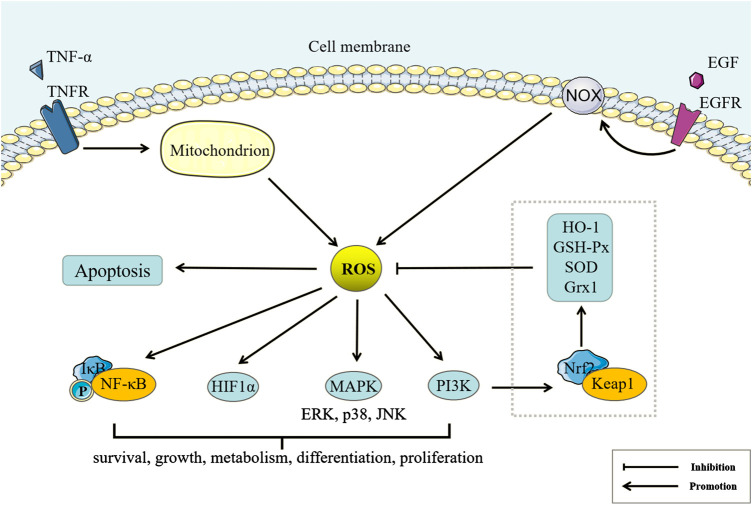
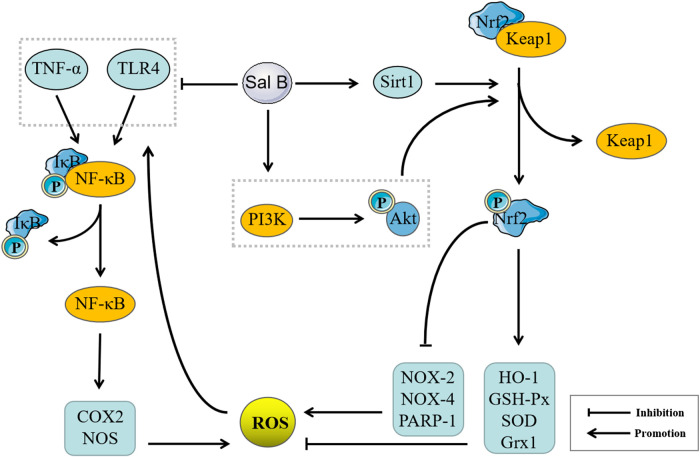
Salvianolic acid B (Sal B) is one of the main active ingredients of , with strong antioxidant effects. Recent findings have shown that Sal B has anti-inflammatory, anti-apoptotic, anti-fibrotic effects and can promote stem cell proliferation and differentiation, and has a beneficial effect on cardiovascular and cerebrovascular diseases, aging, and liver fibrosis. Reactive oxygen species (ROS) include oxygen free radicals and oxygen-containing non-free radicals. ROS can regulate cell proliferation, survival, death and differentiation to regulate inflammation, and immunity, while Sal B can scavenge oxygen free radicals by providing hydrogen atoms and reduce the production of oxygen free radicals and oxygen-containing non-radicals by regulating the expression of antioxidant enzymes. The many pharmacological effects of Sal B may be closely related to its elimination and inhibition of ROS generation, and Nuclear factor E2-related factor 2/Kelch-like ECH-related protein 1 may be the core link in its regulation of the expression of antioxidant enzyme to exert its antioxidant effect. What is confusing and interesting is that Sal B exhibits the opposite mechanisms in tumors. To clarify the specific target of Sal B and the correlation between its regulation of oxidative stress and energy metabolism homeostasis will help to further understand its role in different pathological conditions, and provide a scientific basis for its further clinical application and new drug development. Although Sal B has broad prospects in clinical application due to its extensive pharmacological effects, the low bioavailability is a serious obstacle to further improving its efficacy and promoting clinical application. Therefore, how to improve the availability of Sal B requires the joint efforts of many interdisciplinary subjects.
丹酚酸B(Sal B)是[具体药物名称]的主要活性成分之一,具有强大的抗氧化作用。最近的研究结果表明,Sal B具有抗炎、抗凋亡、抗纤维化作用,能够促进干细胞增殖和分化,对心脑血管疾病、衰老及肝纤维化具有有益作用。活性氧(ROS)包括氧自由基和含氧化合物非自由基。ROS可调节细胞增殖、存活、死亡及分化以调控炎症和免疫,而Sal B可通过提供氢原子清除氧自由基,并通过调节抗氧化酶的表达减少氧自由基和含氧化合物非自由基的产生。Sal B的诸多药理作用可能与其清除及抑制ROS生成密切相关,核因子E2相关因子2/ Kelch样ECH相关蛋白1可能是其调节抗氧化酶表达以发挥抗氧化作用的核心环节。令人困惑且有趣的是,Sal B在肿瘤中表现出相反的机制。阐明Sal B的具体靶点及其对氧化应激和能量代谢稳态调节之间的相关性,将有助于进一步了解其在不同病理状态下的作用,并为其进一步临床应用和新药研发提供科学依据。尽管Sal B因其广泛的药理作用在临床应用中具有广阔前景,但低生物利用度是进一步提高其疗效及促进临床应用的严重障碍。因此,如何提高Sal B的生物利用度需要多学科共同努力。