Muhammad Nasiru, Mansur Rabiu M, Dantani Adamu M, Elhassan Elizabeth, Isiyaku Sunday
College of Heath Sciences, Usmanu Danfodiyo University, Sokoto, Nigeria.
Middle East Afr J Ophthalmol. 2011 Apr;18(2):123-8. doi: 10.4103/0974-9233.80700.
To estimate the prevalence of low vision and blindness, identify the causes, and suggest policies for an effective eye care program based on 2005 data from Sokoto State, Nigeria.
A stratified two-stage cluster sampling method was used to quantify the prevalence of blindness and the causes from 4 health zones in Sokoto State. Subjects were evaluated using a magnifying loupe, direct ophthalmoscope and torchlight. Data were collected based on the World Health Organization prevention of blindness coding for an eye examination. Prevalences with 95% confidence intervals (CI) were calculated and surgical coverage for causes of blindness was also analyzed.
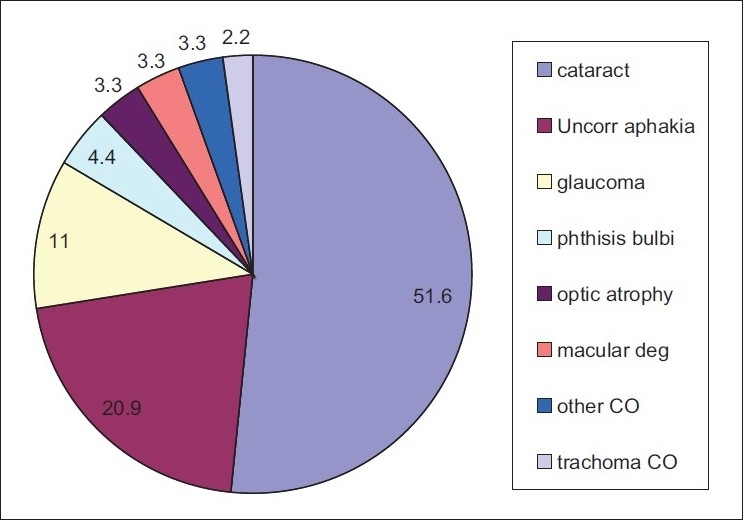
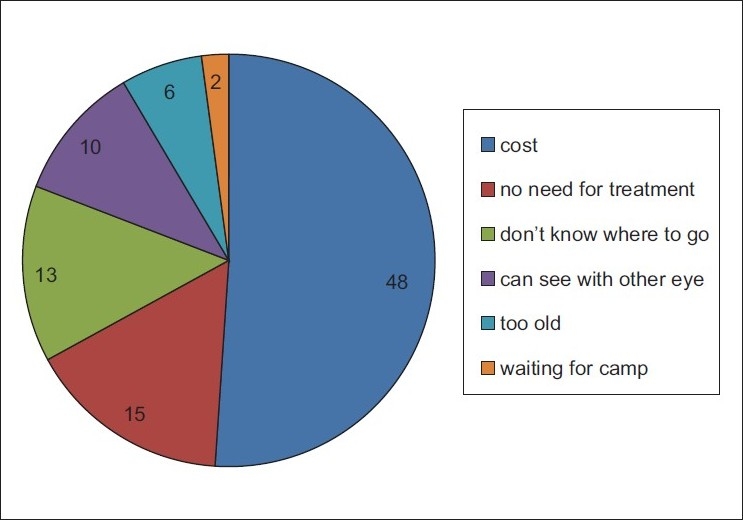
The response rate was 91%. The prevalence of bilateral blindness was 1.9% (95% CI: 1.5-2.3%) ranging from 1.6% to 2.0% across the four health zones. The prevalence was 2.1% (95% CI: 1.6-2.6%) in males and 1.6% (95% CI: 1.1-2.1%) in females. The leading cause of bilateral blindness was cataract (51.6%), followed by uncorrected aphakia (20.9%) and glaucoma (11%). The prevalence of bilateral operable cataract was 1.9% (95% CI: 1.5-2.3%). The cataract surgical coverage (individuals with visual acuity <6/60) for the study was lower than the couching coverage (4.4% vs. 14.9%, respectively). Surgical coverage for trichiasis was 4.4%. The major barrier to cataract and glaucoma management was cost.
The prevalence of blindness in Sokoto State is high yet the main causes are largely avoidable. Barriers can be reduced by appropriate health education regarding the eye care program and the provision of integrated, sustainable, affordable and equitable services.
根据尼日利亚索科托州2005年的数据,估计低视力和失明的患病率,确定病因,并为有效的眼保健计划提出政策建议。
采用分层两阶段整群抽样方法,对索科托州4个卫生区的失明患病率及其病因进行量化。使用放大 loupe、直接检眼镜和手电筒对受试者进行评估。根据世界卫生组织预防失明编码进行眼科检查收集数据。计算患病率及95%置信区间(CI),并分析失明病因的手术覆盖率。
应答率为91%。双侧失明患病率为1.9%(95%CI:1.5 - 2.3%),4个卫生区的患病率在1.6%至2.0%之间。男性患病率为2.1%(95%CI:1.6 - 2.6%),女性患病率为1.6%(95%CI:1.1 - 2.1%)。双侧失明的主要病因是白内障(51.6%),其次是未矫正的无晶状体眼(20.9%)和青光眼(11%)。双侧可手术白内障的患病率为1.9%(95%CI:1.5 - 2.3%)。该研究中白内障手术覆盖率(视力<6/60的个体)低于针拨术覆盖率(分别为4.4%和14.9%)。倒睫的手术覆盖率为4.4%。白内障和青光眼治疗的主要障碍是费用。
索科托州的失明患病率很高,但主要病因在很大程度上是可以避免的。通过对眼保健计划进行适当的健康教育,并提供综合、可持续、负担得起且公平的服务,可以减少障碍。