Department of Physiology and Pharmacology, The University of Western Ontario, London, Ontario, Canada.
PLoS One. 2011;6(6):e21599. doi: 10.1371/journal.pone.0021599. Epub 2011 Jun 28.
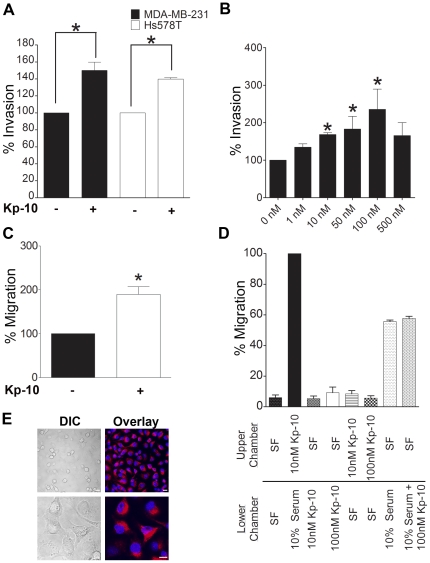
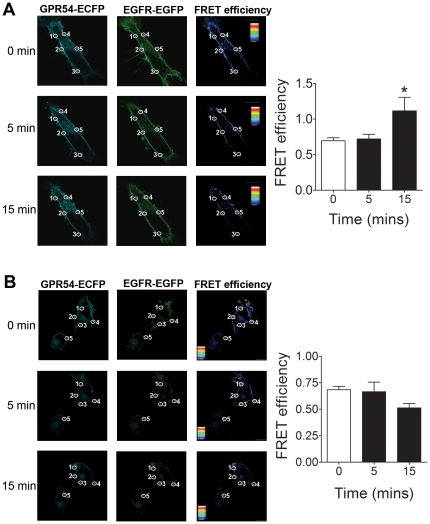
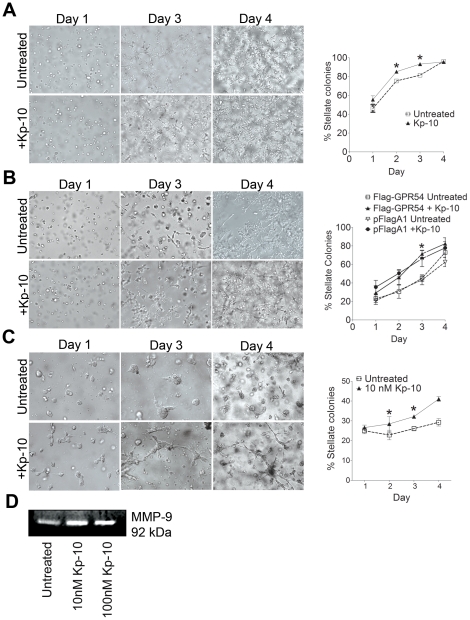
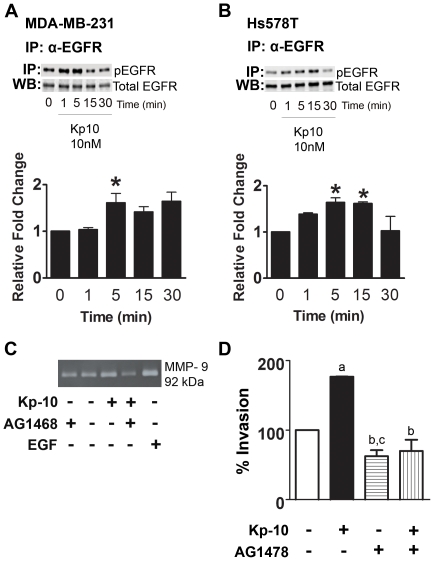
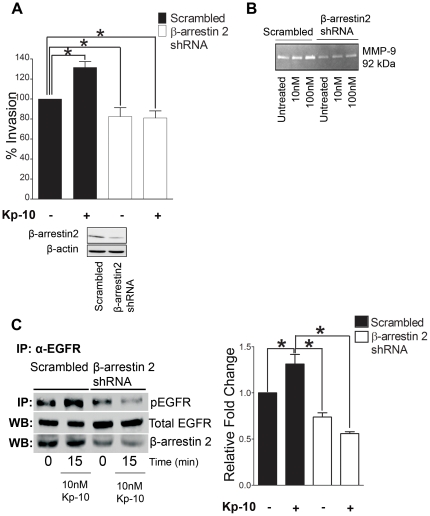
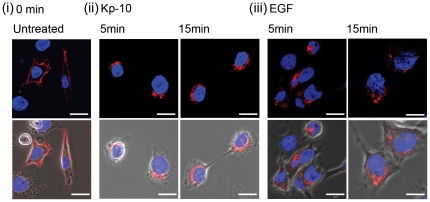
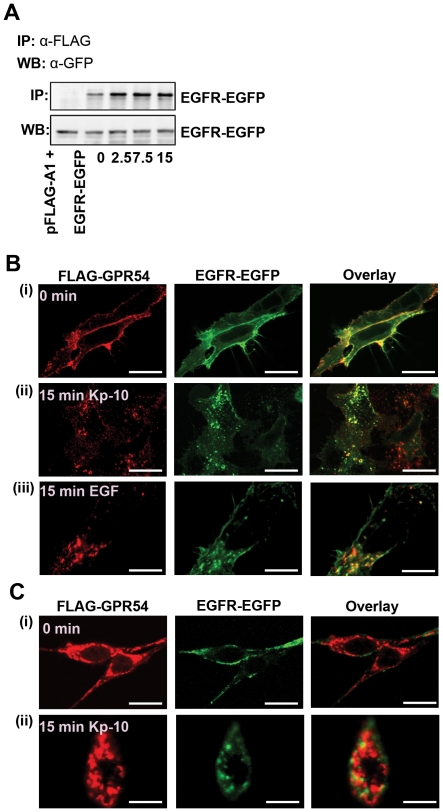
Kisspeptins (Kp), peptide products of the Kisspeptin-1 (KISS1) gene are endogenous ligands for a G protein-coupled receptor 54 (GPR54). Previous findings have shown that KISS1 acts as a metastasis suppressor in numerous cancers in humans. However, recent studies have demonstrated that an increase in KISS1 and GPR54 expression in human breast tumors correlates with higher tumor grade and metastatic potential. At present, whether or not Kp signaling promotes breast cancer cell invasiveness, required for metastasis and the underlying mechanisms, is unknown. We have found that kisspeptin-10 (Kp-10), the most potent Kp, stimulates the invasion of human breast cancer MDA-MB-231 and Hs578T cells using Matrigel-coated Transwell chamber assays and induces the formation of invasive stellate structures in three-dimensional invasion assays. Furthermore, Kp-10 stimulated an increase in matrix metalloprotease (MMP)-9 activity. We also found that Kp-10 induced the transactivation of epidermal growth factor receptor (EGFR). Knockdown of the GPCR scaffolding protein, β-arrestin 2, inhibited Kp-10-induced EGFR transactivation as well as Kp-10 induced invasion of breast cancer cells via modulation of MMP-9 secretion and activity. Finally, we found that the two receptors associate with each other under basal conditions, and FRET analysis revealed that GPR54 interacts directly with EGFR. The stability of the receptor complex formation was increased upon treatment of cells by Kp-10. Taken together, our findings suggest a novel mechanism by which Kp signaling via GPR54 stimulates breast cancer cell invasiveness.
Kisspeptins (Kp),是 Kisspeptin-1 (KISS1) 基因的肽产物,是 G 蛋白偶联受体 54 (GPR54) 的内源性配体。先前的研究表明,KISS1 在人类的许多癌症中充当转移抑制因子。然而,最近的研究表明,人类乳腺肿瘤中 KISS1 和 GPR54 表达的增加与更高的肿瘤分级和转移潜能相关。目前,Kp 信号是否促进乳腺癌细胞的侵袭性,这是转移所必需的,其潜在机制尚不清楚。我们发现,最强的 Kisspeptin-10 (Kp-10) 通过使用 Matrigel 包被的 Transwell 室测定法刺激人乳腺癌 MDA-MB-231 和 Hs578T 细胞的侵袭,并在三维侵袭测定中诱导侵袭性星状结构的形成。此外,Kp-10 刺激基质金属蛋白酶 (MMP)-9 活性的增加。我们还发现,Kp-10 诱导表皮生长因子受体 (EGFR) 的反式激活。GPCR 支架蛋白β-arrestin 2 的敲低抑制了 Kp-10 诱导的 EGFR 反式激活以及 Kp-10 通过调节 MMP-9 分泌和活性诱导的乳腺癌细胞侵袭。最后,我们发现这两个受体在基础条件下相互关联,并且 FRET 分析表明 GPR54 与 EGFR 直接相互作用。Kp-10 处理细胞后,受体复合物形成的稳定性增加。总之,我们的研究结果表明,Kp 通过 GPR54 信号刺激乳腺癌细胞侵袭性的一种新机制。