School of Physics, University of Sydney, Sydney, Australia.
PLoS One. 2011;6(7):e21727. doi: 10.1371/journal.pone.0021727. Epub 2011 Jul 1.
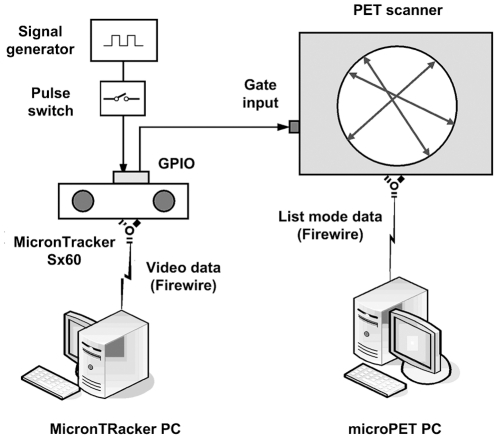
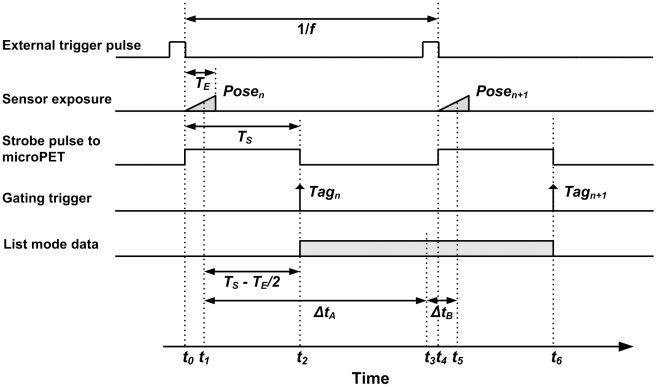
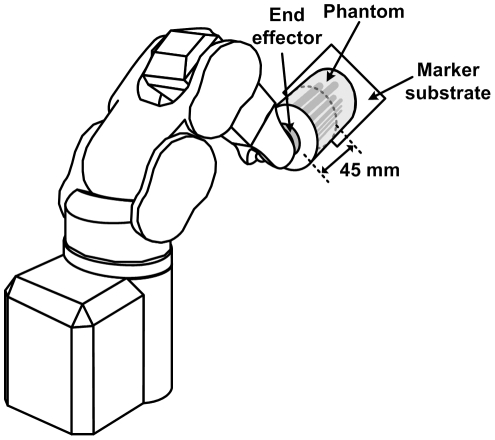
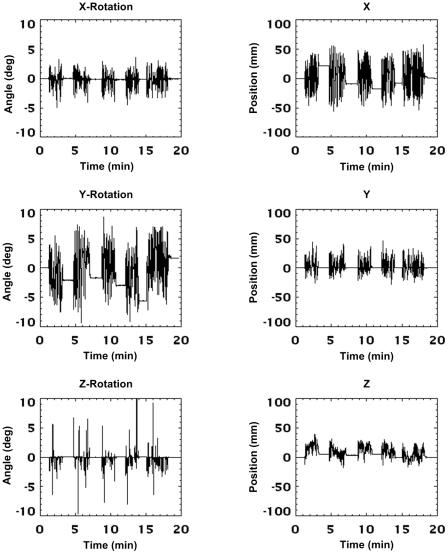
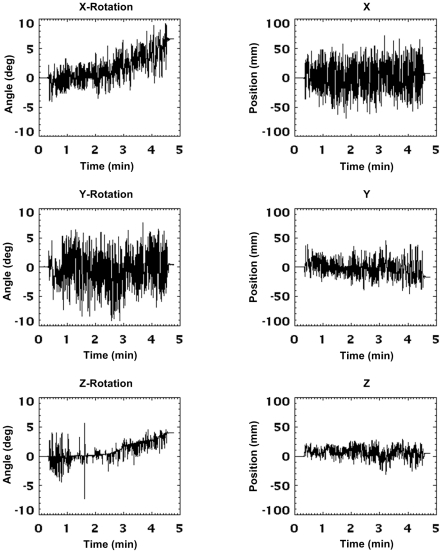
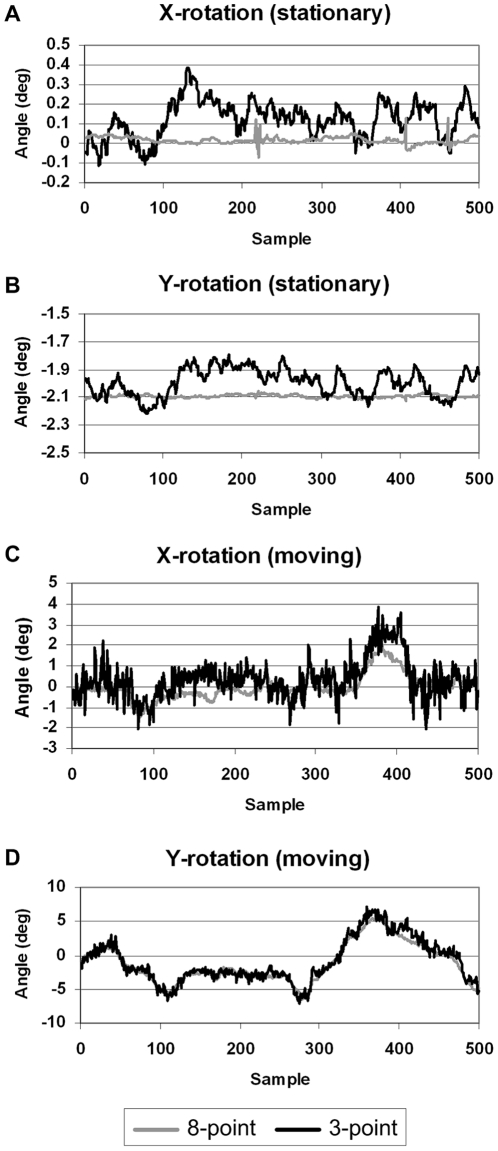
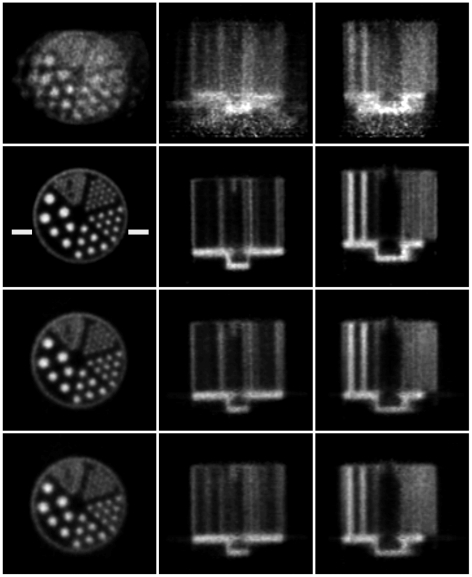
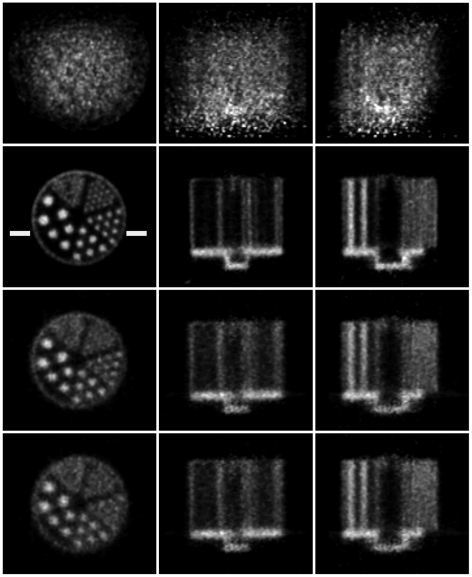
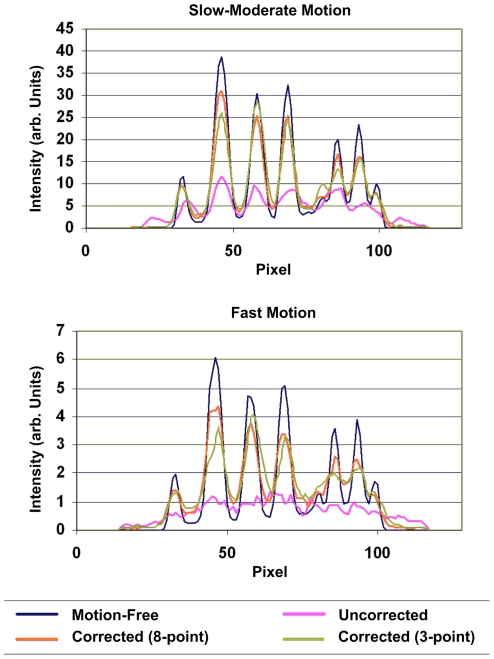
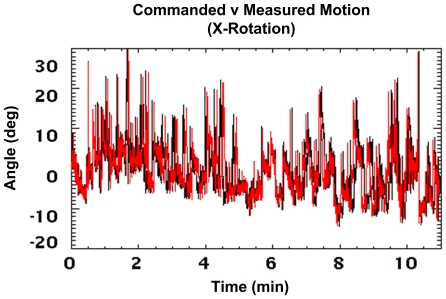
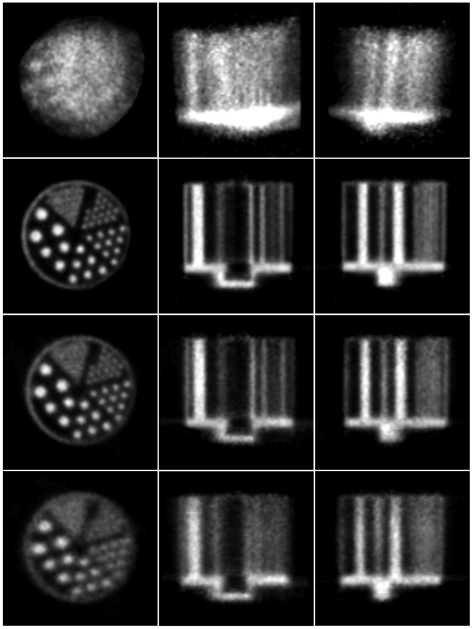
Positron emission tomography (PET) is a non-invasive molecular imaging technique using positron-emitting radioisotopes to study functional processes within the body. High resolution PET scanners designed for imaging rodents and non-human primates are now commonplace in preclinical research. Brain imaging in this context, with motion compensation, can potentially enhance the usefulness of PET by avoiding confounds due to anaesthetic drugs and enabling freely moving animals to be imaged during normal and evoked behaviours. Due to the frequent and rapid motion exhibited by alert, awake animals, optimal motion correction requires frequently sampled pose information and precise synchronisation of these data with events in the PET coincidence data stream. Motion measurements should also be as accurate as possible to avoid degrading the excellent spatial resolution provided by state-of-the-art scanners. Here we describe and validate methods for optimised motion tracking suited to the correction of motion in awake rats. A hardware based synchronisation approach is used to achieve temporal alignment of tracker and scanner data to within 10 ms. We explored the impact of motion tracker synchronisation error, pose sampling rate, rate of motion, and marker size on motion correction accuracy. With accurate synchronisation (<100 ms error), a sampling rate of >20 Hz, and a small head marker suitable for awake animal studies, excellent motion correction results were obtained in phantom studies with a variety of continuous motion patterns, including realistic rat motion (<5% bias in mean concentration). Feasibility of the approach was also demonstrated in an awake rat study. We conclude that motion tracking parameters needed for effective motion correction in preclinical brain imaging of awake rats are achievable in the laboratory setting. This could broaden the scope of animal experiments currently possible with PET.
正电子发射断层扫描(PET)是一种使用正电子发射放射性同位素来研究体内功能过程的非侵入性分子成像技术。现在,设计用于成像啮齿动物和非人类灵长类动物的高分辨率 PET 扫描仪在临床前研究中很常见。在这种情况下,通过运动补偿进行脑成像,可以通过避免麻醉药物引起的混淆并使动物在正常和诱发行为期间自由移动来提高 PET 的有用性。由于警觉和清醒动物频繁且快速的运动,最佳运动校正需要频繁采样的姿势信息,并将这些数据与 PET 符合数据流中的事件精确同步。运动测量也应尽可能准确,以避免降低最先进扫描仪提供的优异空间分辨率。在这里,我们描述并验证了适合清醒大鼠运动校正的优化运动跟踪方法。基于硬件的同步方法用于实现跟踪器和扫描仪数据之间的时间对齐,误差在 10 毫秒以内。我们探讨了运动跟踪器同步误差、姿势采样率、运动速度和标记大小对运动校正精度的影响。在准确的同步(<100 毫秒误差)、>20 Hz 的采样率和适合清醒动物研究的小头部标记的情况下,我们在具有各种连续运动模式的幻影研究中获得了极好的运动校正结果,包括逼真的大鼠运动(平均浓度的偏差<5%)。在清醒大鼠研究中也证明了该方法的可行性。我们得出结论,在清醒大鼠的临床前脑成像中进行有效运动校正所需的运动跟踪参数在实验室环境中是可行的。这可以拓宽目前使用 PET 进行动物实验的范围。