Irsch Kristina, Gramatikov Boris, Wu Yi-Kai, Guyton David
The Wilmer Ophthalmological Institute, The Johns Hopkins University School of Medicine, Wilmer 233, The Johns Hopkins Hospital, 600 N. Wolfe Street, Baltimore, MD 21287-9028, USA.
Biomed Opt Express. 2011 Jul 1;2(7):1955-68. doi: 10.1364/BOE.2.001955. Epub 2011 Jun 17.
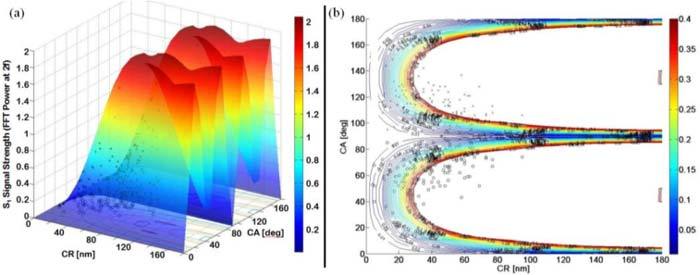
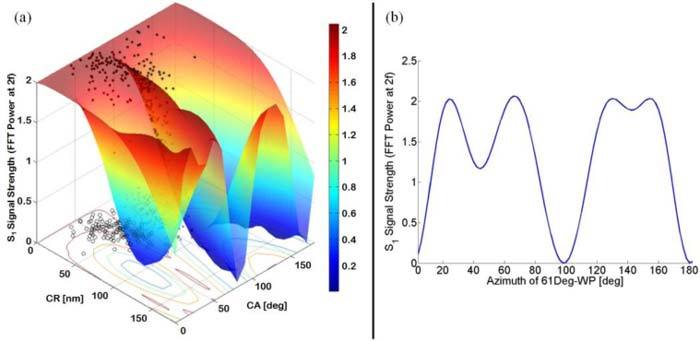
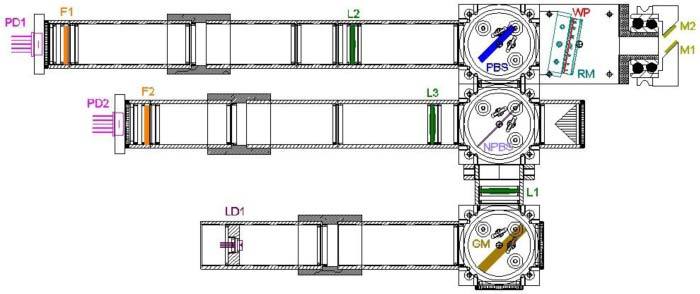
Utilizing the measured corneal birefringence from a data set of 150 eyes of 75 human subjects, an algorithm and related computer program, based on Müller-Stokes matrix calculus, were developed in MATLAB for assessing the influence of corneal birefringence on retinal birefringence scanning (RBS) and for converging upon an optical/mechanical design using wave plates ("wave-plate-enhanced RBS") that allows foveal fixation detection essentially independently of corneal birefringence. The RBS computer model, and in particular the optimization algorithm, were verified with experimental human data using an available monocular RBS-based eye fixation monitor. Fixation detection using wave-plate-enhanced RBS is adaptable to less cooperative subjects, including young children at risk for developing amblyopia.
利用75名人类受试者150只眼睛的数据集所测得的角膜双折射,基于米勒 - 斯托克斯矩阵演算,在MATLAB中开发了一种算法及相关计算机程序,用于评估角膜双折射对视网膜双折射扫描(RBS)的影响,并通过使用波片(“波片增强型RBS”)来确定一种光学/机械设计,该设计能够基本独立于角膜双折射进行中央凹注视检测。使用现有的基于单眼RBS的眼注视监测器,用实验性人体数据对RBS计算机模型,特别是优化算法进行了验证。使用波片增强型RBS进行注视检测适用于不太配合的受试者,包括有患弱视风险的幼儿。