Gotoh Tomomi, Endo Motoyoshi, Oike Yuichi
Department of Molecular Genetics, Graduate School of Medical Sciences, Kumamoto University, Honjo 1-1-1, Kumamoto 860-8556, Japan.
Int J Inflam. 2011;2011:259462. doi: 10.4061/2011/259462. Epub 2011 Jun 27.
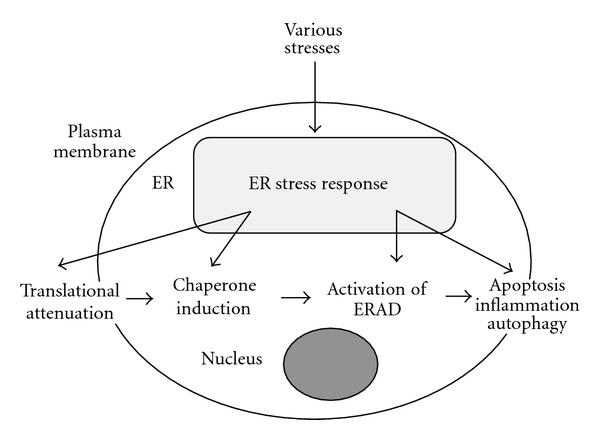
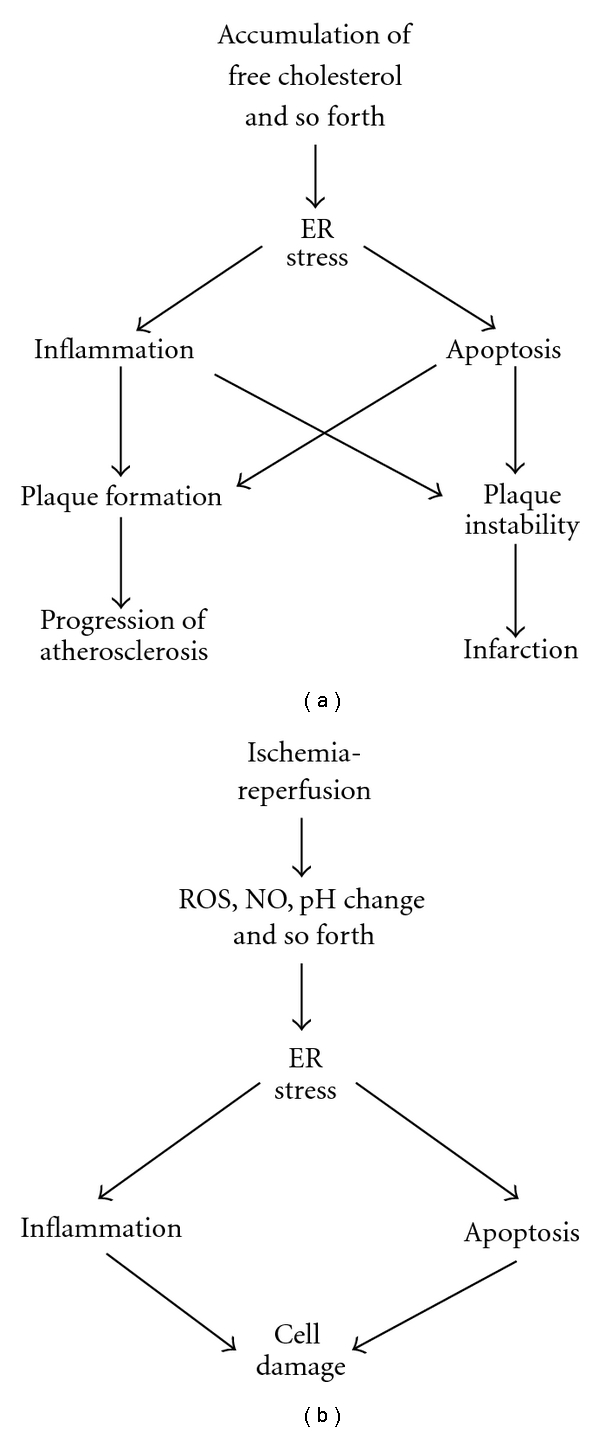
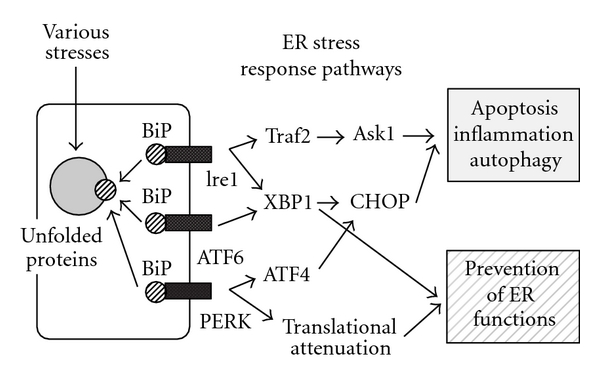
The endoplasmic reticulum (ER) is the site of synthesis and maturation of proteins designed for secretion or for localization on the cell membrane. Various types of stress from both inside and outside cells disturb ER function, thus causing unfolded or misfolded proteins to accumulate in the ER. To improve and maintain the ER functions against such stresses, the ER stress response pathway is activated. However, when the stress is prolonged or severe, apoptosis pathways are activated to remove damaged cells. It was recently reported that the ER stress pathway is also involved in the inflammatory response, whereby inflammation induces ER stress, and ER stress induces an inflammatory response. Therefore, the ER stress response pathway is involved in various diseases, including cardiovascular diseases such as atherosclerosis and ischemic diseases, in various ways. The ER stress pathway may represent a novel target for the treatment of these diseases.
内质网(ER)是合成和成熟用于分泌或定位在细胞膜上的蛋白质的场所。细胞内外的各种应激会干扰内质网的功能,从而导致未折叠或错误折叠的蛋白质在内质网中积累。为了改善和维持内质网针对此类应激的功能,内质网应激反应途径被激活。然而,当应激持续时间长或程度严重时,细胞凋亡途径被激活以清除受损细胞。最近有报道称,内质网应激途径也参与炎症反应,即炎症诱导内质网应激,而内质网应激又诱导炎症反应。因此,内质网应激反应途径以多种方式参与包括动脉粥样硬化和缺血性疾病等心血管疾病在内的各种疾病。内质网应激途径可能是治疗这些疾病的一个新靶点。