New York University, New York, NY 10003, USA.
Dev Psychopathol. 2011 Aug;23(3):845-57. doi: 10.1017/S0954579411000344.
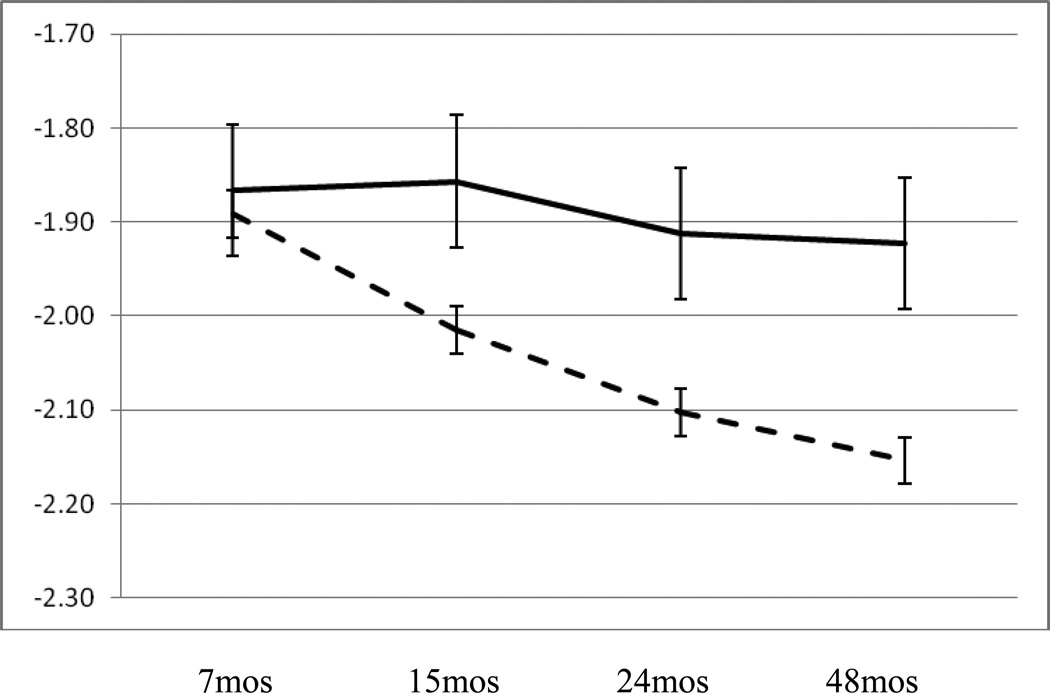
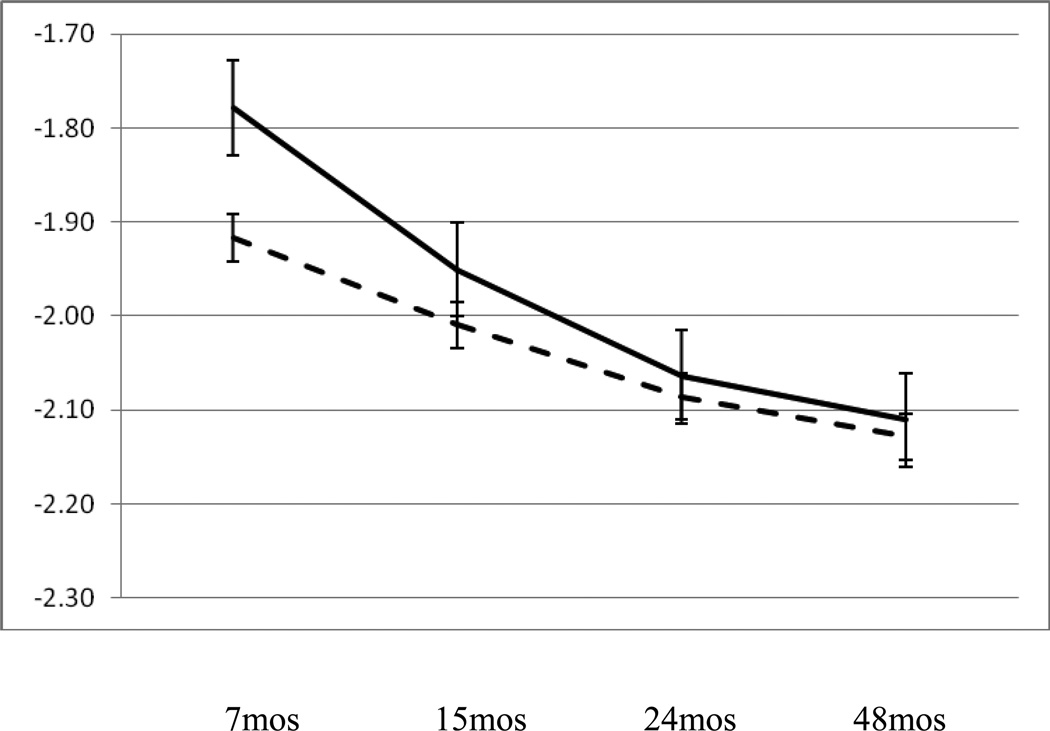
This paper examined the relation of early environmental adversity associated with poverty to child resting or basal level of cortisol in a prospective longitudinal sample of 1135 children seen at 7, 15, 24, 35, and 48 months of age. We found main effects for poor housing quality, African American ethnicity, and low positive caregiving behavior in which each was uniquely associated with an overall higher level of cortisol from age 7 to 48 months. We also found that two aspects of the early environment in the context of poverty, adult exits from the home and perceived economic insufficiency, were related to salivary cortisol in a time-dependent manner. The effect for the first of these, exits from the home, was consistent with the principle of allostatic load in which the effects of adversity on stress physiology accumulate over time. The effect for perceived economic insufficiency was one in which insufficiency was associated with higher levels of cortisol in infancy but with a typical but steeper decline in cortisol with age at subsequent time points.
本研究在一个 1135 名儿童的前瞻性纵向样本中,考察了与贫困相关的早期环境逆境与儿童静息或基础皮质醇水平的关系,这些儿童在 7、15、24、35 和 48 个月时接受了观察。我们发现,住房质量差、非裔美国人种族和积极的养育行为较少等主要因素与皮质醇水平的整体升高有关,这种情况从 7 岁到 48 个月持续存在。我们还发现,贫困背景下早期环境的两个方面,即成年人离开家庭和感知到的经济不足,与唾液皮质醇呈时间依赖性相关。其中第一个方面,即离开家庭,与压力生理学的适应负荷原则一致,即逆境对压力生理的影响随时间累积。感知到的经济不足的影响是,不足与婴儿期较高的皮质醇水平有关,但随后随着年龄的增长,皮质醇水平呈典型但更陡峭的下降。