From the Department of Medicine (de la Rosa, Zablotny, Ye, Thakur), University of California San Francisco, San Francisco; School of Public Health (de la Rosa), University of California Berkeley, Berkeley; Departments of Psychiatry and Behavioral Science (Bush) and Pediatrics (Bush and Long) and Family and Community Medicine (Hessler), University of California San Francisco, San Francisco; UCSF Benioff Children's Hospital Oakland (Long), Oakland; Center for Youth Wellness (Koita, Bucci), San Francisco, California.
Psychosom Med. 2023;85(2):108-117. doi: 10.1097/PSY.0000000000001167. Epub 2023 Jan 5.
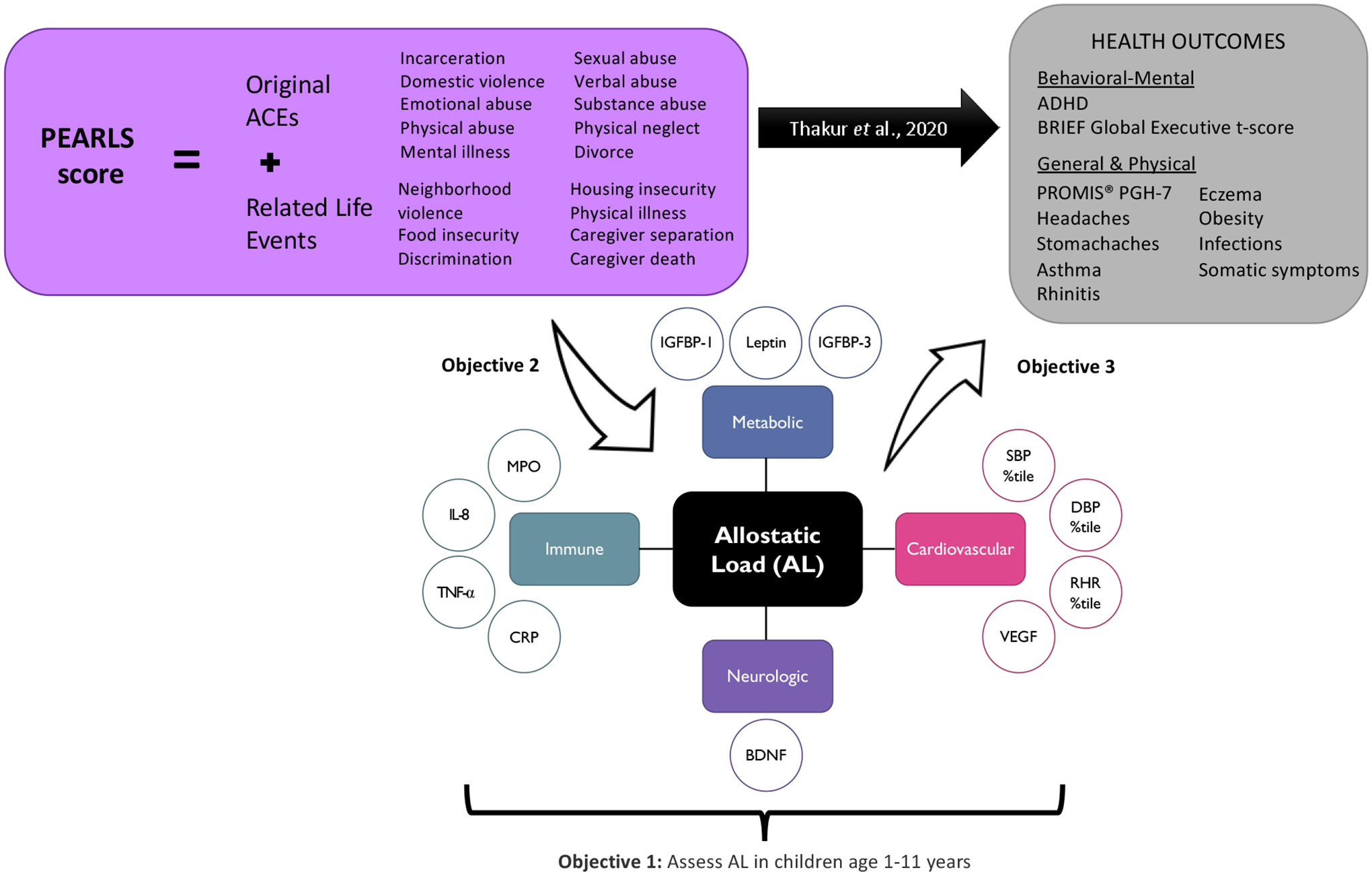
This study aimed to examine relationships between adverse childhood experiences (ACEs) and related life events and allostatic load (AL)-"wear and tear" from chronic stress-in a pediatric population.
Children were screened with the PEdiatric ACEs and Related Life Event Screener (PEARLS) tool, a 17-item questionnaire capturing experiences of abuse, neglect, household challenges, and related life events. Biological data were available for 207 participants, and AL was operationalized using clinical or empirical cutoff points across 4 physiological systems (i.e., cardiac, metabolic, inflammatory, neurologic). Covariate-adjusted multivariable regression models were used to examine associations between AL with adversity and health.
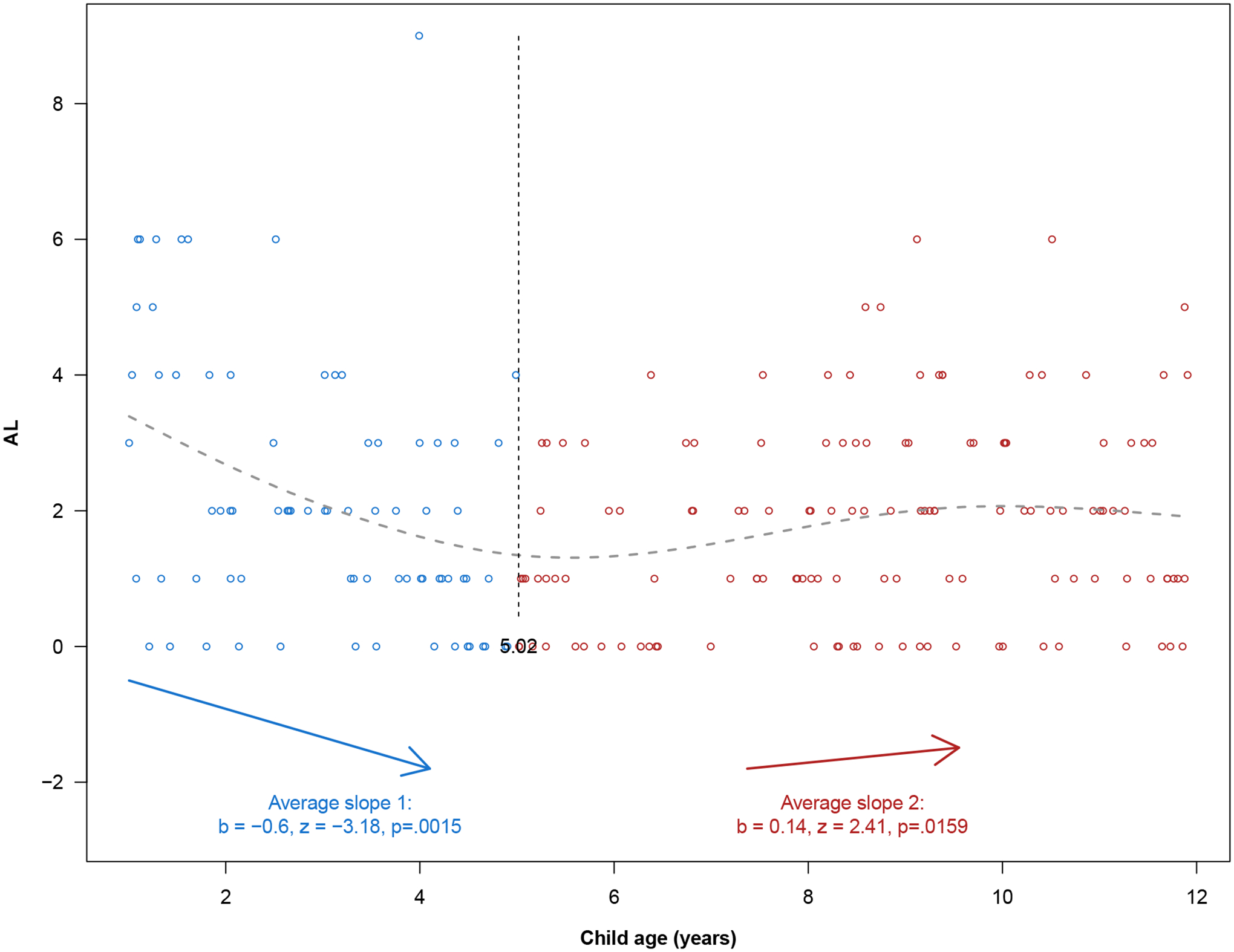
Children (mean age = 6.5 years, range = 1-11 years) had an average AL score of 1.9 (standard deviation = 1.7), and a U-shaped relationship was observed with child's age. Continuous PEARLS and original ACE scores were not associated with AL. However, children with a reported PEARLS score of 1 to 2 or original ACEs score of 1 to 3 had 1.5 (incidence rate ratio [IRR] = 1.50, 95% confidence interval [CI] = 1.09-2.08) and 1.4 (IRR = 1.41, 95% CI = 1.08-1.84) times greater AL, respectively, compared with participants with none reported. In secondary analyses, caregiver mental illness was associated with higher child AL (adjusted IRR = 1.27, 95% CI = 1.01-1.58). AL was also associated with poorer perceived child general health (adjusted β = -0.87, 95% CI = -1.58 to -0.15) and greater odds of child obesity (adjusted odds ratio = 1.51, 95% CI = 1.23-1.89).
Measuring AL in a pediatric population requires careful consideration of age. Higher AL was associated with a greater number of reported adversities and worse child health.
本研究旨在探讨儿科人群中不良童年经历(ACEs)及相关生活事件与全身应激“损耗”(即压力导致的身体多个系统变化)——身体应激指标(AL)之间的关系。
采用包含虐待、忽视、家庭问题和相关生活事件等 17 项内容的 PEdiatric ACEs 和 Related Life Event Screener(PEARLS)工具对儿童进行筛查。共纳入 207 名参与者的生物学数据,使用 4 个生理系统(即心脏、代谢、炎症和神经)的临床或经验临界值来对 AL 进行操作化定义。采用协变量调整的多变量回归模型来检验 AL 与逆境和健康之间的关联。
儿童(平均年龄=6.5 岁,范围=1-11 岁)的 AL 平均得分为 1.9(标准差=1.7),且 AL 与儿童年龄呈 U 型关系。连续的 PEARLS 和原始 ACE 评分与 AL 均无关联。然而,PEARLS 评分为 1-2 分或 ACE 评分为 1-3 分的儿童的 AL 分别高出 1.5 倍(发病率比 [IRR] = 1.50,95%置信区间 [CI] = 1.09-2.08)和 1.4 倍(IRR = 1.41,95% CI = 1.08-1.84)。在二次分析中,照顾者的精神疾病与儿童更高的 AL 相关(调整后的发病率比 [IRR] = 1.27,95% CI = 1.01-1.58)。AL 还与较差的儿童总体健康感知相关(调整后的β=-0.87,95% CI = -1.58 至 -0.15),且儿童肥胖的可能性更高(调整后的优势比 [OR] = 1.51,95% CI = 1.23-1.89)。
在儿科人群中测量 AL 需要仔细考虑年龄因素。更高的 AL 与更多的不良经历报告和更差的儿童健康状况相关。