China-America Cancer Research Institute, Guangdong Medical College, Dongguan, Guangdong.
Int J Nanomedicine. 2011;6:1391-8. doi: 10.2147/IJN.S20263. Epub 2011 Jul 4.
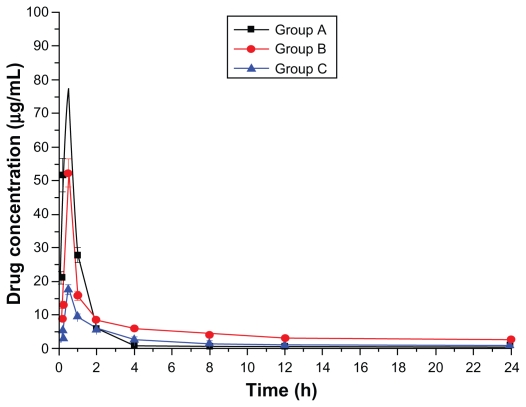
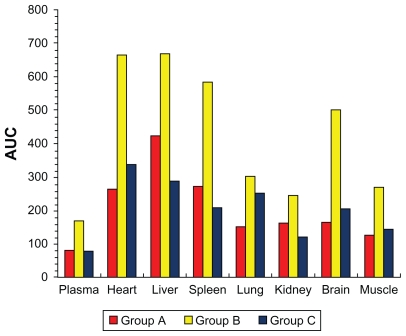
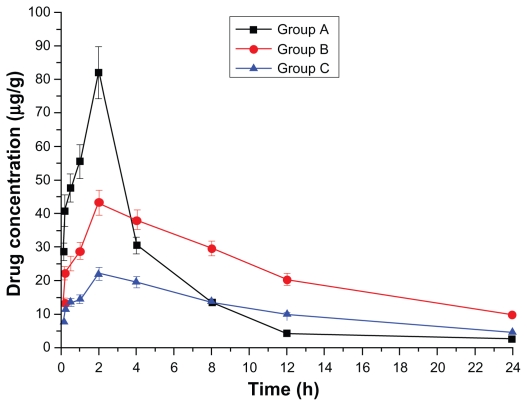
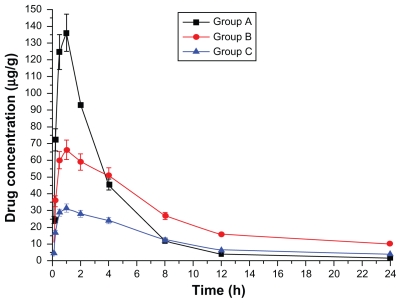
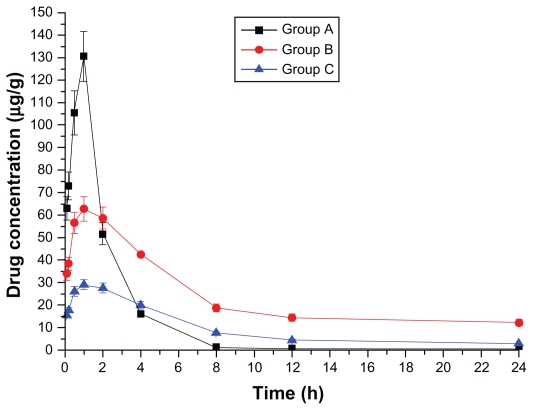
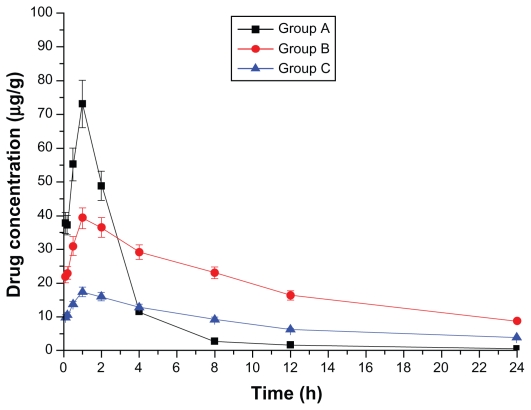
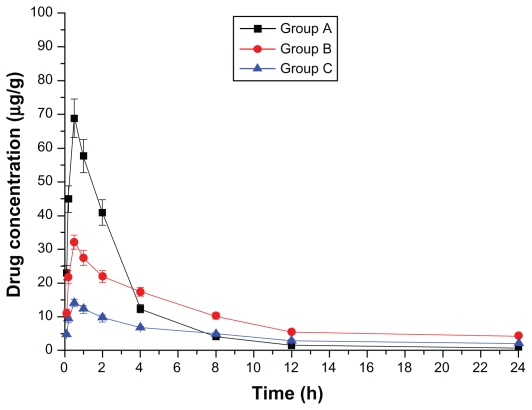
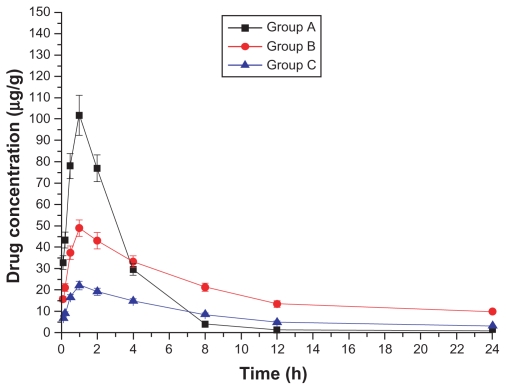
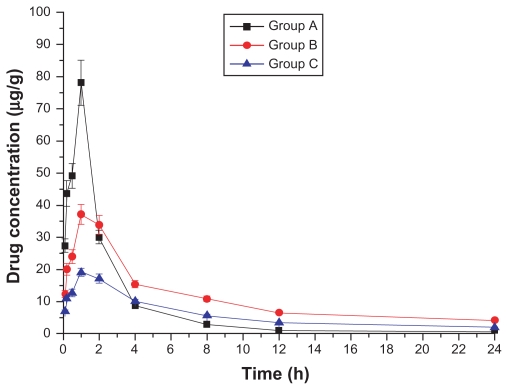
The objective of this study was to investigate the pharmacokinetics of the ligustrazine ethosome patch and antimyocardial ischemia and anti-ischemic reperfusion injury effect. Male Sprague Dawley rats were divided randomly into 3 groups: Group A (intragastric ligustrazine), Group B (transdermal ligustrazine ethosome patch), and Group C (conventional transdermal ligustrazine patch). After treatment, samples of blood and of various tissues such as heart, liver, spleen, lung, kidney, brain, and muscle samples were taken at different time points. Drug concentration was measured with HPLC, and the drug concentration-time curve was plotted. Pharmacokinetic software 3p97 was applied to calculate pharmacokinetic parameters and the area under the drug concentration-time curve (AUC) in various tissues. The rat model of acute myocardial ischemia was constructed with intravenous injection of pituitrin and the model of myocardial ischemia-perfusion injury was constructed by tying off the left anterior descending coronary artery of rats to observe the effect of ligustrazine ethosome patches on ischemic myocardium and ischemia-reperfusion injury. Results showed that AUC was highest in the transdermal drug delivery group of ligustrazine ethosome patch. There were significant differences in whole blood viscosity, plasma viscosity, hematocrit, red blood cell aggregation index, and deformation index between ligustrazine the ethosome patch group and ischemic control group (P < 0.01). Moreover, ligustrazine ethosome patches could reduce the scope of myocardial infarction induced by long-term ischemia. Ligustrazine ethosome patches have a sustained-release property. They can maintain stable and sustained blood drug concentration, increase bioavailability, and reduce administration times. The drug patch can decrease hemorheological indices of myocardial ischemia in rats, as well as protect acute ischemic myocardium and ischemia-reperfusion injured myocardium.
本研究旨在探讨川芎嗪醇质体贴剂的药代动力学及其抗心肌缺血和抗缺血再灌注损伤作用。雄性 Sprague Dawley 大鼠随机分为 3 组:A 组(灌胃川芎嗪)、B 组(透皮川芎嗪醇质体贴剂)和 C 组(常规透皮川芎嗪贴剂)。治疗后,在不同时间点采集血样和心、肝、脾、肺、肾、脑、肌肉等组织样本。采用高效液相色谱法测定药物浓度,绘制药物浓度-时间曲线。应用 3p97 药代动力学软件计算各组织的药代动力学参数和药物浓度-时间曲线下面积(AUC)。采用静脉注射垂体后叶素构建大鼠急性心肌缺血模型,结扎大鼠左前降支冠状动脉构建心肌缺血再灌注损伤模型,观察川芎嗪醇质体贴剂对缺血心肌及缺血再灌注损伤的作用。结果表明,川芎嗪醇质体透皮给药组 AUC 最高。川芎嗪醇质体贴剂组与缺血对照组比较,全血黏度、血浆黏度、红细胞压积、红细胞聚集指数和变形指数均有显著差异(P<0.01)。此外,川芎嗪醇质体贴剂还能缩小长期缺血引起的心肌梗死范围。川芎嗪醇质体贴剂具有缓释特性,能维持稳定、持续的血药浓度,提高生物利用度,减少用药次数。该药物贴剂可降低心肌缺血大鼠的血液流变学指标,保护急性缺血心肌和缺血再灌注损伤心肌。