Xu Yuyi, Zhao Ming, Cao Jinxue, Fang Ting, Zhang Jian, Zhen Yanli, Wu Fangling, Yu Xiaohui, Liu Yaming, Li Ji, Wang Dongkai
Department of Pharmaceutics, School of Pharmacy, Shenyang Pharmaceutical University, Shenyang 110016, China.
Acta Pharm Sin B. 2023 Nov;13(11):4417-4441. doi: 10.1016/j.apsb.2023.05.025. Epub 2023 May 26.
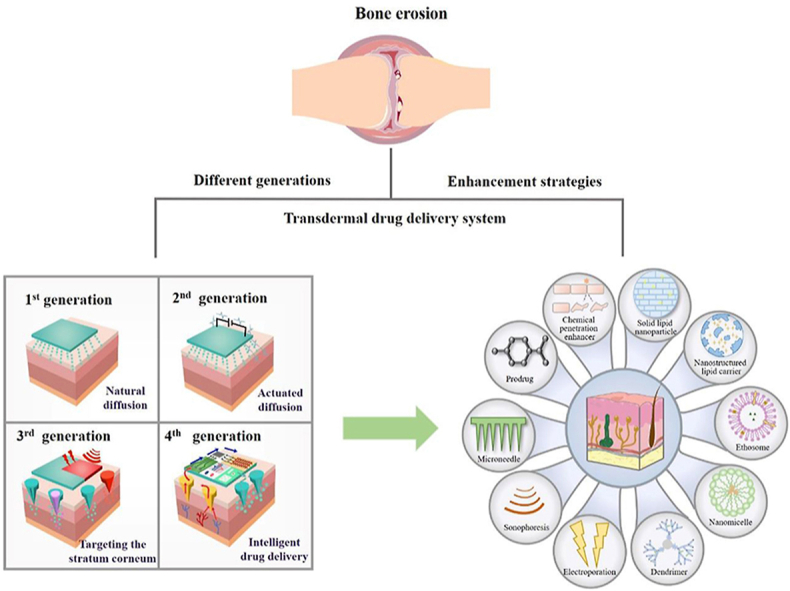
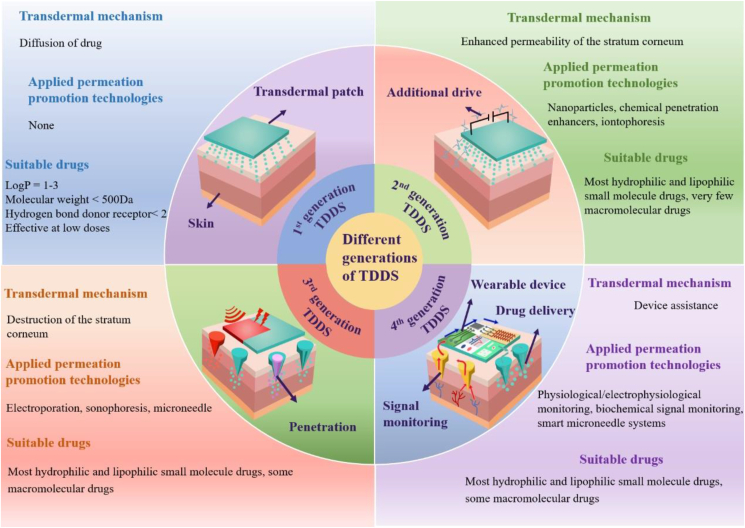
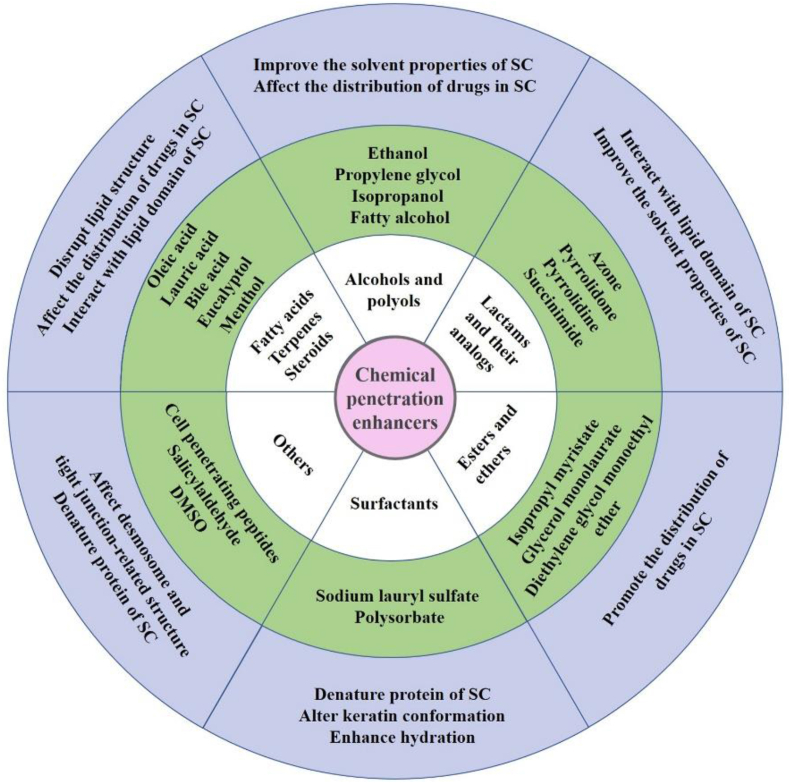
Rheumatoid arthritis is a chronic, systemic autoimmune disease predominantly based on joint lesions with an extremely high disability and deformity rate. Several drugs have been used for the treatment of rheumatoid arthritis, but their use is limited by suboptimal bioavailability, serious adverse effects, and nonnegligible first-pass effects. In contrast, transdermal drug delivery systems (TDDSs) can avoid these drawbacks and improve patient compliance, making them a promising option for the treatment of rheumatoid arthritis (RA). Of course, TDDSs also face unique challenges, as the physiological barrier of the skin makes drug delivery somewhat limited. To overcome this barrier and maximize drug delivery efficiency, TDDSs have evolved in terms of the principle of transdermal facilitation and transdermal facilitation technology, and different generations of TDDSs have been derived, which have significantly improved transdermal efficiency and even achieved individualized controlled drug delivery. In this review, we summarize the different generations of transdermal drug delivery systems, the corresponding transdermal strategies, and their applications in the treatment of RA.
类风湿性关节炎是一种慢性全身性自身免疫性疾病,主要以关节病变为基础,致残率和畸形率极高。几种药物已被用于治疗类风湿性关节炎,但其使用受到生物利用度欠佳、严重不良反应和不可忽视的首过效应的限制。相比之下,经皮给药系统(TDDS)可以避免这些缺点并提高患者依从性,使其成为治疗类风湿性关节炎(RA)的一个有前景的选择。当然,TDDS也面临独特的挑战,因为皮肤的生理屏障使药物递送受到一定限制。为了克服这一屏障并最大限度地提高药物递送效率,TDDS在透皮促进原理和透皮促进技术方面不断发展,并衍生出不同代的TDDS,显著提高了透皮效率,甚至实现了个体化控释给药。在本综述中,我们总结了不同代的经皮给药系统、相应的透皮策略及其在RA治疗中的应用。