Henry Curtis J, Marusyk Andriy, DeGregori James
Department of Biochemistry and Molecular Genetics, Integrated Department of Immunology, Program in Molecular Biology, University of Colorado Denver School of Medicine, Aurora, Colorado, USA.
Aging (Albany NY). 2011 Jun;3(6):643-56. doi: 10.18632/aging.100351.
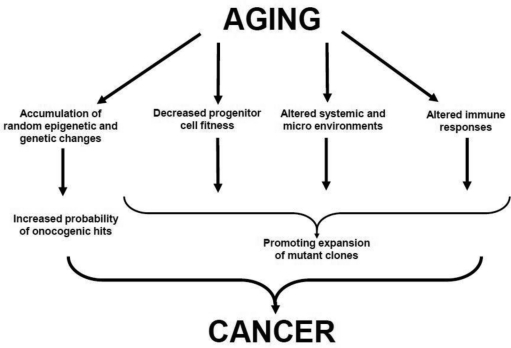
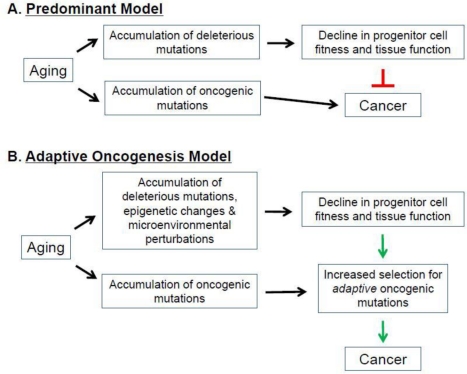
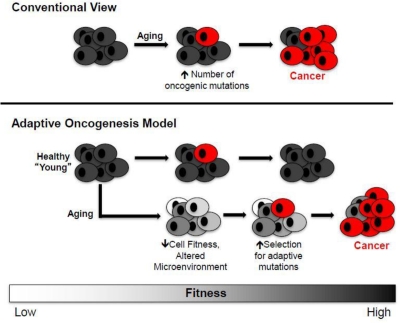
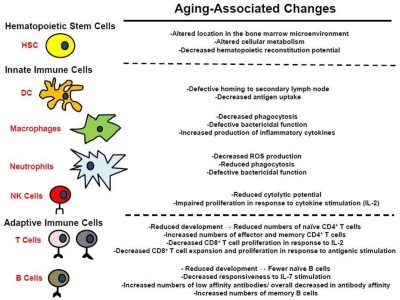
Aging is associated with a marked increase in a number of diseases, including many types of cancer. Due to the complex and multi-factorial nature of both aging and cancer, accurate deciphering of causative links between aging and cancer remains a major challenge. It is generally accepted that initiation and progression of cancers are driven by a process of clonal evolution. In principle, this somatic evolution should follow the same Darwinian logic as evolutionary processes in populations in nature: diverse heritable types arising as a result of mutations are subjected to selection, resulting in expansion of the fittest clones. However, prevalent paradigms focus primarily on mutational aspects in linking aging and cancer. In this review, we will argue that age-related changes in selective pressures are likely to be equally important. We will focus on aging-related changes in the hematopoietic system, where age-associated alterations are relatively well studied, and discuss the impact of these changes on the development of leukemias and other malignancies.
衰老与多种疾病的显著增加相关,包括多种类型的癌症。由于衰老和癌症都具有复杂的多因素性质,准确解读衰老与癌症之间的因果联系仍然是一项重大挑战。人们普遍认为,癌症的发生和发展是由克隆进化过程驱动的。原则上,这种体细胞进化应遵循与自然界种群进化过程相同的达尔文逻辑:由于突变产生的各种可遗传类型会受到选择,从而导致最适应的克隆体扩张。然而,普遍的范式主要关注衰老与癌症联系中的突变方面。在本综述中,我们将论证选择性压力的年龄相关变化可能同样重要。我们将聚焦于造血系统中与衰老相关的变化,在该系统中与年龄相关的改变得到了相对充分的研究,并讨论这些变化对白血病和其他恶性肿瘤发展的影响。