Kajiyama Tadahiro, Suzuki Yusuke, Kihara Masao, Suzuki Hitoshi, Horikoshi Satoshi, Tomino Yasuhiko
Division of Nephrology, Department of Internal Medicine, Faculty of Medicine, Juntendo University, Tokyo 113-8421, Japan.
Clin Dev Immunol. 2011;2011:819646. doi: 10.1155/2011/819646. Epub 2011 Jun 30.
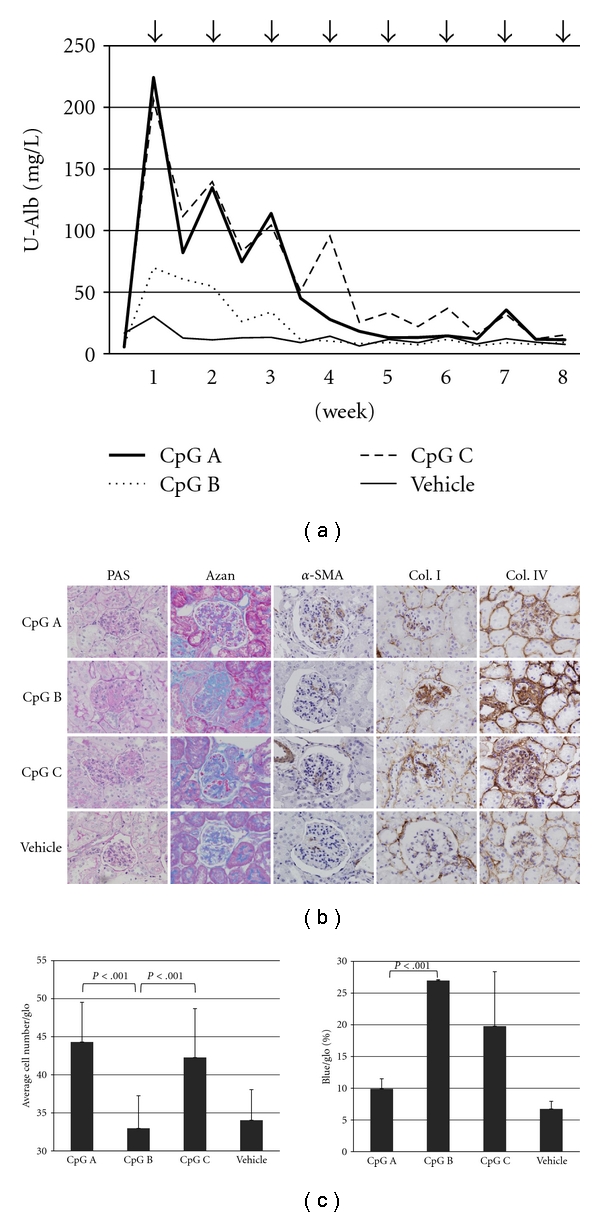
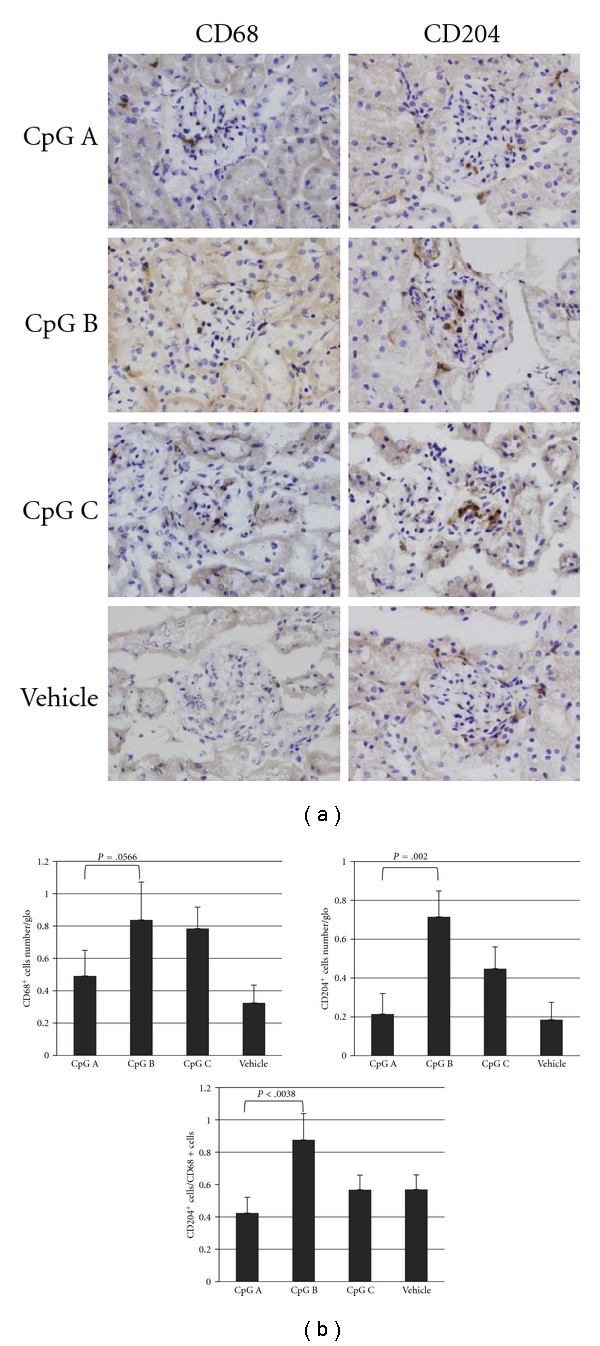
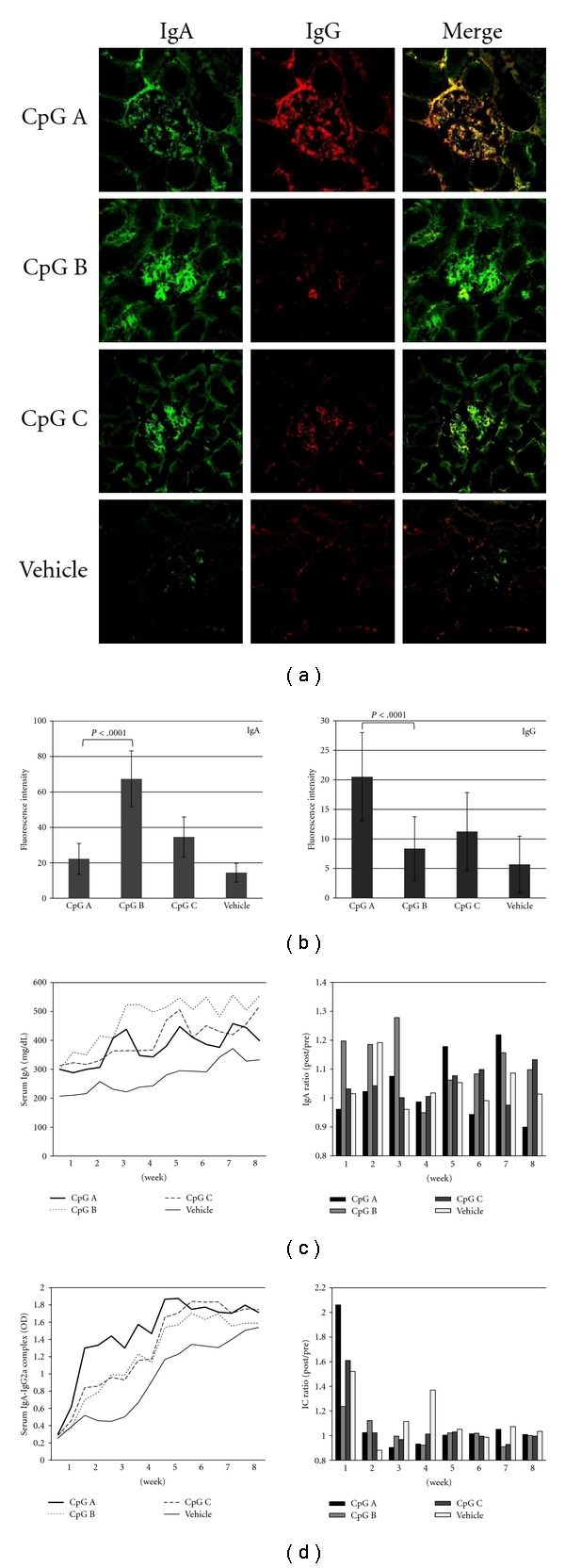
Although pathogenesis of IgA nephropathy (IgAN) is still obscure, pathological contribution of mucosal immunity including production of nephritogenic IgA and IgA immune complex (IC) has been discussed. We have reported that mucosal toll-like receptor (TLR)-9 is involved in the pathogenesis of human and murine IgAN. However, cell-type expressing TLR9 in mucosa remains unclear. To address this, we nasally challenged cell-specific CpG DNA ((i): dendritic cell: (DC), (ii): B cell, (iii): both), known as ligand for TLR9, to IgAN prone mice and analyzed disease phenotype of each group. After 8 times of the weekly administration, every group showed deterioration of glomerular damage. However, CpG-A-group showed clear extension of mesangial proliferative lesions with increase of serum IgA-IgG2a IC and its glomerular depositions, while CpG-B-group showed extent of glomerular sclerotic lesions with increase of serum and glomerular IgA and M2 macrophage infiltration. Present results indicate that mucosal TLR9 on B cells and DC may differently contribute to the progression of this disease via induction of nephritogenic IgA or IgA-IgG IC, respectively. This picture is suggestive for the pathological difference between child and adult IgAN.
尽管IgA肾病(IgAN)的发病机制仍不清楚,但包括致肾炎性IgA和IgA免疫复合物(IC)产生在内的黏膜免疫的病理作用已被讨论。我们曾报道黏膜Toll样受体(TLR)-9参与人和小鼠IgAN的发病机制。然而,黏膜中表达TLR9的细胞类型仍不清楚。为解决这一问题,我们将细胞特异性CpG DNA((i):树突状细胞:(DC),(ii):B细胞,(iii):两者均有),即已知的TLR9配体,经鼻给予IgAN易感小鼠,并分析每组的疾病表型。每周给药8次后,每组均出现肾小球损伤加重。然而,CpG-A组系膜增生性病变明显扩展,血清IgA-IgG2a IC及其肾小球沉积增加,而CpG-B组肾小球硬化性病变程度增加,血清和肾小球IgA增加以及M2巨噬细胞浸润。目前的结果表明,B细胞和DC上的黏膜TLR9可能分别通过诱导致肾炎性IgA或IgA-IgG IC对该疾病的进展有不同作用。这一情况提示了儿童和成人IgAN之间的病理差异。