Papavramidis Theodossis S, Marinis Athanasios D, Pliakos Ioannis, Kesisoglou Isaak, Papavramidou Nicki
3 Department of Surgery, AHEPA University Hospital of Thessaloniki, Aristotle University of Thessaloniki, Thessaloniki, Greece.
J Emerg Trauma Shock. 2011 Apr;4(2):279-91. doi: 10.4103/0974-2700.82224.
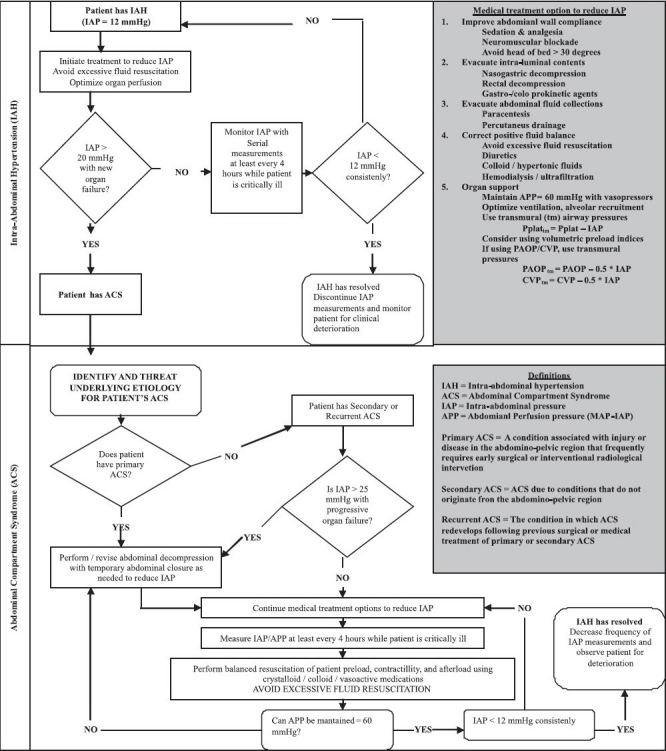
Abdominal compartment syndrome (ACS) and intra-abdominal hypertension (IAH) are increasingly recognized as potential complications in intensive care unit (ICU) patients. ACS and IAH affect all body systems, most notably the cardiac, respiratory, renal, and neurologic systems. ACS/IAH affects blood flow to various organs and plays a significant role in the prognosis of the patients. Recognition of ACS/IAH, its risk factors and clinical signs can reduce the morbidity and mortality associated. Moreover, knowledge of the pathophysiology may help rationalize the therapeutic approach. We start this article with a brief historic review on ACS/IAH. Then, we present the definitions concerning parameters necessary in understanding ACS/IAH. Finally, pathophysiology aspects of both phenomena are presented, prior to exploring the various facets of ACS/IAH management.
腹腔间隔室综合征(ACS)和腹腔内高压(IAH)日益被认为是重症监护病房(ICU)患者的潜在并发症。ACS和IAH会影响身体的所有系统,最显著的是心脏、呼吸、肾脏和神经系统。ACS/IAH会影响各个器官的血流,并在患者的预后中发挥重要作用。认识ACS/IAH、其危险因素和临床体征可以降低相关的发病率和死亡率。此外,了解病理生理学可能有助于使治疗方法更加合理。我们在本文开头对ACS/IAH进行简要的历史回顾。然后,我们给出理解ACS/IAH所需参数的定义。最后,在探讨ACS/IAH管理的各个方面之前,介绍这两种现象的病理生理学方面。