Ali Sajid, Gautier Angélique, Leconte Marc, Enjalbert Jérôme, de Vallavieille-Pope Claude
UMR1290 BIOGER-CPP, INRA-AgroParisTech, BP01, 78850 Thiverval-Grignon, France.
BMC Res Notes. 2011 Jul 20;4:240. doi: 10.1186/1756-0500-4-240.
Puccinia striiformis f.sp. tritici (PST), an obligate fungal pathogen causing wheat yellow/stripe rust, a serious disease, has been used to understand the evolution of crop pathogen using molecular markers. However, numerous questions regarding its evolutionary history and recent migration routes still remains to be addressed, which need the genotyping of a large number of isolates, a process that is limited by both DNA extraction and genotyping methods. To address the two issues, we developed here a method for direct DNA extraction from infected leaves combined with optimized SSR multiplexing.
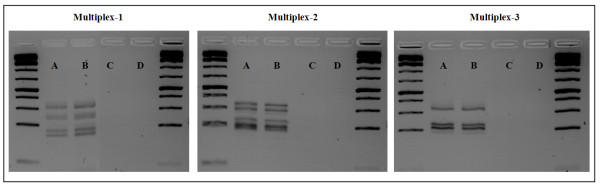
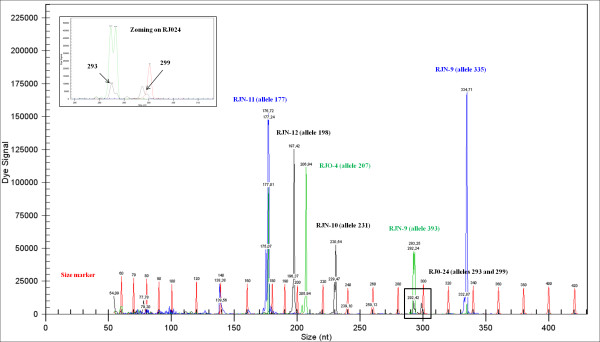
We report here an efficient protocol for direct fungal DNA extraction from infected leaves, avoiding the costly and time consuming step of spore multiplication. The genotyping strategy we propose, amplified a total of 20 SSRs in three Multiplex PCR reactions, which were highly polymorphic and were able to differentiate different PST populations with high efficiency and accuracy.
These two developments enabled a genotyping strategy that could contribute to the development of molecular epidemiology of yellow rust disease, both at a regional or worldwide scale.
条形柄锈菌小麦专化型(PST)是一种导致小麦条锈病的专性真菌病原体,条锈病是一种严重病害,它已被用于利用分子标记来理解作物病原体的进化。然而,关于其进化历史和近期迁移路线仍有许多问题有待解决,这需要对大量分离株进行基因分型,而这一过程受到DNA提取和基因分型方法的限制。为了解决这两个问题,我们在此开发了一种从感染叶片中直接提取DNA并结合优化的SSR多重化方法。
我们在此报告一种从感染叶片中直接提取真菌DNA的有效方案,避免了孢子繁殖这一昂贵且耗时的步骤。我们提出的基因分型策略在三个多重PCR反应中共扩增了20个SSR,这些SSR具有高度多态性,能够高效且准确地区分不同的PST群体。
这两项进展促成了一种基因分型策略,该策略可在区域或全球范围内推动条锈病分子流行病学的发展。