Infectious Disease Epidemiology Group, Bernhard Nocht Institute for Tropical Medicine, Bernhard Nocht Str. 74, 20359 Hamburg, Germany.
J Environ Public Health. 2011;2011:484010. doi: 10.1155/2011/484010. Epub 2011 Jun 21.
Urbanization is a process which alters the structure and function of urban environments. The alteration in the quality of urban environmental conditions has significant implications for health. This applies both to the ecology of insect vectors that may transmit diseases and the burden of disease.
To investigate the relationship between malaria and infectious diarrhea mortality and spatially varied neighborhood environmental quality conditions in a low-income economy.
A one time point spatial analysis of cluster-level environmental conditions and mortality data using principal component analysis (PCA), one-way analysis of variance (ANOVA) and generalized linear models (GLMs).
Environmental variables were extracted from the Ghana Census 2000 database while mortality data were obtained from the Ghana Births and Deaths Registry in Accra over the period 1998-2002.
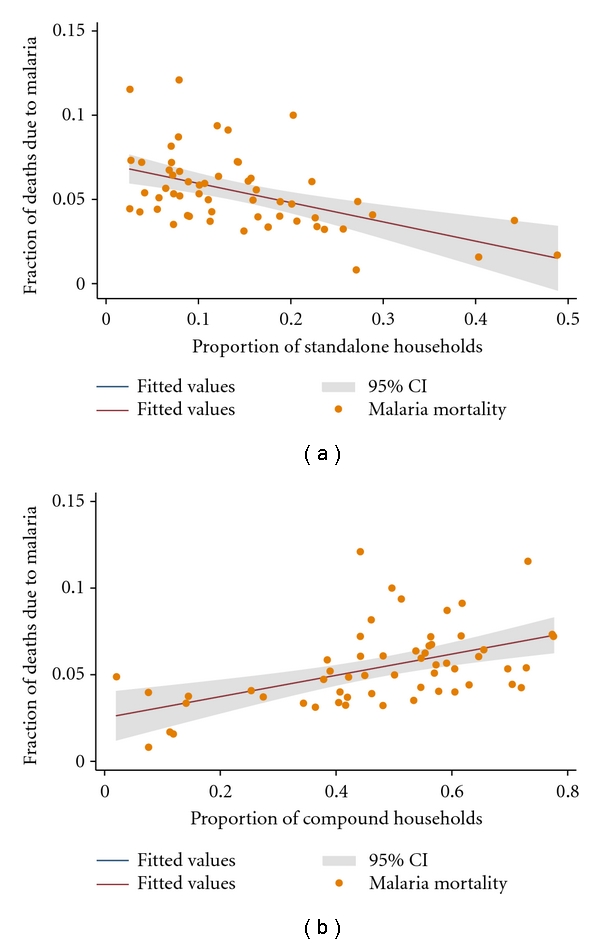
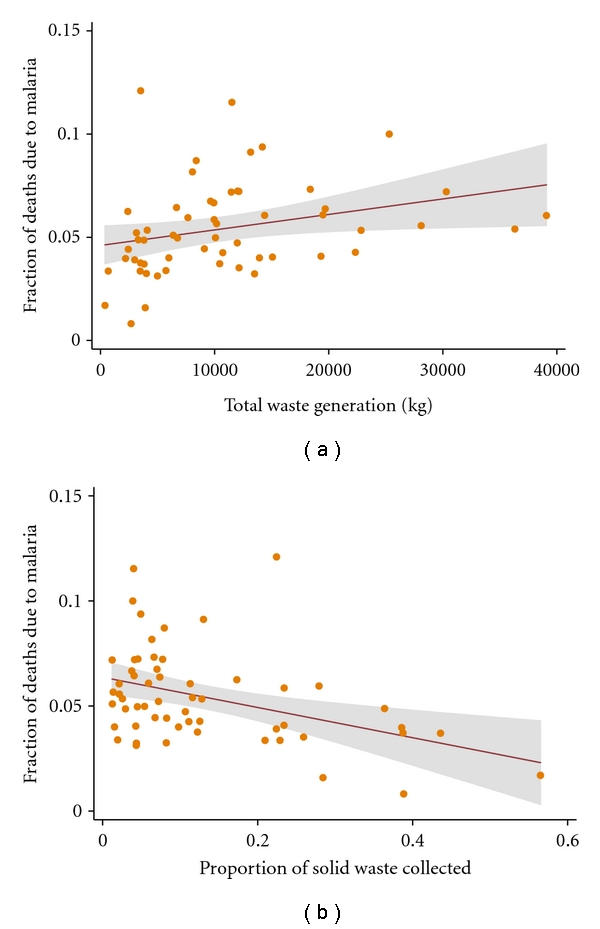
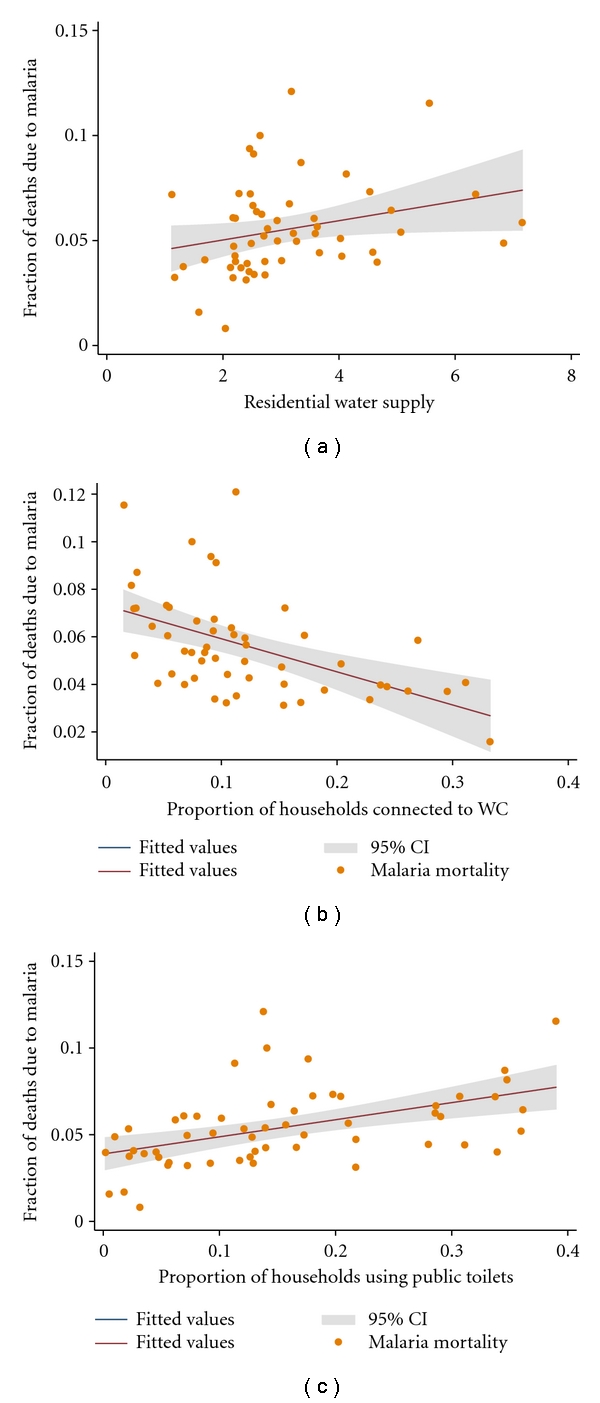
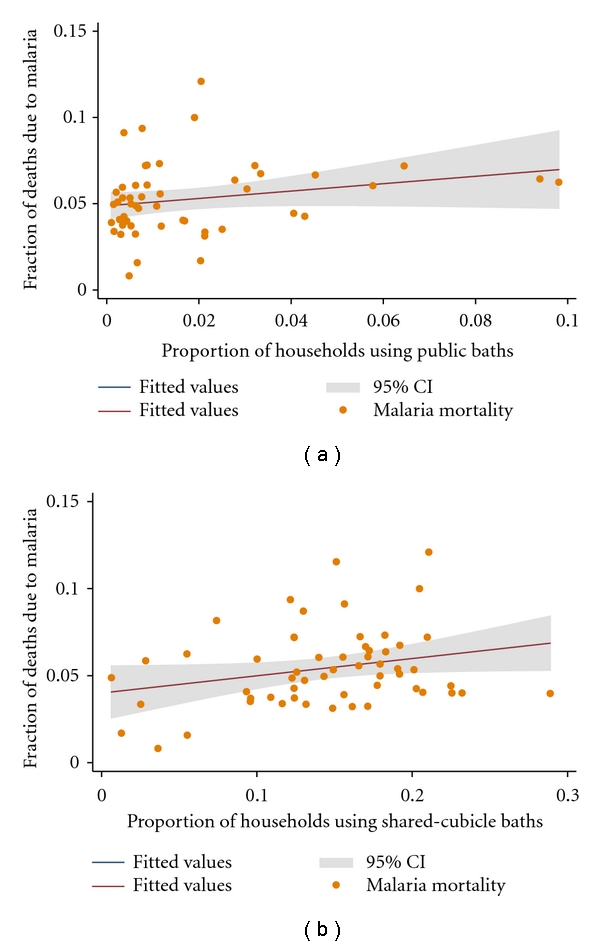
Whereas there was a strong evidence of a difference in relative mortality of malaria across urban environmental zones of differing neighborhood environmental conditions, no such evidence of mortality differentials was observed for diarrhea. In addition, whereas bivariate analyses showed a weak to strong evidence of association between the environmental variables and malaria mortality, no evidence of association was found between diarrhea mortality and environmental variables.
We conclude that environmental management initiatives intended for infectious disease control might substantially reduce the risk of urban malaria mortality and to a less extent that for urban diarrhea mortality in rapidly urbanizing areas in a low-income setting.
城市化是一个改变城市环境结构和功能的过程。城市环境条件质量的改变对健康有重大影响。这既适用于可能传播疾病的昆虫媒介的生态学,也适用于疾病负担。
调查在低收入经济中疟疾和传染性腹泻死亡率与空间变化的邻里环境质量条件之间的关系。
使用主成分分析(PCA)、单向方差分析(ANOVA)和广义线性模型(GLMs)对聚类水平的环境条件和死亡率数据进行一次性空间分析。
环境变量从 2000 年加纳人口普查数据库中提取,而死亡率数据则从阿克拉的加纳出生和死亡登记处获得,时间跨度为 1998-2002 年。
尽管有强有力的证据表明疟疾在不同邻里环境条件的城市环境区域的相对死亡率存在差异,但没有观察到腹泻死亡率存在差异的证据。此外,尽管双变量分析显示环境变量与疟疾死亡率之间存在弱到强的关联证据,但没有发现腹泻死亡率与环境变量之间存在关联。
我们的结论是,旨在控制传染病的环境管理举措可能会大大降低城市疟疾死亡率的风险,而在低收入环境中,城市腹泻死亡率的风险则降低得较少。