• 文献检索
  • 文档翻译
  • 深度研究
  • 学术资讯
  • Suppr Zotero 插件Zotero 插件
  • 邀请有礼
  • 套餐&价格
  • 历史记录
应用&插件
Suppr Zotero 插件Zotero 插件浏览器插件Mac 客户端Windows 客户端微信小程序
定价
高级版会员购买积分包购买API积分包
服务
文献检索文档翻译深度研究API 文档MCP 服务
关于我们
关于 Suppr公司介绍联系我们用户协议隐私条款
关注我们

Suppr 超能文献

核心技术专利:CN118964589B侵权必究
粤ICP备2023148730 号-1Suppr @ 2026

文献检索

告别复杂PubMed语法,用中文像聊天一样搜索,搜遍4000万医学文献。AI智能推荐,让科研检索更轻松。

立即免费搜索

文件翻译

保留排版,准确专业,支持PDF/Word/PPT等文件格式,支持 12+语言互译。

免费翻译文档

深度研究

AI帮你快速写综述,25分钟生成高质量综述,智能提取关键信息,辅助科研写作。

立即免费体验

东帝汶经杀虫剂处理过的蚊帐的探索性研究:预期使用和替代用途模式。

An exploratory study of treated-bed nets in Timor-Leste: patterns of intended and alternative usage.

机构信息

Department of Epidemiology and Public Health, Yong Loo Lin School of Medicine, National University of Singapore MD3, 16 Medical Drive, 117597, Singapore.

出版信息

Malar J. 2011 Jul 21;10:199. doi: 10.1186/1475-2875-10-199.

DOI:10.1186/1475-2875-10-199
PMID:21777415
原文链接:https://pmc.ncbi.nlm.nih.gov/articles/PMC3155971/
Abstract

BACKGROUND

The Timor-Leste Ministry of Health has recently finalized the National Malaria Control Strategy for 2010-2020. A key component of this roadmap is to provide universal national coverage with long-lasting insecticide-treated nets (LLINs) in support of achieving the primary goal of reducing both morbidity and mortality from malaria by 30% in the first three years, followed by a further reduction of 20% by end of the programme cycle in 2020 1. The strategic plan calls for this target to be supported by a comprehensive information, education and communication (IEC) programme; however, there is limited prior research into household and personal usage patterns to assist in the creation of targeted, effective, and socio-culturally specific behaviour change materials.

METHODS

Nine separate focus group discussions (FGDs) were carried out in Dili, Manatuto, and Covalima districts, Democratic Republic of Timor-Leste, in July 2010.These focus groups primarily explored themes of perceived malaria risk, causes of malaria, net usage patterns within families, barriers to correct and consistent usage, and the daily experience of users (both male and female) in households with at least one net. Comprehensive qualitative analysis utilized open source analysis software.

RESULTS

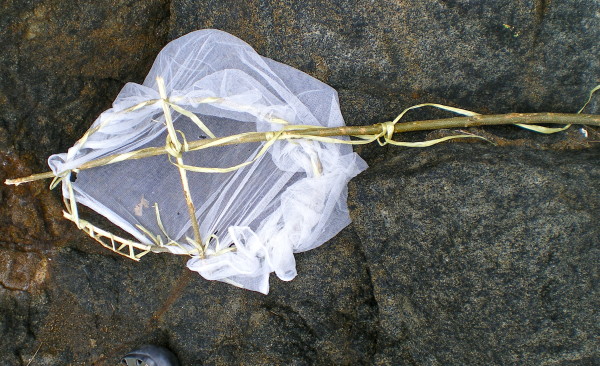
The primary determinants of net usage were a widespread perception that nets could or should only be used by pregnant women and young children, and the availability of sufficient sleeping space under a limited number of nets within households. Both nuisance biting and disease prevention were commonly cited as primary motivations for usage, while seasonality was not a significant factor. Long-term net durability and ease of hanging were seen as key attributes in net design preference. Very frequent washing cycles were common, potentially degrading net effectiveness. Finally, extensive re-purposing of nets (fishing, protecting crops) was both reported and observed, and may significantly decrease availability of nighttime sleeping space for all family members if distributed nets do not remain within the household.

CONCLUSIONS

Emphasizing that net usage is acceptable and important for all family members regardless of age or gender, and addressing the complex behavioural economics of alternative net usages could have significant impacts on malaria control efforts in Timor-Leste, as the country's programmes make progress towards universal net coverage.

摘要

背景

东帝汶卫生部最近完成了 2010-2020 年国家疟疾控制战略。该路线图的一个关键组成部分是提供全国范围内普遍使用长效驱虫蚊帐(LLINs),以支持在头三年将疟疾发病率和死亡率降低 30%这一首要目标,然后在 2020 年方案周期结束前再降低 20%。该战略计划要求该目标得到全面的信息、教育和交流(IEC)计划的支持;然而,在创建有针对性、有效和具有社会文化特定的行为改变材料方面,家庭和个人使用模式的前期研究有限。

方法

2010 年 7 月,在东帝汶民主共和国帝力、马纳图托和科瓦利马区进行了九项单独的焦点小组讨论(FGD)。这些焦点小组主要探讨了疟疾风险的感知、疟疾的原因、家庭内蚊帐的使用模式、正确和一致使用的障碍,以及家庭中至少有一个蚊帐的用户(男性和女性)的日常体验等主题。全面的定性分析利用开源分析软件进行。

结果

蚊帐使用的主要决定因素是一种普遍的看法,即蚊帐只能或应该由孕妇和幼儿使用,以及家庭中有限数量的蚊帐下有足够的睡眠空间。被蚊子叮咬和预防疾病都是常见的使用动机,而季节性不是一个重要因素。长期的耐用性和易于悬挂被认为是蚊帐设计偏好的关键属性。经常频繁的洗涤周期很常见,可能会降低蚊帐的效果。最后,广泛的重新定位(捕鱼、保护农作物)既被报道也被观察到,如果分发的蚊帐不在家庭中,可能会显著减少所有家庭成员夜间的睡眠空间。

结论

强调无论年龄或性别如何,蚊帐的使用对所有家庭成员都是可接受和重要的,并解决替代蚊帐使用的复杂行为经济学问题,可能对东帝汶的疟疾控制工作产生重大影响,因为该国的方案正在朝着普遍覆盖蚊帐的目标迈进。

https://cdn.ncbi.nlm.nih.gov/pmc/blobs/3121/3155971/db9286cabde9/1475-2875-10-199-5.jpg
https://cdn.ncbi.nlm.nih.gov/pmc/blobs/3121/3155971/faef046ce97b/1475-2875-10-199-1.jpg
https://cdn.ncbi.nlm.nih.gov/pmc/blobs/3121/3155971/5801d2020854/1475-2875-10-199-2.jpg
https://cdn.ncbi.nlm.nih.gov/pmc/blobs/3121/3155971/55f26835ca5d/1475-2875-10-199-3.jpg
https://cdn.ncbi.nlm.nih.gov/pmc/blobs/3121/3155971/0ac2512fb59e/1475-2875-10-199-4.jpg
https://cdn.ncbi.nlm.nih.gov/pmc/blobs/3121/3155971/db9286cabde9/1475-2875-10-199-5.jpg
https://cdn.ncbi.nlm.nih.gov/pmc/blobs/3121/3155971/faef046ce97b/1475-2875-10-199-1.jpg
https://cdn.ncbi.nlm.nih.gov/pmc/blobs/3121/3155971/5801d2020854/1475-2875-10-199-2.jpg
https://cdn.ncbi.nlm.nih.gov/pmc/blobs/3121/3155971/55f26835ca5d/1475-2875-10-199-3.jpg
https://cdn.ncbi.nlm.nih.gov/pmc/blobs/3121/3155971/0ac2512fb59e/1475-2875-10-199-4.jpg
https://cdn.ncbi.nlm.nih.gov/pmc/blobs/3121/3155971/db9286cabde9/1475-2875-10-199-5.jpg

相似文献

1
An exploratory study of treated-bed nets in Timor-Leste: patterns of intended and alternative usage.东帝汶经杀虫剂处理过的蚊帐的探索性研究:预期使用和替代用途模式。
Malar J. 2011 Jul 21;10:199. doi: 10.1186/1475-2875-10-199.
2
A qualitative study on the acceptability and preference of three types of long-lasting insecticide-treated bed nets in Solomon Islands: implications for malaria elimination.所罗门群岛三种长效驱虫蚊帐的可接受性和偏好的定性研究:对疟疾消除的启示
Malar J. 2009 Jun 4;8:119. doi: 10.1186/1475-2875-8-119.
3
Long-lasting insecticidal net source, ownership and use in the context of universal coverage: a household survey in eastern Rwanda.长效驱虫蚊帐的来源、所有权及在全面覆盖背景下的使用情况:卢旺达东部的一项家庭调查
Malar J. 2015 Oct 6;14:390. doi: 10.1186/s12936-015-0915-9.
4
Barriers of persistent long-lasting insecticidal nets utilization in Northwest Ethiopia: a qualitative study.在埃塞俄比亚西北部,阻碍人们持续长期使用长效驱虫蚊帐的因素:一项定性研究。
BMC Public Health. 2024 Oct 15;24(1):2828. doi: 10.1186/s12889-024-20319-w.
5
Ownership and utilization of bed nets and reasons for use or non-use of bed nets among community members at risk of malaria along the Thai-Myanmar border.泰国-缅甸边境地区有疟疾感染风险的社区成员中蚊帐的所有权、使用情况以及使用或不使用蚊帐的原因。
Malar J. 2021 Jul 6;20(1):305. doi: 10.1186/s12936-021-03837-5.
6
Evaluation of the 2011 long-lasting, insecticide-treated net distribution for universal coverage in Togo.评估多哥 2011 年长效驱虫蚊帐普及分发活动。
Malar J. 2013 May 16;12:162. doi: 10.1186/1475-2875-12-162.
7
Malaria control under the Taliban regime: insecticide-treated net purchasing, coverage, and usage among men and women in eastern Afghanistan.塔利班政权下的疟疾控制:阿富汗东部男女使用杀虫剂处理过的蚊帐的购买、覆盖和使用情况。
Malar J. 2010 Jan 6;9:7. doi: 10.1186/1475-2875-9-7.
8
Which family members use the best nets? An analysis of the condition of mosquito nets and their distribution within households in Tanzania.哪些家庭成员使用最好的蚊帐?坦桑尼亚家庭内蚊帐状况及其分布分析。
Malar J. 2010 Jul 22;9:211. doi: 10.1186/1475-2875-9-211.
9
Long-lasting insecticide-treated net usage in eastern Sierra Leone - the success of free distribution.塞拉利昂东部长效驱虫蚊帐的使用情况 - 免费分发的成功。
Trop Med Int Health. 2010 Apr;15(4):480-8. doi: 10.1111/j.1365-3156.2010.02478.x. Epub 2010 Feb 9.
10
Impact of a mass media campaign on bed net use in Cameroon.大众媒体宣传活动对喀麦隆蚊帐使用情况的影响。
Malar J. 2013 Jan 25;12:36. doi: 10.1186/1475-2875-12-36.

引用本文的文献

1
Malaria prevention in the age of climate change: A community survey in rural Senegal.气候变化时代的疟疾预防:塞内加尔农村地区的一项社区调查。
PLoS One. 2025 Jun 30;20(6):e0313456. doi: 10.1371/journal.pone.0313456. eCollection 2025.
2
What happens to old insecticide-treated nets after households use in Burkina Faso?在布基纳法索,家庭使用完旧的经杀虫剂处理过的蚊帐后会发生什么?
Malar J. 2024 Nov 20;23(1):350. doi: 10.1186/s12936-024-05181-w.
3
Assessment of household preferences for net textile type (polyester versus polyethylene) for decision-making of the National Malaria Control Programme in Burkina Faso: methods for a quasi-experimental study.

本文引用的文献

1
Claims about the misuse of insecticide-treated mosquito nets: are these evidence-based?关于杀虫剂处理过的蚊帐的误用的说法:这些说法有依据吗?
PLoS Med. 2011 Apr;8(4):e1001019. doi: 10.1371/journal.pmed.1001019. Epub 2011 Apr 12.
2
A research agenda to underpin malaria eradication.支撑疟疾消除的研究议程。
PLoS Med. 2011 Jan 25;8(1):e1000406. doi: 10.1371/journal.pmed.1000406.
3
The effect of repeated washing of long-lasting insecticide-treated nets (LLINs) on the feeding success and survival rates of Anopheles gambiae.
评估布基纳法索国家疟疾控制规划中家用蚊帐类型(聚酯与聚乙烯)的家庭偏好,以辅助决策:一项准实验研究方法。
Malar J. 2024 Sep 12;23(1):277. doi: 10.1186/s12936-024-05105-8.
4
Challenges of proper disposal of old long-lasting insecticidal nets and its alternative uses in rural south-eastern Tanzania.坦桑尼亚东南部农村地区妥善处理旧的长效杀虫蚊帐及其替代用途面临的挑战。
PLoS One. 2024 Feb 15;19(2):e0279143. doi: 10.1371/journal.pone.0279143. eCollection 2024.
5
Why using bed nets is a challenge among minority populations in Central Vietnam.在越南北中部地区,为什么少数民族使用蚊帐是一个挑战。
Malar J. 2022 Mar 15;21(1):87. doi: 10.1186/s12936-022-04114-9.
6
Residual Malaria Transmission in Select Countries of Asia-Pacific Region: Old Wine in a New Barrel.亚太区域部分国家疟疾传播的残余现象:旧酒装新瓶。
J Infect Dis. 2021 Apr 27;223(12 Suppl 2):S111-S142. doi: 10.1093/infdis/jiab004.
7
Family, social and cultural determinants of long-lasting insecticidal net (LLIN) use in Madagascar: secondary analysis of three qualitative studies focused on children aged 5-15 years.马达加斯加长效驱虫蚊帐(LLIN)使用的家庭、社会和文化决定因素:三项关注 5-15 岁儿童的定性研究的二次分析。
Malar J. 2021 Mar 26;20(1):168. doi: 10.1186/s12936-021-03705-2.
8
Implications of Insecticide-Treated Mosquito Net Fishing in Lower Income Countries.经杀虫剂处理过的蚊帐在低收入国家的应用。
Environ Health Perspect. 2021 Jan;129(1):15001. doi: 10.1289/EHP7001. Epub 2021 Jan 8.
9
Parents' perception on cause of malaria and their malaria prevention experience among school-aged children in Kutcha district, Southern Ethiopia; qualitative study.埃塞俄比亚南部库恰地区学龄儿童父母对疟疾病因的认知及其疟疾预防经验;定性研究。
PLoS One. 2020 Oct 13;15(10):e0239728. doi: 10.1371/journal.pone.0239728. eCollection 2020.
10
Individual, community and region level predictors of insecticide-treated net use among women in Uganda: a multilevel analysis.乌干达妇女使用驱虫蚊帐的个体、社区和地区水平预测因素:一项多水平分析。
Malar J. 2020 Sep 16;19(1):337. doi: 10.1186/s12936-020-03412-4.
重复洗涤长效驱虫蚊帐(LLINs)对冈比亚按蚊摄食成功率和存活率的影响。
Malar J. 2010 Oct 29;9:304. doi: 10.1186/1475-2875-9-304.
4
Attitudes, knowledge, and practices regarding malaria prevention and treatment among pregnant women in Eastern India.印度东部孕妇对疟疾预防和治疗的态度、知识和实践。
Am J Trop Med Hyg. 2010 Jun;82(6):1010-6. doi: 10.4269/ajtmh.2010.09-0339.
5
Plasmodium vivax in the Democratic Republic of East Timor: Parasite prevalence and antifolate resistance-associated mutations.东帝汶的间日疟原虫:寄生虫流行率和抗叶酸药物耐药相关突变。
Acta Trop. 2010 Sep;115(3):288-92. doi: 10.1016/j.actatropica.2010.04.008. Epub 2010 Apr 20.
6
Protective efficacy of interventions for preventing malaria mortality in children in Plasmodium falciparum endemic areas.干预措施预防疟疾流行区儿童疟疾死亡的保护效果。
Int J Epidemiol. 2010 Apr;39 Suppl 1(Suppl 1):i88-101. doi: 10.1093/ije/dyq026.
7
Malaria control in Timor-Leste during a period of political instability: what lessons can be learned?东帝汶政治不稳定时期的疟疾控制:可以吸取哪些经验教训?
Confl Health. 2009 Dec 16;3:11. doi: 10.1186/1752-1505-3-11.
8
Factors associated with use and non-use of mosquito nets owned in Oromia and Amhara regional states, Ethiopia.与埃塞俄比亚奥罗米亚和阿姆哈拉地区拥有的蚊帐使用和未使用相关的因素。
Malar J. 2009 Nov 23;8:264. doi: 10.1186/1475-2875-8-264.
9
Knowledge, attitude and practice on malaria: a study in a tribal belt of Orissa state, India with reference to use of long lasting treated mosquito nets.关于疟疾的知识、态度和实践:在印度奥里萨邦部落地区开展的一项关于长效驱虫蚊帐使用情况的研究
Acta Trop. 2009 Nov;112(2):137-42. doi: 10.1016/j.actatropica.2009.07.011. Epub 2009 Jul 22.
10
A qualitative study on the acceptability and preference of three types of long-lasting insecticide-treated bed nets in Solomon Islands: implications for malaria elimination.所罗门群岛三种长效驱虫蚊帐的可接受性和偏好的定性研究:对疟疾消除的启示
Malar J. 2009 Jun 4;8:119. doi: 10.1186/1475-2875-8-119.