Sanford-Burnham Medical Research Institute, Orlando, Florida, United States of America.
PLoS One. 2011;6(7):e21643. doi: 10.1371/journal.pone.0021643. Epub 2011 Jul 11.
The development of plasma biomarkers could facilitate early detection, risk assessment and therapeutic monitoring in Alzheimer's disease (AD). Alterations in ceramides and sphingomyelins have been postulated to play a role in amyloidogensis and inflammatory stress related neuronal apoptosis; however few studies have conducted a comprehensive analysis of the sphingolipidome in AD plasma using analytical platforms with accuracy, sensitivity and reproducibility.
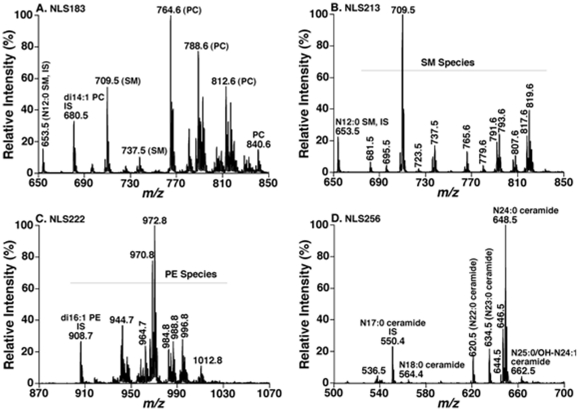
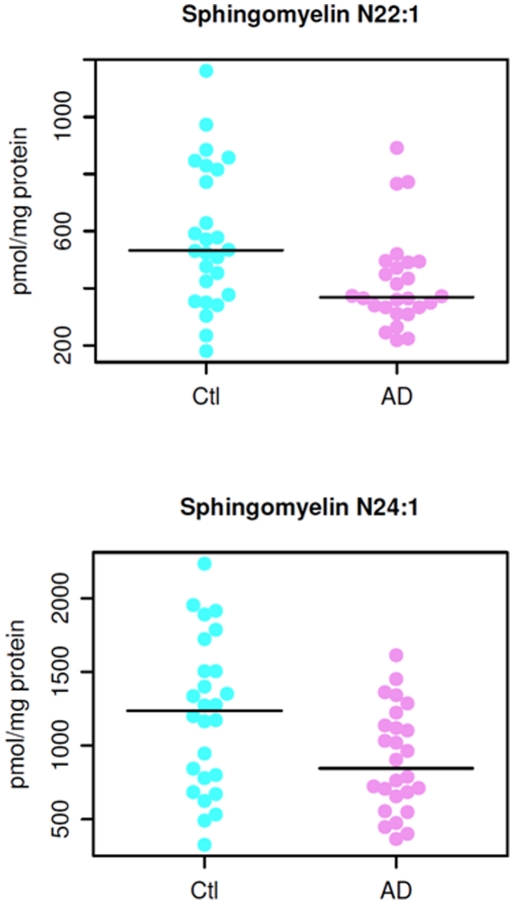
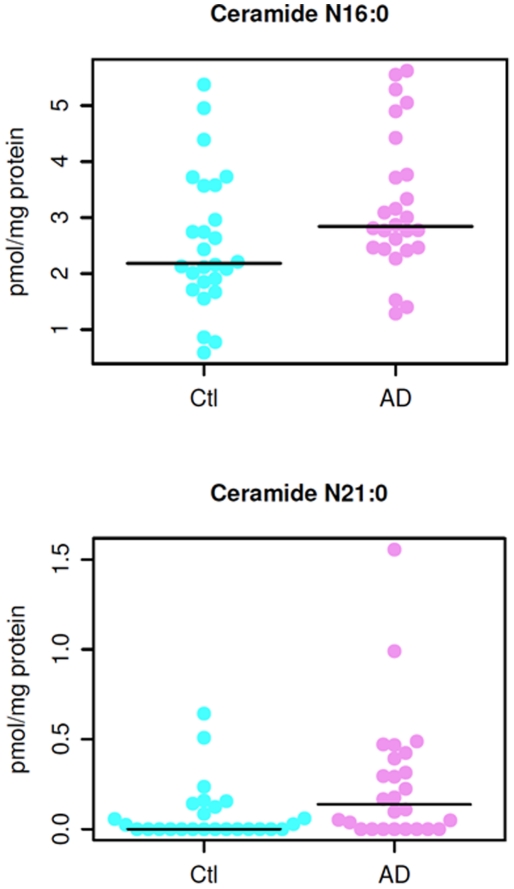
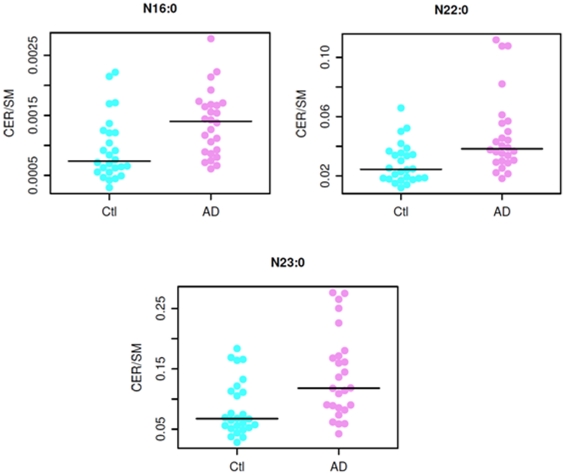
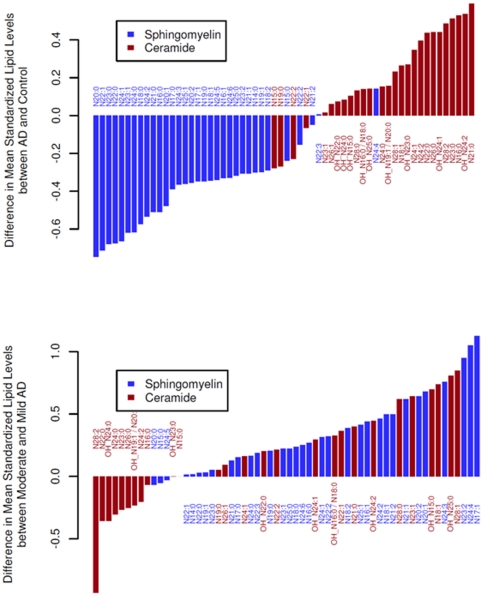
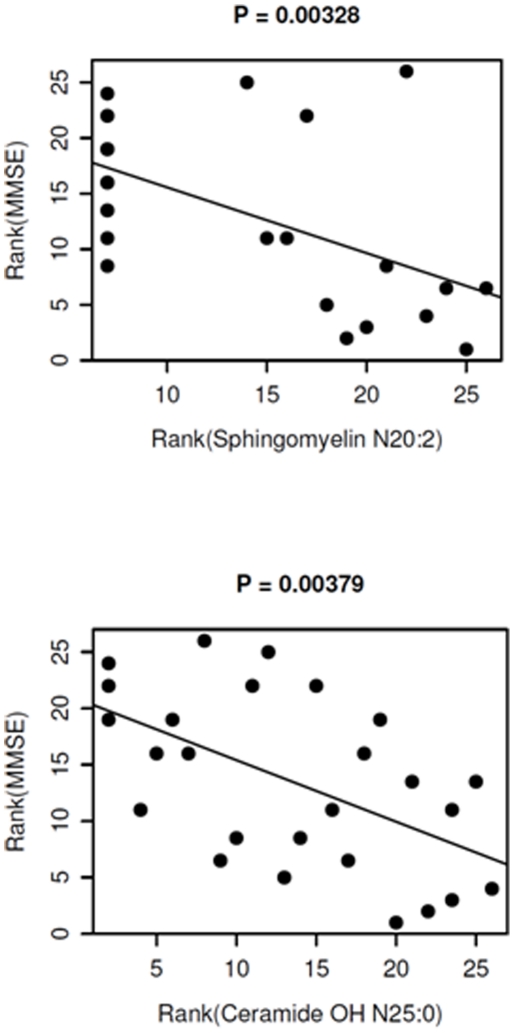
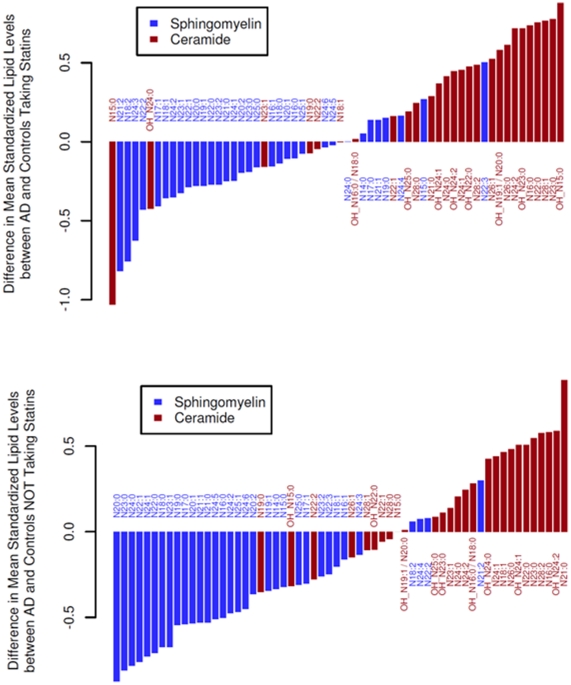
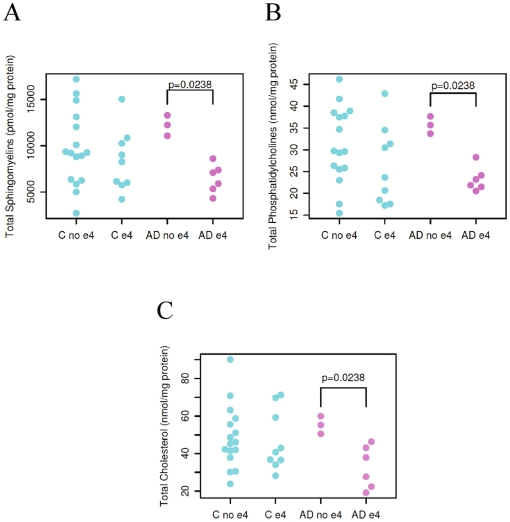
We prospectively analyzed plasma from 26 AD patients (mean MMSE 21) and 26 cognitively normal controls in a non-targeted approach using multi-dimensional mass spectrometry-based shotgun lipidomics to determine the levels of over 800 molecular species of lipids. These data were then correlated with diagnosis, apolipoprotein E4 genotype and cognitive performance. Plasma levels of species of sphingolipids were significantly altered in AD. Of the 33 sphingomyelin species tested, 8 molecular species, particularly those containing long aliphatic chains such as 22 and 24 carbon atoms, were significantly lower (p<0.05) in AD compared to controls. Levels of 2 ceramide species (N16:0 and N21:0) were significantly higher in AD (p<0.05) with a similar, but weaker, trend for 5 other species. Ratios of ceramide to sphingomyelin species containing identical fatty acyl chains differed significantly between AD patients and controls. MMSE scores were correlated with altered mass levels of both N20:2 SM and OH-N25:0 ceramides (p<0.004) though lipid abnormalities were observed in mild and moderate AD. Within AD subjects, there were also genotype specific differences.
In this prospective study, we used a sensitive multimodality platform to identify and characterize an essentially uniform but opposite pattern of disruption in sphingomyelin and ceramide mass levels in AD plasma. Given the role of brain sphingolipids in neuronal function, our findings provide new insights into the AD sphingolipidome and the potential use of metabolomic signatures as peripheral biomarkers.
在阿尔茨海默病(AD)中,血浆生物标志物的发展可以促进早期检测、风险评估和治疗监测。已有研究提出,神经酰胺和神经鞘氨醇的改变可能在淀粉样蛋白形成和与炎症应激相关的神经元凋亡中发挥作用;然而,很少有研究使用具有准确性、灵敏度和重现性的分析平台对 AD 血浆中的鞘脂组进行全面分析。
我们前瞻性地分析了 26 例 AD 患者(平均 MMSE 为 21 分)和 26 例认知正常对照者的血浆,采用多维基于质谱的 shotgun 脂质组学进行非靶向分析,以确定超过 800 种脂质分子的水平。然后将这些数据与诊断、载脂蛋白 E4 基因型和认知表现相关联。AD 患者的血浆鞘脂水平发生了显著改变。在测试的 33 种神经鞘氨醇中,有 8 种分子种类,特别是那些含有长脂族链(如 22 碳和 24 碳)的分子种类,在 AD 中明显低于对照组(p<0.05)。AD 患者的 2 种神经酰胺水平(N16:0 和 N21:0)明显升高(p<0.05),其他 5 种神经酰胺水平也呈现类似但较弱的趋势。AD 患者和对照组的神经酰胺与含有相同脂肪酸链的神经鞘氨醇的比值明显不同。MMSE 评分与 N20:2 SM 和 OH-N25:0 神经酰胺的改变质量水平相关(p<0.004),尽管在轻度和中度 AD 中观察到脂质异常。在 AD 患者中,还存在基因型特异性差异。
在这项前瞻性研究中,我们使用了一种敏感的多模态平台,在 AD 血浆中鉴定和描述了神经鞘氨醇和神经酰胺质量水平的一种基本一致但相反的破坏模式。鉴于脑鞘脂在神经元功能中的作用,我们的发现为 AD 鞘脂组学提供了新的见解,并为代谢组学特征作为外周生物标志物的潜在用途提供了依据。