Department of Advanced Medical and Surgical Sciences, University of Campania "Luigi Vanvitelli", 80138 Naples, Italy.
Laboratory of Neuronal Networks Morphology and System Biology, Department of Mental and Physical Health and Preventive Medicine, University of Campania "Luigi Vanvitelli", 80138 Naples, Italy.
Biomolecules. 2024 Oct 26;14(11):1362. doi: 10.3390/biom14111362.
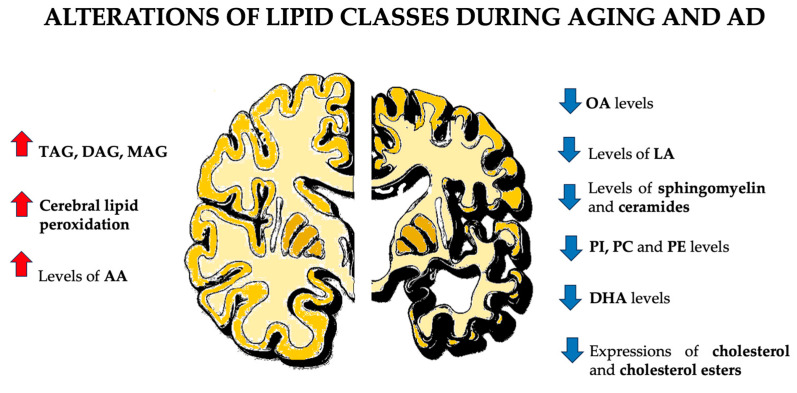
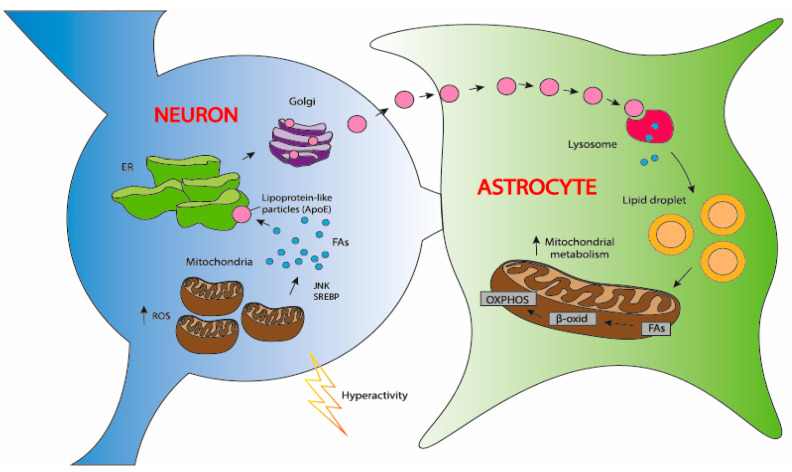
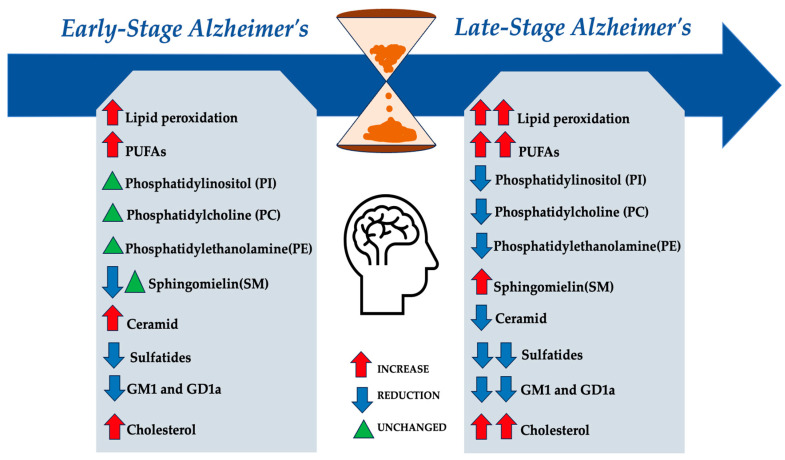
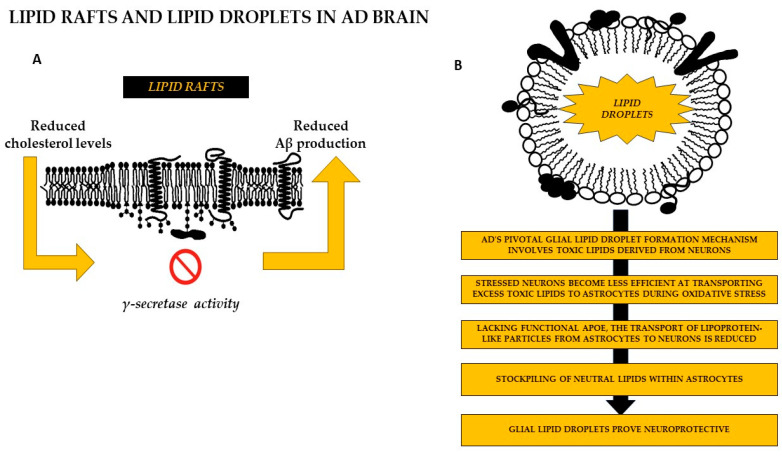
Aging induces complex changes in the lipid profiles across different areas of the brain. These changes can affect the function of brain cells and may contribute to neurodegenerative diseases such as Alzheimer's disease. Research shows that while the overall lipid profile in the human brain remains quite steady throughout adulthood, specific changes occur with age, especially after the age of 50. These changes include a slow decline in total lipid content and shifts in the composition of fatty acids, particularly in glycerophospholipids and cholesterol levels, which can vary depending on the brain region. Lipid rafts play a crucial role in maintaining membrane integrity and facilitating cellular signaling. In the context of Alzheimer's disease, changes in the composition of lipid rafts have been associated with the development of the disease. For example, alterations in lipid raft composition can lead to increased accumulation of amyloid β (Aβ) peptides, contributing to neurotoxic effects. Lipid droplets store neutral lipids and are key for cellular energy metabolism. As organisms age, the dynamics of lipid droplets in the brain change, with evidence suggesting a decline in metabolic activity over time. This reduced activity may lead to an imbalance in lipid synthesis and mobilization, contributing to neurodegenerative processes. In model organisms like Drosophila, studies have shown that lipid metabolism in the brain can be influenced by diet and insulin signaling pathways, crucial for maintaining metabolic balance. The interplay between lipid metabolism, oxidative stress, and inflammation is critical in the context of aging and Alzheimer's disease. Lipid peroxidation, a consequence of oxidative stress, can lead to the formation of reactive aldehydes that further damage neurons. Inflammatory processes can also disrupt lipid metabolism, contributing to the pathology of AD. Consequently, the accumulation of oxidized lipids can affect lipid raft integrity, influencing signaling pathways involved in neuronal survival and function.
衰老会引起大脑不同区域脂质谱的复杂变化。这些变化会影响脑细胞的功能,并可能导致阿尔茨海默病等神经退行性疾病。研究表明,虽然人类大脑的整体脂质谱在成年期保持相当稳定,但随着年龄的增长,特别是在 50 岁之后,会出现特定的变化。这些变化包括总脂质含量的缓慢下降和脂肪酸组成的变化,特别是甘油磷脂和胆固醇水平的变化,其取决于大脑区域。脂筏在维持膜完整性和促进细胞信号转导方面起着至关重要的作用。在阿尔茨海默病的背景下,脂筏组成的变化与疾病的发展有关。例如,脂筏组成的改变会导致淀粉样β(Aβ)肽的积累增加,从而导致神经毒性作用。脂滴储存中性脂质,是细胞能量代谢的关键。随着生物体的衰老,大脑中脂滴的动力学发生变化,有证据表明随着时间的推移代谢活性下降。这种活性降低可能导致脂质合成和动员的失衡,从而促进神经退行性过程。在果蝇等模式生物中,研究表明大脑中的脂质代谢可以受到饮食和胰岛素信号通路的影响,这对于维持代谢平衡至关重要。脂质代谢、氧化应激和炎症之间的相互作用在衰老和阿尔茨海默病的背景下至关重要。氧化应激的后果是脂质过氧化,会导致形成进一步损伤神经元的反应性醛。炎症过程也会破坏脂质代谢,导致 AD 的病理学改变。因此,氧化脂质的积累会影响脂筏的完整性,影响涉及神经元存活和功能的信号通路。