Center for Alzheimer Research and Treatment, Department of Neurology, Brigham and Women's Hospital, Boston, MA, USA.
Alzheimers Dement. 2011 Jul;7(4):367-85. doi: 10.1016/j.jalz.2011.05.2351.
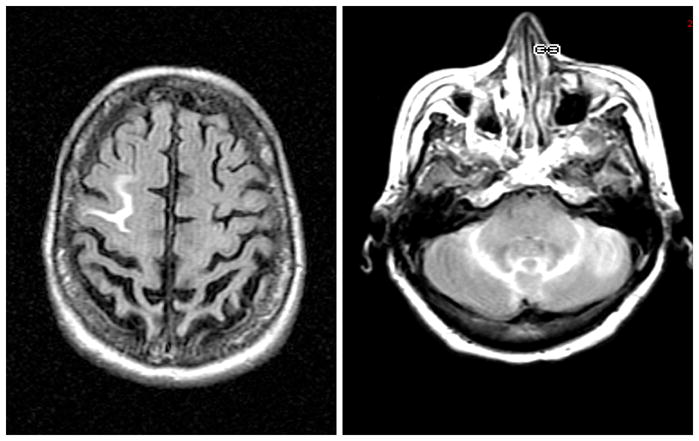
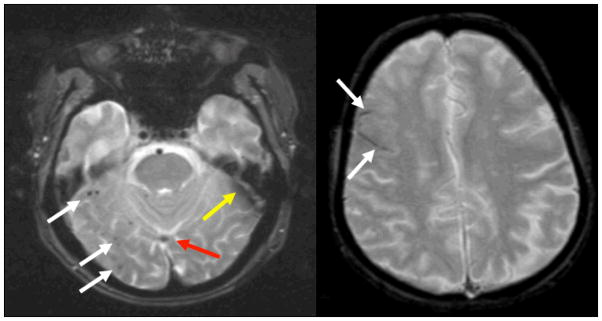
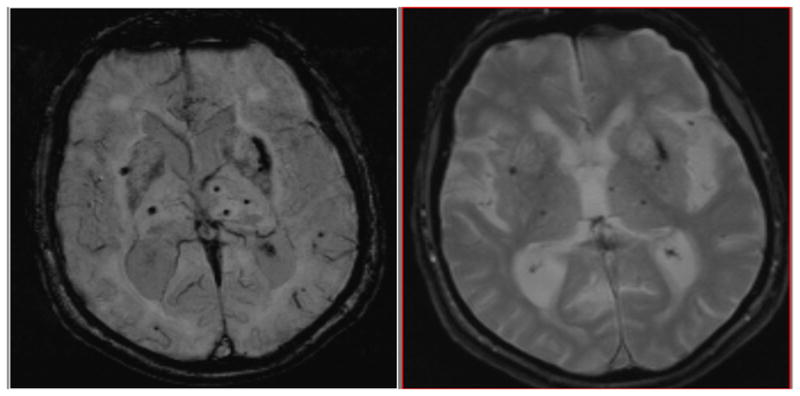
Amyloid imaging related abnormalities (ARIA) have now been reported in clinical trials with multiple therapeutic avenues to lower amyloid-β burden in Alzheimer's disease (AD). In response to concerns raised by the Food and Drug Administration, the Alzheimer's Association Research Roundtable convened a working group to review the publicly available trial data, attempts at developing animal models, and the literature on the natural history and pathology of related conditions. The spectrum of ARIA includes signal hyperintensities on fluid attenuation inversion recoverysequences thought to represent "vasogenic edema" and/or sulcal effusion (ARIA-E), as well as signal hypointensities on GRE/T2* thought to represent hemosiderin deposits (ARIA-H), including microhemorrhage and superficial siderosis. The etiology of ARIA remains unclear but the prevailing data support vascular amyloid as a common pathophysiological mechanism leading to increased vascular permeability. The workgroup proposes recommendations for the detection and monitoring of ARIA in ongoing AD clinical trials, as well as directions for future research.
淀粉样蛋白成像相关异常(ARIA)现已在多项降低阿尔茨海默病(AD)淀粉样蛋白-β负担的治疗途径的临床试验中报告。为回应食品和药物管理局提出的担忧,阿尔茨海默病协会研究圆桌会议召集了一个工作组,审查公开的试验数据、开发动物模型的尝试,以及关于相关疾病自然史和病理学的文献。ARIA 的范围包括在液体衰减反转恢复序列上的信号高信号,这些信号被认为代表“血管源性水肿”和/或脑沟液(ARIA-E),以及 GRE/T2*上的信号低信号,这些信号被认为代表含铁血黄素沉积(ARIA-H),包括微出血和表浅铁沉积。ARIA 的病因仍不清楚,但流行的数据支持血管淀粉样蛋白是导致血管通透性增加的常见病理生理机制。工作组提出了在正在进行的 AD 临床试验中检测和监测 ARIA 的建议,以及未来研究的方向。