Nasir Aejaz, Chen Dung-Tsa, Gruidl Mike, Henderson-Jackson Evita B, Venkataramu Chinnambally, McCarthy Susan M, McBride Heyoung L, Harris Eleanor, Khakpour Nazanin, Yeatman Timothy J
Department of Anatomic Pathology, Moffitt Cancer Center & Research Institute, Tampa, FL 33612, USA.
Patholog Res Int. 2011;2011:489064. doi: 10.4061/2011/489064. Epub 2011 Jul 10.
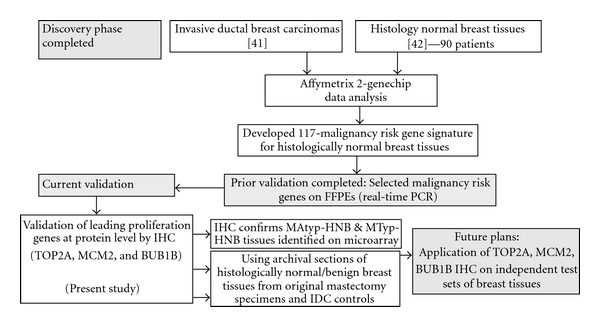
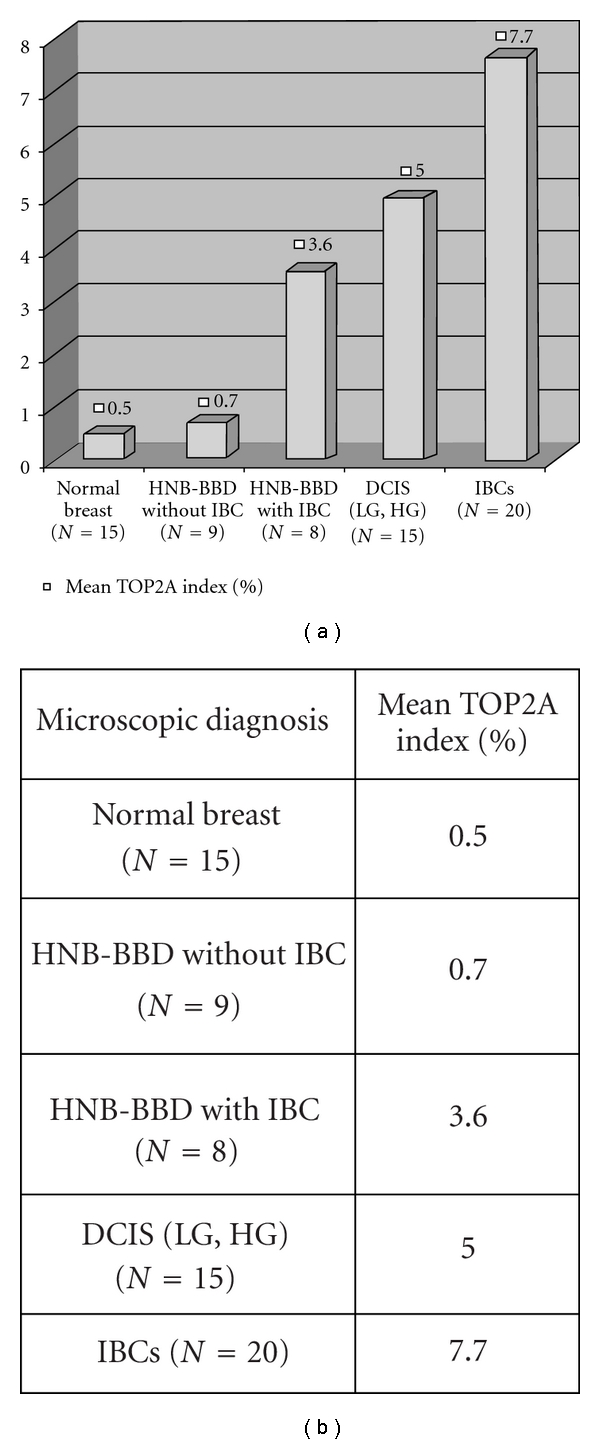
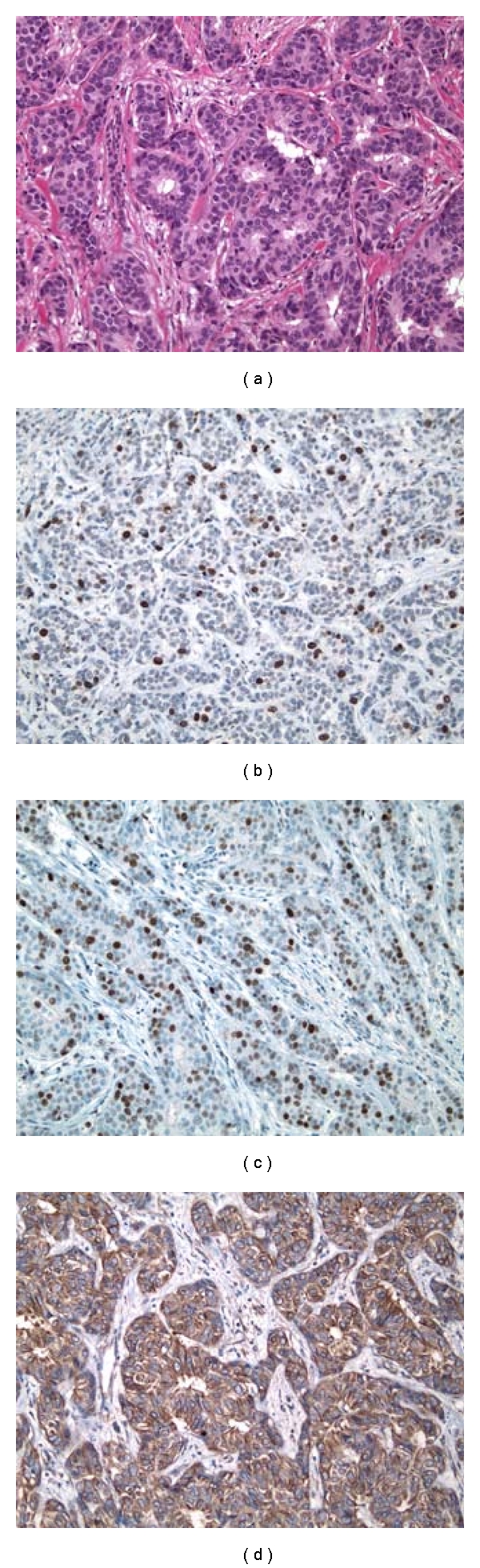
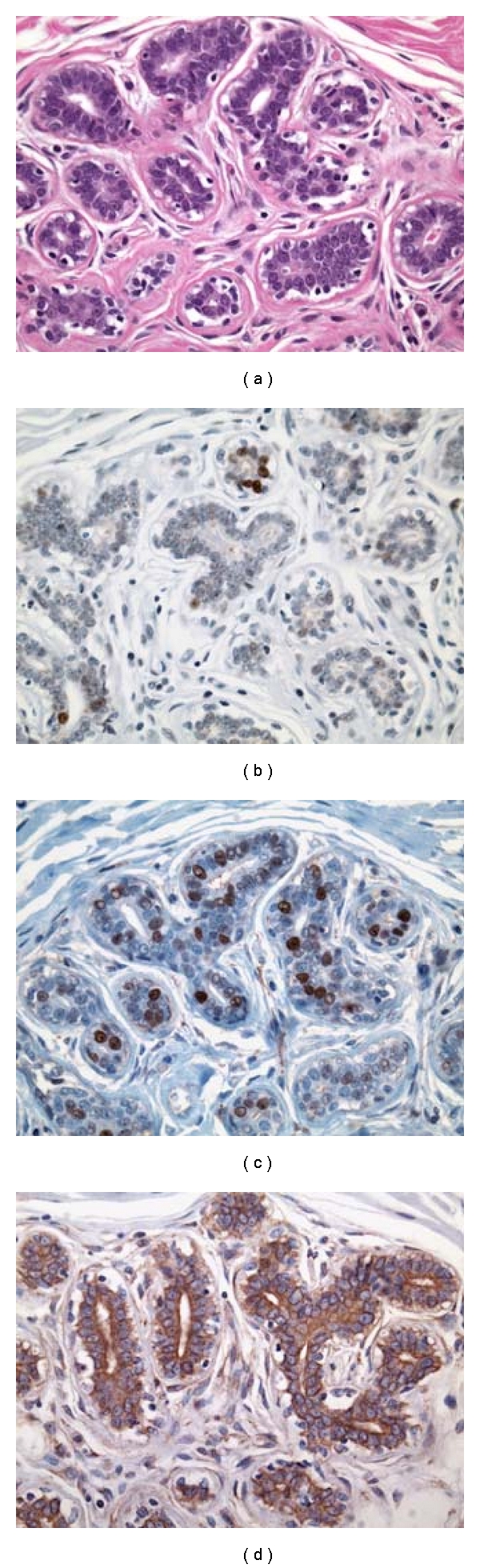
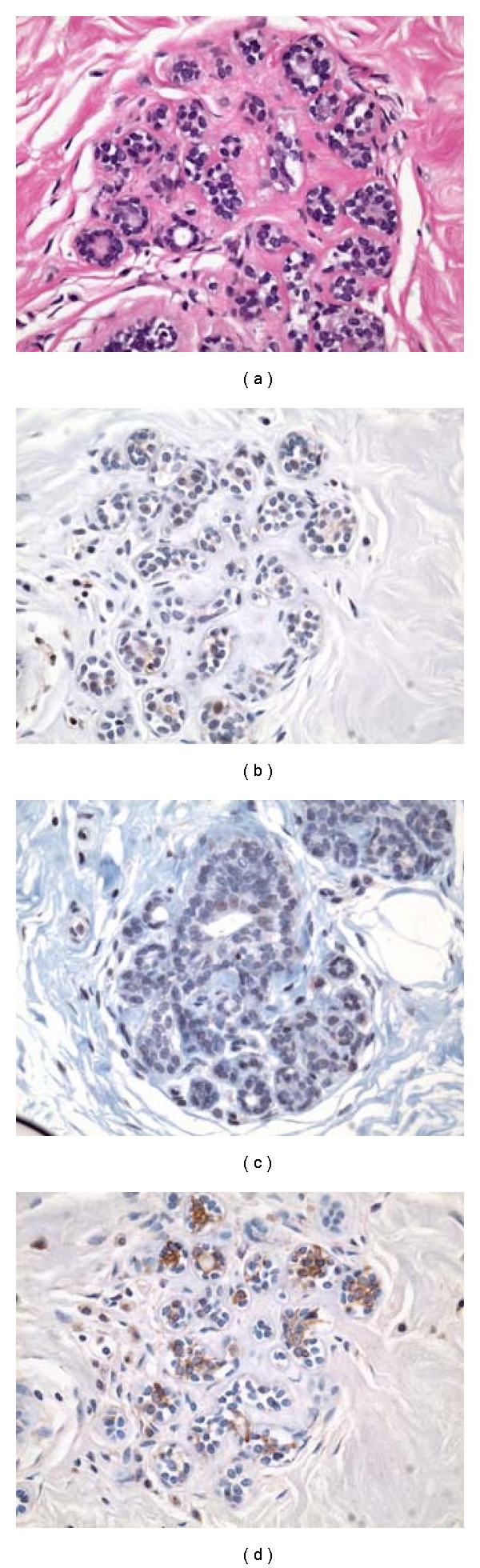
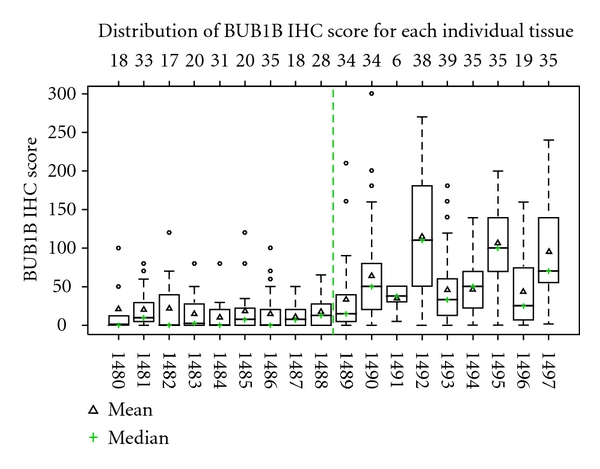
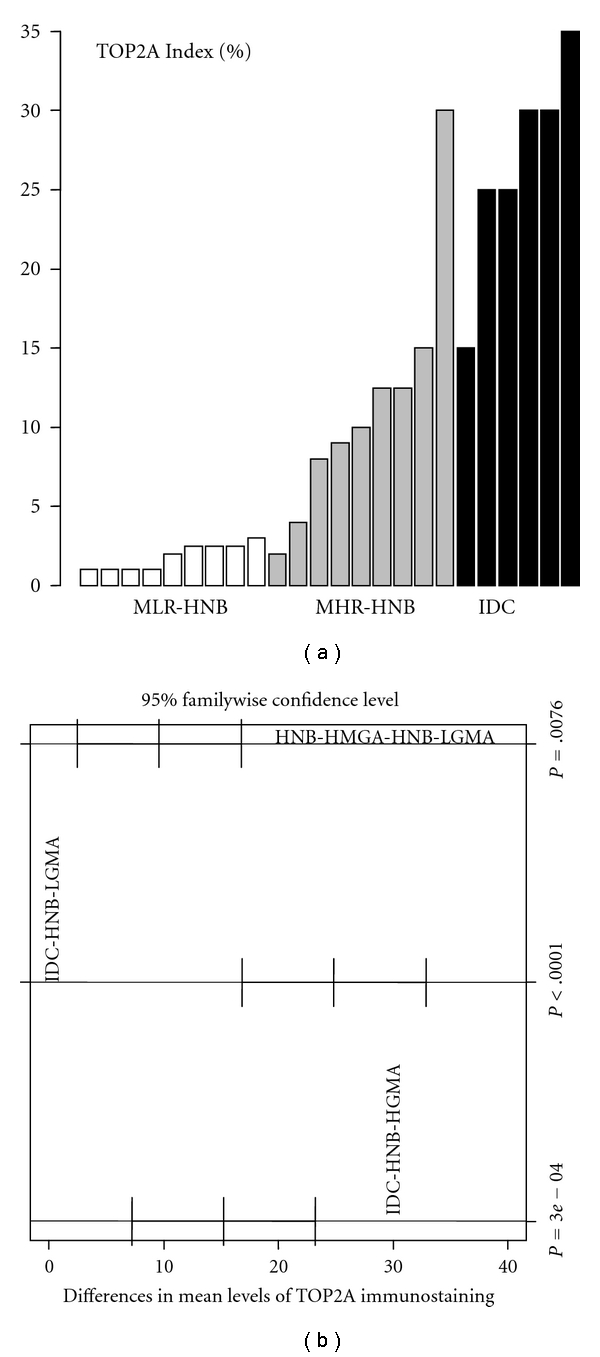
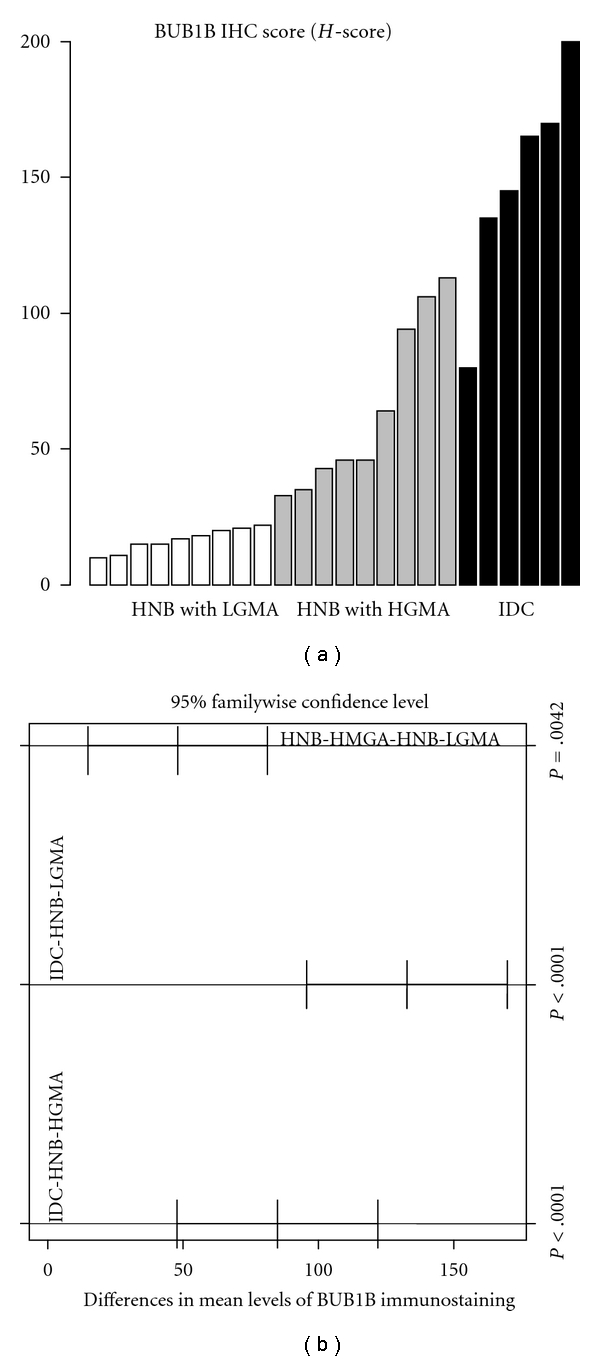
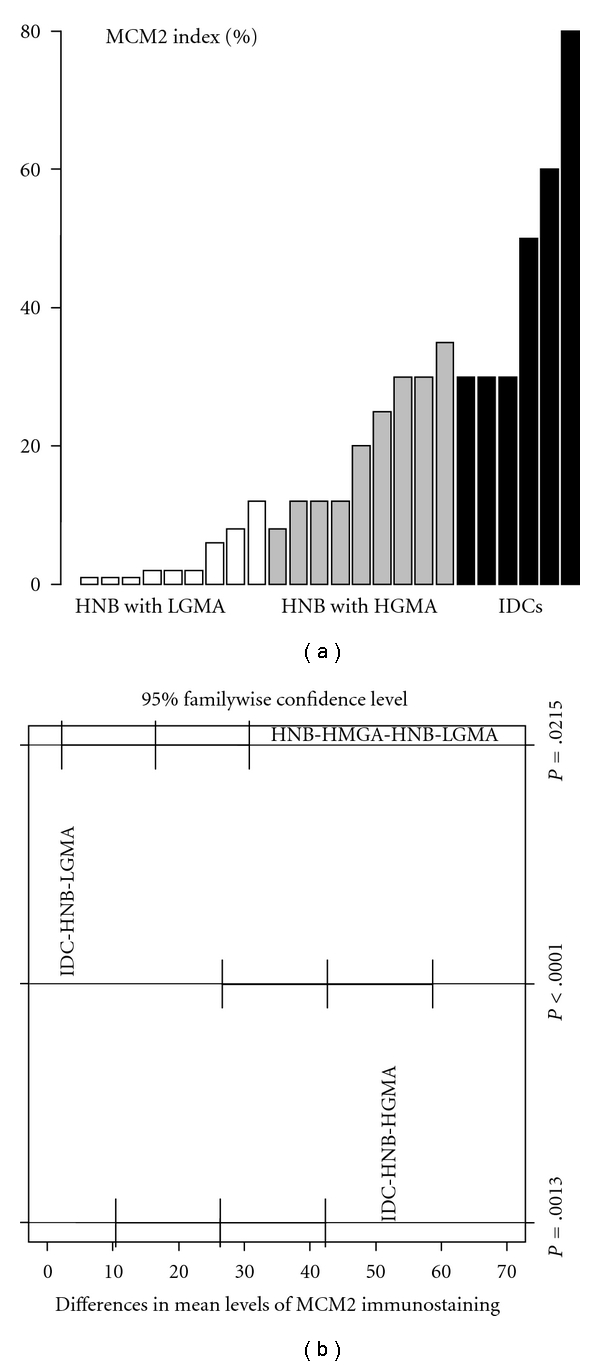
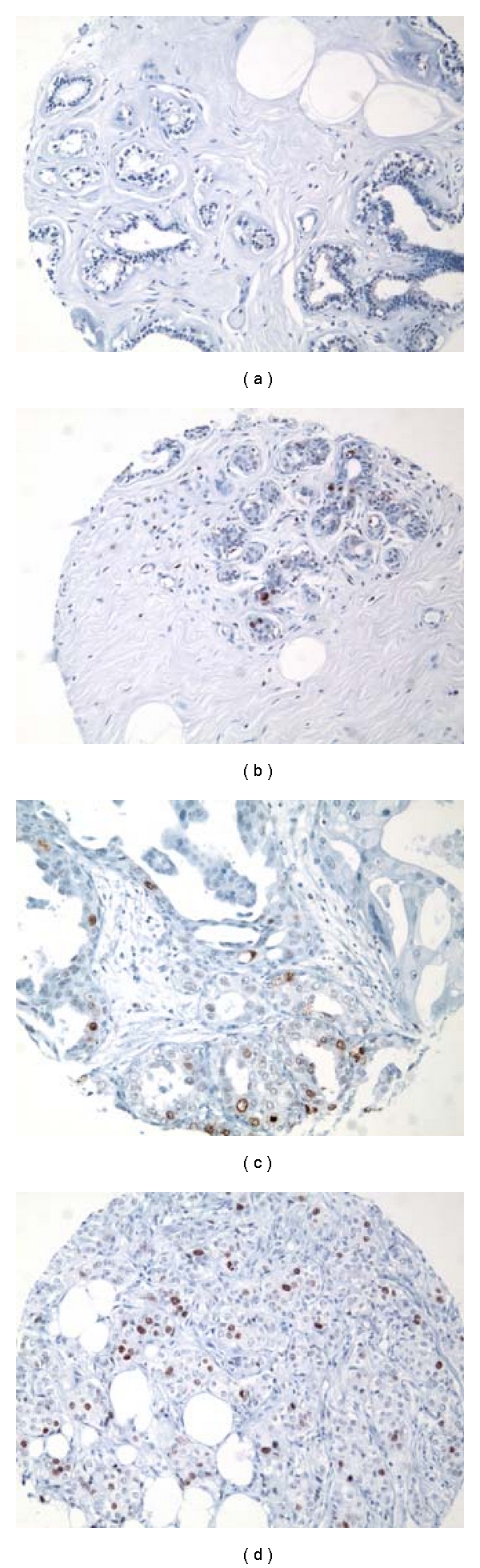
To detect the molecular changes of malignancy in histologically normal breast (HNB) tissues, we recently developed a novel 117-gene-malignancy-signature. Here we report validation of our leading malignancy-risk-genes, topoisomerase-2-alpha (TOP2A), minichromosome-maintenance-protein-2 (MCM2) and "budding-uninhibited-by-benzimidazoles-1-homolog-beta" (BUB1B) at the protein level. Using our 117-gene malignancy-signature, we classified 18 fresh-frozen HNB tissues from 18 adult female breast cancer patients into HNB-tissues with low-grade (HNB-LGMA; N = 9) and high-grade molecular abnormality (HNB-HGMA; N = 9). Archival sections of additional HNB tissues from these patients, and invasive ductal carcinoma (IDC) tissues from six other patients were immunostained for these biomarkers. TOP2A/MCM2 expression was assessed as staining index (%) and BUB1B expression as H-scores (0-300). Increasing TOP2A, MCM2, and BUB1B protein expression from HNB-LGMA to HNB-HGMA tissues to IDCs validated our microarray-based molecular classification of HNB tissues by immunohistochemistry. We also demonstrated an increasing expression of TOP2A protein on an independent test set of HNB/benign/reductionmammoplasties, atypical-ductal-hyperplasia with and without synchronous breast cancer, DCIS and IDC tissues using a custom tissue microarray (TMA). In conclusion, TOP2A, MCM2, and BUB1B proteins are potential molecular biomarkers of malignancy in histologically normal and benign breast tissues. Larger-scale clinical validation studies are needed to further evaluate the clinical utility of these molecular biomarkers.
为了检测组织学正常乳腺(HNB)组织中恶性肿瘤的分子变化,我们最近开发了一种新型的117基因恶性肿瘤特征。在此,我们报告在蛋白质水平对我们主要的恶性肿瘤风险基因——拓扑异构酶-2-α(TOP2A)、微小染色体维持蛋白-2(MCM2)和“苯并咪唑不抑制的芽殖-1-同源物-β”(BUB1B)进行验证。使用我们的117基因恶性肿瘤特征,我们将来自18名成年女性乳腺癌患者的18个新鲜冷冻HNB组织分为低度分子异常的HNB组织(HNB-LGMA;N = 9)和高度分子异常的HNB组织(HNB-HGMA;N = 9)。对这些患者的额外HNB组织存档切片以及其他6名患者的浸润性导管癌(IDC)组织进行这些生物标志物的免疫染色。TOP2A/MCM2表达以染色指数(%)评估,BUB1B表达以H评分(0-300)评估。从HNB-LGMA组织到HNB-HGMA组织再到IDC组织,TOP2A、MCM2和BUB1B蛋白表达的增加通过免疫组织化学验证了我们基于微阵列的HNB组织分子分类。我们还使用定制组织微阵列(TMA)在HNB/良性/缩乳术、伴或不伴同步乳腺癌的非典型导管增生、导管原位癌(DCIS)和IDC组织的独立测试集中证明了TOP2A蛋白表达的增加。总之,TOP2A、MCM2和BUB1B蛋白是组织学正常和良性乳腺组织中恶性肿瘤的潜在分子生物标志物。需要更大规模的临床验证研究来进一步评估这些分子生物标志物的临床效用。