Department of Surgery, The University of Hong Kong, Hong Kong, Special Administrative Region, People's Republic of China.
PLoS One. 2011;6(7):e22233. doi: 10.1371/journal.pone.0022233. Epub 2011 Jul 18.
Previously, we have examined the methylation status of SLC19A3 (solute carrier family 19, member 3) promoter and found that SLC19A3 was epigenetically down-regulated in gastric cancer. Here, we aim to develop a new biomarker for cancer diagnosis using methylated SLC19A3 DNA in plasma.
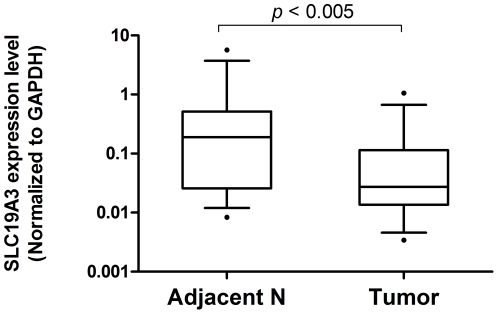
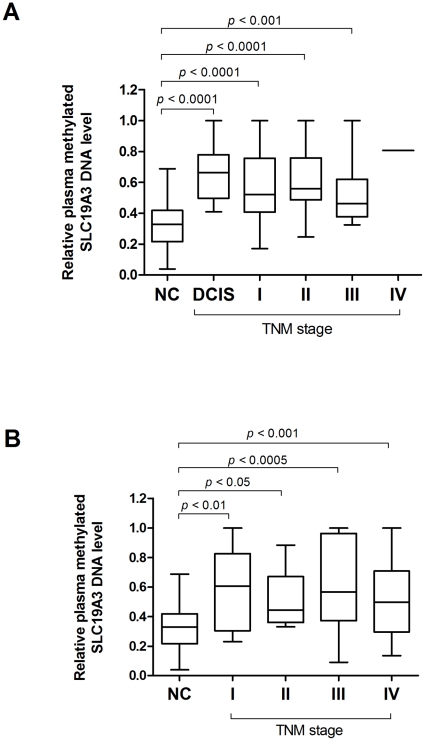
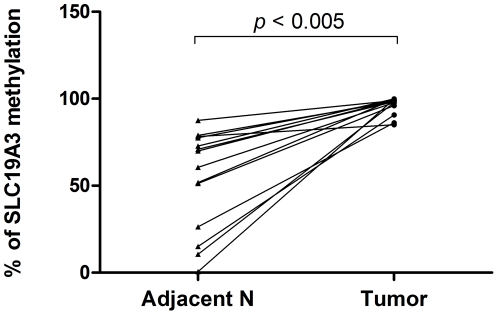
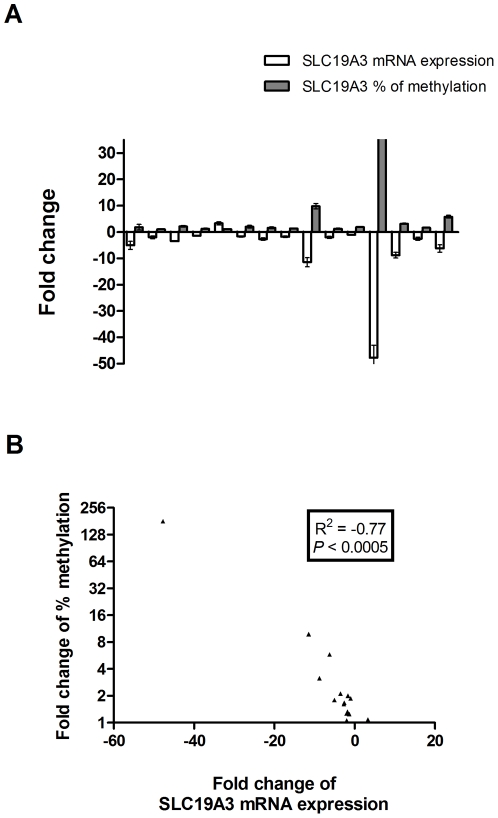
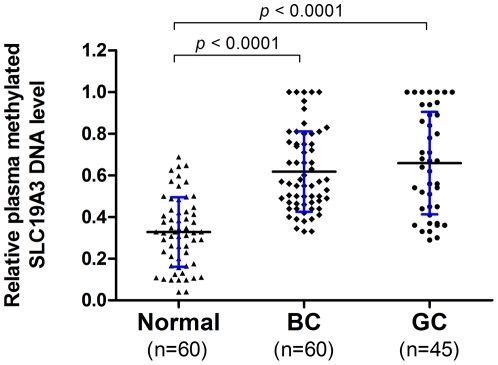
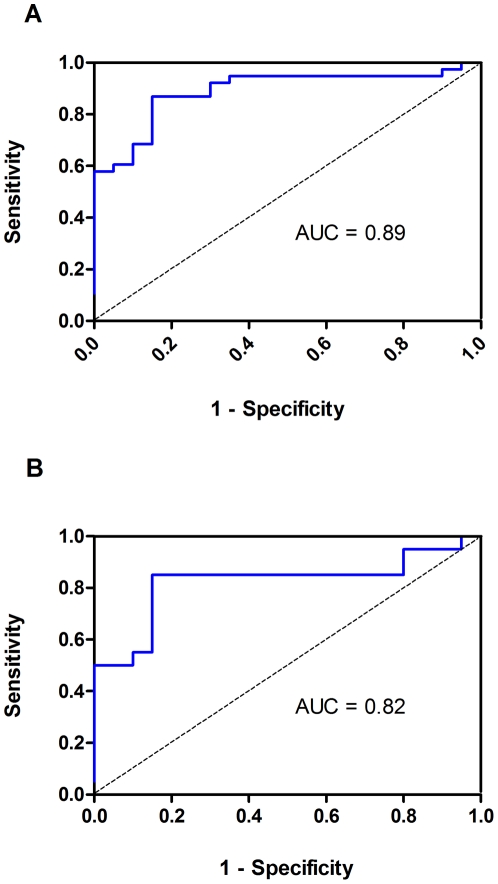
METHODOLOGY/PRINCIPAL FINDINGS: SLC19A3 gene expression was examined by RT-qPCR. Methylation status of SLC19A3 promoter was evaluated by methylation-specific qPCR. SLC19A3 expression was significantly down-regulated in 80% (12/15) of breast tumors (P<0.005). Breast tumors had significant increase in methylation percentage when compared to adjacent non-tumor tissues (P<0.005). A robust and simple methylation-sensitive restriction enzyme digestion and real-time quantitative PCR (MSRED-qPCR) was developed to quantify SLC19A3 DNA methylation in plasma. We validated this biomarker in an independent validation cohort of 165 case-control plasma including 60 breast cancer, 45 gastric cancer patients and 60 healthy subjects. Plasma SLC19A3 methylated DNA level was effective in differentiating both breast and gastric cancer from healthy subjects. We further validated this biomarker in another independent blinded cohort of 78 plasma including 38 breast cancer, 20 gastric cancer patients and 20 healthy subjects. The positive predictive values for breast and gastric cancer were 90% and 85%, respectively. The negative predictive value of this biomarker was 85%. Elevated level in plasma has been detected not only in advanced stages but also early stages of tumors. The positive predictive value for ductal carcinoma in situ (DCIS) cases was 100%.
These results suggested that aberrant SLC19A3 promoter hypermethylation in plasma may be a novel biomarker for breast and gastric cancer diagnosis.
之前,我们已经研究了 SLC19A3(溶质载体家族 19,成员 3)启动子的甲基化状态,发现 SLC19A3 在胃癌中呈表观遗传下调。在这里,我们旨在使用血浆中甲基化的 SLC19A3 DNA 开发用于癌症诊断的新生物标志物。
方法/主要发现:通过 RT-qPCR 检查 SLC19A3 基因表达。通过甲基化特异性 qPCR 评估 SLC19A3 启动子的甲基化状态。在 80%(12/15)的乳腺癌肿瘤中,SLC19A3 表达明显下调(P<0.005)。与相邻非肿瘤组织相比,乳腺癌肿瘤的甲基化百分比有显著增加(P<0.005)。开发了一种稳健且简单的甲基化敏感限制性内切酶消化和实时定量 PCR(MSRED-qPCR)来定量血浆中的 SLC19A3 DNA 甲基化。我们在包括 60 例乳腺癌、45 例胃癌患者和 60 例健康受试者的 165 例病例对照血浆的独立验证队列中验证了该生物标志物。血浆 SLC19A3 甲基化 DNA 水平可有效区分乳腺癌和胃癌与健康受试者。我们在另一个独立的盲法队列 78 例血浆中进一步验证了该生物标志物,其中包括 38 例乳腺癌、20 例胃癌患者和 20 例健康受试者。乳腺癌和胃癌的阳性预测值分别为 90%和 85%。该生物标志物的阴性预测值为 85%。不仅在晚期肿瘤中,而且在肿瘤早期也检测到了血浆中的升高水平。导管原位癌(DCIS)病例的阳性预测值为 100%。
这些结果表明,血浆中异常的 SLC19A3 启动子高甲基化可能是乳腺癌和胃癌诊断的新型生物标志物。