Irastorza Luis Javier, Corujo Pablo, Bañuelos Pilar
MHC Arganda, Juan de la Cierva 20, Arganda del Rey, 28500 Madrid, Spain.
Int J Alzheimers Dis. 2011;2011:941041. doi: 10.4061/2011/941041. Epub 2011 Jul 18.
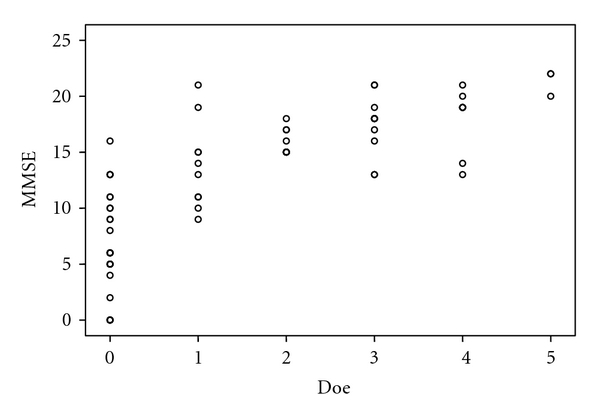
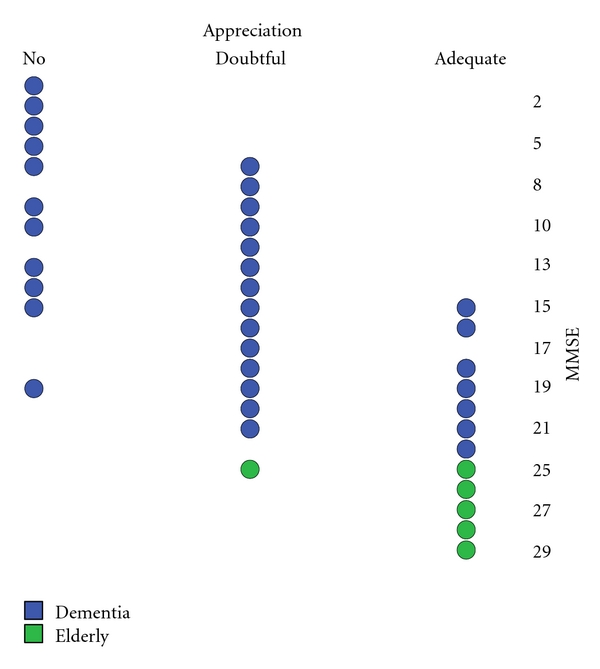
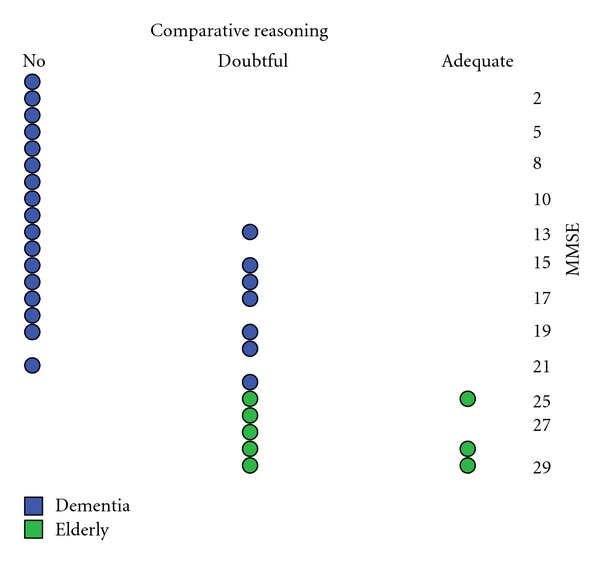
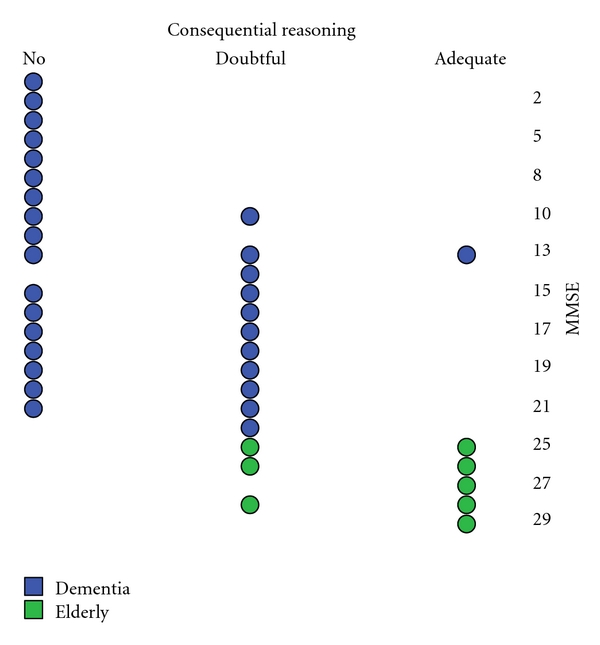
The capacity to vote in patients with mental illness is increasingly questioned. The objective of this study is to evaluate this capacity in a group of subjects with dementia (Alzheimer's disease) and other elderly subjects without dementia. With a sample of 68 subjects with dementia and 25 controls living in a senior residence, a transversal study was carried out over 4 months. Subjects were evaluated with the Mini-Mental State Examination (MMSE) and the Competence Assessment Tool for voting (CAT-V). The results were more positive for the Doe criteria (as part of the CAT-V), and a correlation was found with the MMSE in subjects with dementia and, to a lesser degree, in the controls. We conclude that the capacity to vote is related to cognitive deterioration and, within that, is more related to understanding and appreciation.
患有精神疾病患者的投票能力越来越受到质疑。本研究的目的是评估一组患有痴呆症(阿尔茨海默病)的受试者和其他无痴呆症的老年受试者的这种能力。以居住在老年公寓的68名痴呆症患者和25名对照为样本,进行了为期4个月的横断面研究。受试者接受简易精神状态检查表(MMSE)和投票能力评估工具(CAT-V)的评估。对于多伊标准(作为CAT-V的一部分),结果更为积极,并且在患有痴呆症的受试者中发现与MMSE存在相关性,在对照组中相关性较小。我们得出结论,投票能力与认知衰退有关,并且在认知衰退中,与理解和鉴赏力的关系更大。